
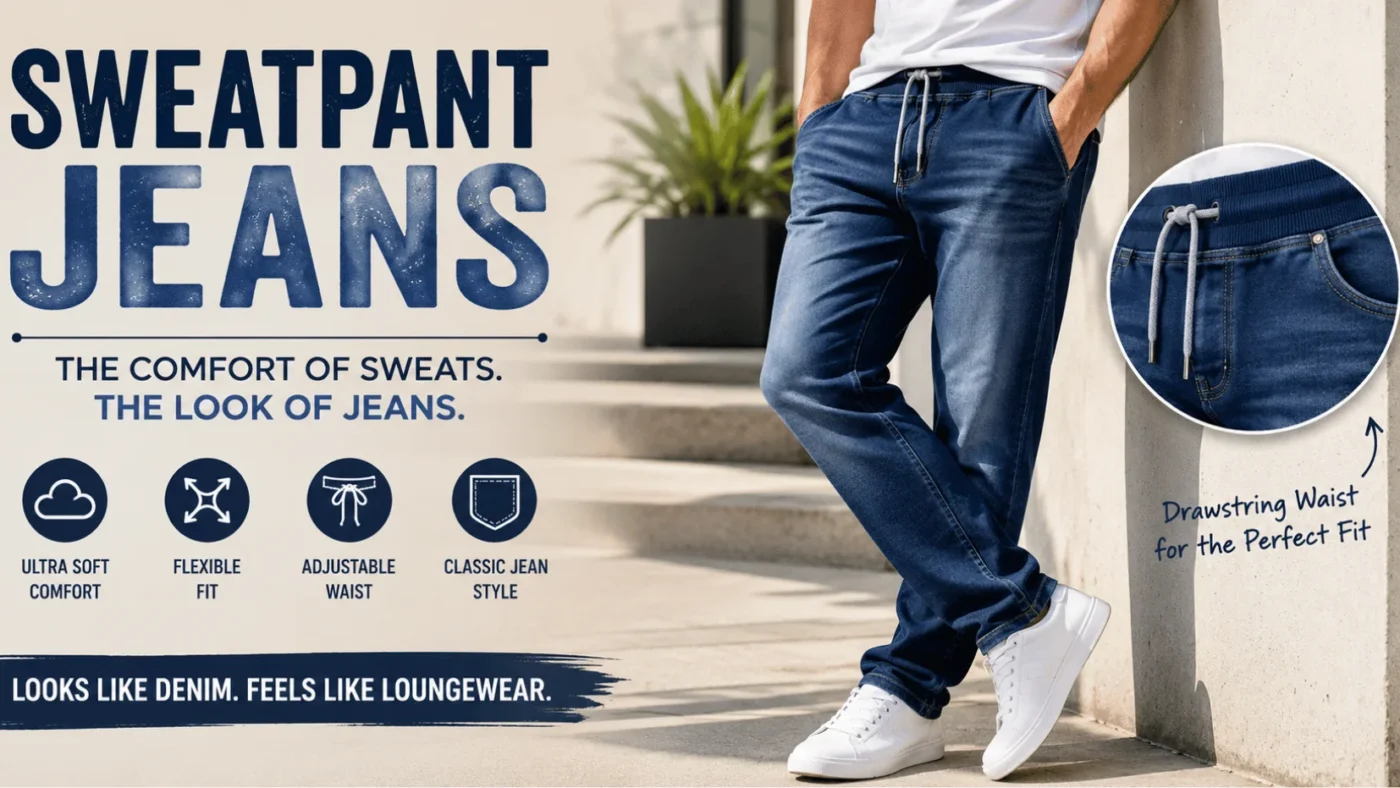
Sweatpant jeans give you the relaxed feel of lounge pants while creating the visual effect of denim. The strongest versions use French terry, soft knit fabric, realistic washes, and carefully placed pocket or fly details. They make sense when you want an easy waistband and plenty of movement without making your outfit look like sleepwear.
Quick answer: Sweatpants are soft-knit or French-terry pants designed to look like denim. Good pairs use convincing washes, printed or functional pocket details, and a comfortable waistband that does not look bulky. Choose by fabric weight, inseam, pocket construction, and how polished you need the finished outfit to feel.
| What to know | Practical answer |
| Typical construction | French terry, cotton knit, stretch fabric, or soft denim-inspired blends |
| Common silhouettes | Wide-leg, baggy, straight, flare, cropped, and track-pant shapes |
| Main advantage | More flexibility and waistband comfort than traditional rigid denim |
| Main drawback | Cheap prints or bulky elastic can reveal the sweatpants construction. |
| Good for | Travel, errands, casual offices, weekend plans, and long seated days |
| Shopping priority | Fabric, waistband, inseam, pocket realism, then wash |
| U.S. price range | Budget options can sit near $50, while premium versions can exceed $200. |
| Easy shoes | Sleek sneakers, flats, loafers, ankle boots, and low heels |
Why the Denim-Look Sweatpant Trend Works
The idea is simple, but modern versions are more convincing than older jeggings or denim-print leggings. ELLE describes current styles as pants commonly made from cotton terry or lightweight blends that copy the visual details of traditional denim. Rag & Bone’s Miramar line helped make the concept more recognizable through printed flies, rivets, pockets, and washes.
Comfort is the main reason the category keeps attracting attention. Glamour’s 2026 testing focused on pairs that could handle work, daily movement, and repeated washing while still resembling jeans. The Guardian also tested premium and lower-priced versions during everyday activities, showing that a convincing pair does not always require the highest price.
The trend also fits the wider move toward relaxed denim silhouettes. Wide legs, baggier shapes, and softer fabrics give people more room to move than close-fitting jeans. That makes this hybrid especially useful for flights, commuting, casual workdays, and errands when a stiff waistband feels unnecessary.
How to Choose Sweatpant Jeans That Look Convincing
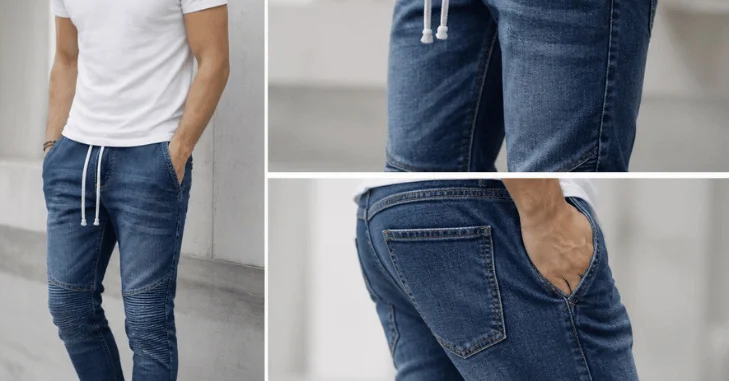
Start with the fabric rather than the wash. French terry gives you a familiar sweatshirt feel, while lighter knit blends can drape more like loose denim. If the fabric is too thin, printed pockets and fading may look flat instead of creating the depth you expect from jeans.
Next, inspect the waistband and pocket construction. A smooth elastic waist hidden behind belt loops tends to look more convincing than a gathered jogger waistband. Real front or back pockets can also make a pair look more polished, although printed details usually reduce bulk.
Length matters as much as fabric because many current versions have wide or baggy legs. The hem should fall cleanly over your shoe rather than collect in a large puddle on the floor. Styleblor’s flare jeans fit, and the styling guide explains the same proportion principle for wider denim shapes.
Finally, read the brand’s sizing notes instead of relying on your usual letter size. Gap describes its Heavyweight Easy Baggy version as deliberately loose and recommends going down one size for a more classic fit. Its current U.S. product page also offers regular, tall, and petite options, which can make length easier to control.
Which Options Give You the Most for Your Money?
Current U.S. choices range from inexpensive fashion versions to premium pants costing more than many conventional jeans. Price alone does not determine whether the illusion works because fabric weight, printing, fit, and pocket construction all matter. Think about where you will wear the pair before paying extra for details you may not need.
| Option | Recent U.S. price reference | Strengths | Trade-offs | Good choice for |
| Rag & Bone Miramar | Around $218 for several current Miramar styles | Detailed denim illusion, established range, soft premium construction | High price | Shoppers prioritizing a convincing, polished look |
| Gap Heavyweight Easy Baggy | $99.95 list price, with promotions changing | Heavy French terry, belt loops, five-pocket styling, petite/tall choices | Relaxed sizing can run large. | Everyday casual wear and colder weather |
| Halara Flex wide-leg style | Around $55 in an April 2026 Guardian test | Lower price, multiple lengths, comfortable wide-leg fit | Less premium finish than luxury choices | Trying the trend without spending $200+ |
Rag & Bone’s current Miramar collection includes several $218 styles, while Gap lists its Heavyweight Easy Baggy version at $99.95 before changing promotions. Gap says that pair uses an 86 percent cotton and 14 percent recycled-polyester French terry blend. The Guardian’s lower-price comparison found its tested Halara pair competitive enough to fool observers while costing far less than the premium option.
Our recommendation: start in the middle price tier unless you already know this silhouette works for your wardrobe. A mid-priced pair lets you judge the elastic waist, drape, and printed-denim effect without paying luxury prices. Spend more when realistic finishing and a polished appearance matter enough that you will wear the pants frequently.
7 Smart Ways to Style Denim-Look Sweatpants
- Start with a fitted tee and clean sneakers. A close top balances the wider leg, while simple sneakers keep the outfit casual without making it resemble gym wear.
- Add a button-down shirt for travel. Wear it open over a tank or tuck the front into the waistband so the outfit gains enough structure for the airport and your destination.
- Use a blazer for casual office days. Pick a pair with a smooth waist, realistic pockets, and a darker wash, then add loafers or a low heel.
- Pair a wide leg with a cropped knit. Keeping the upper half defined prevents the outfit from becoming one loose column from shoulder to floor.
- Wear ankle boots when temperatures drop. Let the wider hem fall over the top of the footwear, using the same clean overlap described in Styleblor’s Indie Aesthetic guide.
- Try a slim flat with long, loose legs. Low-profile shoes keep visual weight near the ground without fighting the volume of the pants, a proportion also used in Styleblor’s Bikinis guide.
- Dress up a flare or bootcut version. Add a fitted top and low heel, then use Styleblor’s bootcut jeans guide to fine-tune the relationship between the hem and shoe.
The easiest styling rule is to treat the pants like relaxed denim instead of traditional sweatpants. Choose one polished element, such as a structured jacket, finished shoe, leather bag, or fitted knit. That contrast keeps the soft fabric looking intentional rather than unfinished.
Where These Pants Make the Most Sense
Travel may be the clearest use case because a flexible waistband helps during long periods of sitting. Travel + Leisure highlighted the category for flights and airport days, while ELLE also identified travel-oriented designs within its 2026 roundup. A wrinkle-tolerant knit can also be easier to manage in a carry-on than stiff, heavy denim.
Errands and casual weekends are another natural match. A medium-wash wide-leg pair can work with a tee, cardigan, sneakers, or flats without requiring much planning. The outfit remains comfortable enough for driving, shopping, coffee, and a long lunch.
Work depends more on your dress code than the name on the product page. Choose darker washes, cleaner hems, discreet elastic, and real-looking pocket details for a creative or casual office. Traditional professional settings still call for tailored trousers or conventional dark denim when jeans are permitted.
What to Check Before You Buy
Fabric photographs deserve more attention than dramatic full-body campaign images. Zoom in on the waistband, fly, side seam, back pockets, and printed fading because those details determine whether the garment reads like denim up close. A pair that only looks convincing from ten feet away may be harder to style for work or dinner.
Check the inseam next, especially if you are petite or tall. Wide legs exaggerate a bad length because too much fabric gathers around the shoe, while a short inseam can make a full-length silhouette look accidental. If you already know how you like wider jeans to fall, use that same measurement as your starting point.
Then look at the care label before assuming every pair can handle a hot dryer. Gap’s current French-terry versions call for machine washing, while its printed model specifies a cold gentle cycle and low tumble drying. Following the garment label can help protect the print, shape, and elastic over repeated washes.
Are They Better Than Regular Jeans?
They are better for comfort, but they do not replace every pair of traditional denim. Rigid or lightly stretched denim creates sharper structure, holds certain silhouettes more firmly, and develops wear differently over time. Knit-based alternatives win when softness and easy movement matter more than authentic denim construction.
That distinction can make your closet easier to plan. Keep traditional denim for outfits where structure matters, then use the softer hybrid for travel, relaxed days, and casual settings. You do not need to choose one category for every occasion.
Your Next Move
Start by deciding whether you want maximum softness or the most believable denim appearance. Then compare the waistband, fabric, inseam, and pocket details before thinking about the wash color. A pair that works with three outfits you already own will usually earn more wear than a viral design that requires a new wardrobe.
FAQs
Many pairs are not made from conventional woven denim. They often use cotton French terry, knit fabric, or another soft blend that has been washed or printed to resemble denim. Some newer designs sit closer to real jeans by using functioning pockets, belt loops, flies, or denim-inspired fabrics.
The better versions can look surprisingly convincing, especially from normal conversational distance. Printed rivets, faded washes, belt loops, pockets, and well-shaped hems make the biggest difference. Thin fabric, obvious gathered elastic, or flat low-resolution printing tends to reveal the illusion faster.
Do not apply one sizing rule to every brand because the construction varies widely. Gap specifically recommends going down one size in its Heavyweight Easy Baggy style if you prefer a more classic fit. Compare your waist and inseam measurements with the individual product chart before ordering.
You can wear polished versions in many casual and creative offices. Darker color, a smooth waistband, functional-looking pockets, and a clean hem make the style easier to pair with a blazer, button-down, or refined knit. Follow your workplace’s denim policy because highly traditional offices may still require tailored trousers.
A premium pair can make sense if you value realistic printing and refined construction, and you plan to wear it often. Budget and mid-priced designs can still provide the core comfort benefit, and The Guardian’s 2026 comparison found a lower-cost contender surprisingly convincing. Your cost per wear matters more than choosing the most expensive label.