
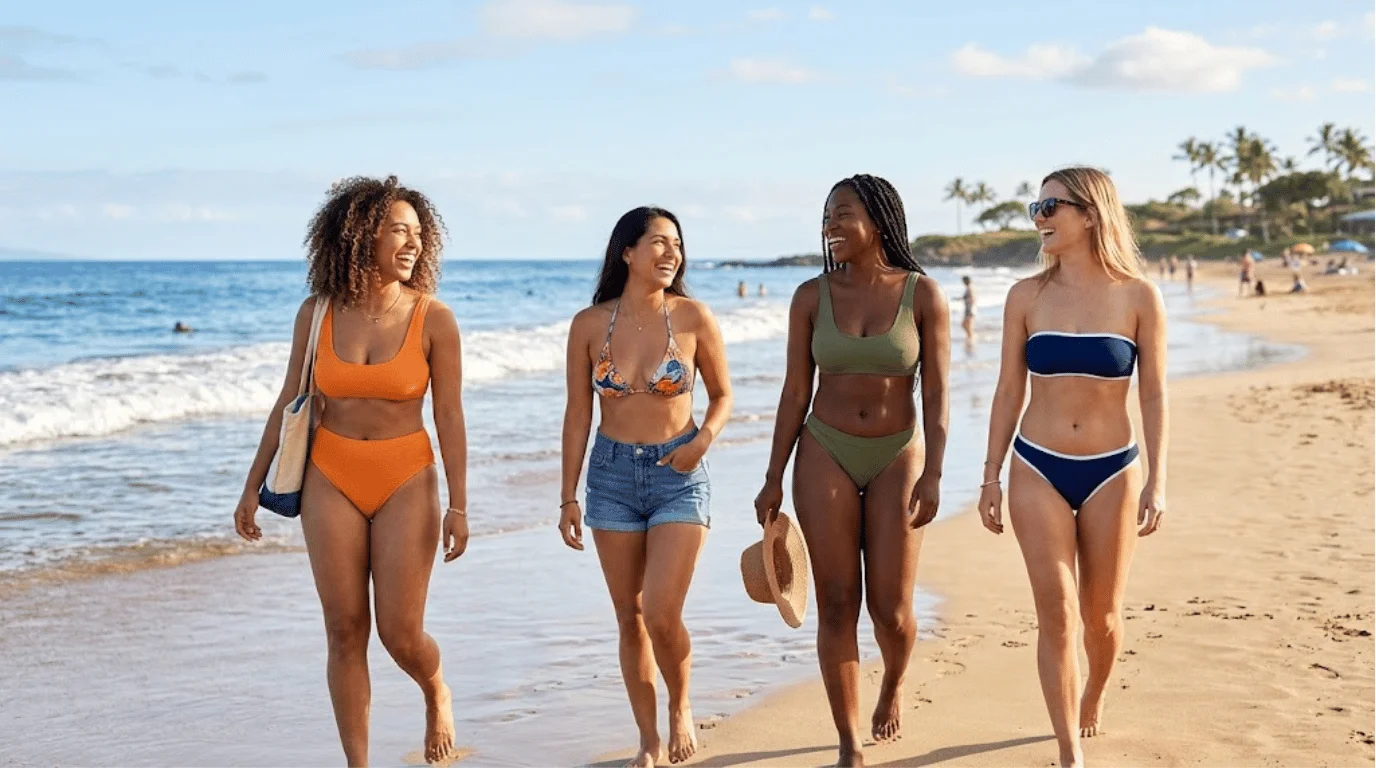
Bikinis give you the freedom to choose separate pieces that adjust coverage and create a swim look that feels personal. The right choice stays comfortable while you swim, lounge, or walk.
Comfort comes first.
Start with the support and coverage you want, then choose color and details. If your plan includes lunch or a boardwalk stroll, these easy beach outfit ideas can help you build around your swimwear.
Quick answer: Choose a top that feels secure through the band and straps, pair it with a bottom that does not dig in, then test both while moving. Separate sizing is often the simplest route when your preferred top and bottom sizes differ.
TL;DR
- Choose support first, especially when you expect to swim or move a lot.
- Pick coverage based on comfort, not on rules about your body.
- Try the full set in motion before removing tags.
- Mix colors and textures while choosing the size you need.
A quick guide to bikinis
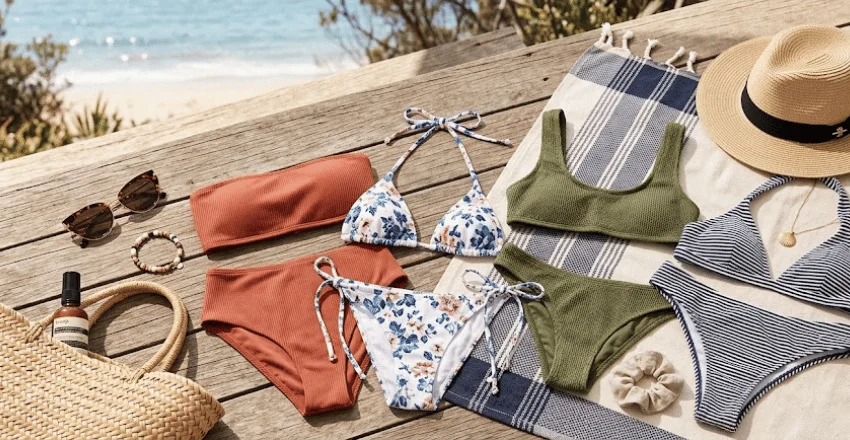
This two-piece suit has two useful decisions built in. The top handles lift, strap placement, and chest coverage. The bottom sets the rise, leg line, and seat coverage. Treating those choices separately makes shopping much less frustrating.
Separate sizes solve a lot.
There is no universal flattering cut. A suit can look great because it feels stable, suits your plans, and lets you forget about having to adjust it. Think about your day before you think about a trend.
| Feature | What it changes | Helpful for |
|---|---|---|
| Triangle top | Adjustable shape and lighter coverage | Relaxed pool or beach days |
| Underwire top | Defined support and a familiar bra feel | Readers who prefer structure |
| High waist bottom | More rise through the midsection | Retro styling or extra coverage |
| Classic brief bottom | Balanced front and back coverage | Everyday swimming and lounging |
| Adjustable tie side | Flexible hip fit | Fine-tuning the waist fit |
Choose the top by support and activity
Triangle tops are light and adjustable, so they are simple to pack. They work well for reading by the water or taking a gentle dip. Make sure the cups cover the area you want covered before tying the neck and back.
Movement tells the truth.
For a more anchored feel, try an underwire, molded cup, bralette, or longline shape. These options often have wider straps and a firmer band. They can feel especially useful during lap swimming, beach games, or long walks.
Halter straps can create a secure feel, although the neck tie may become tiring over several hours. Shoulder straps spread the load more evenly. Bandeau tops create clean lines but may slide during active plans unless they include grips, a supportive band, or detachable straps.
Strap comfort matters.
Do a small movement test in the fitting room. Lift both arms. Lean forward, then twist and take a few quick steps. If cup coverage changes or the fit digs in, change the size or style.
Pick a bottom that matches your coverage preference
Bottoms are easiest to compare by rise and coverage. Rise describes where the waistband sits. Coverage describes how much fabric you want across the seat. Neither choice has to match a body shape label.
Coverage is yours to choose.
Low rise cuts sit near the hips and can feel minimal. Mid-rise briefs are familiar and versatile. High-waisted styles sit closer to the natural waist, which can create a vintage mood and a more covered feel.
For the leg opening, check whether you prefer a straight line, a high cut, or a tie side. Higher cuts create a longer visual line on the leg. Tie sides give you room to adjust the hip fit, but confirm that knots stay comfortable when you sit.
Try it seated.
Coverage is personal. Full coverage can feel reassuring for active days. Cheekier cuts can feel breezier for sunbathing. Choose what makes you feel relaxed enough to enjoy the plan.
Get the fit right before your first swim
Fit becomes clearer when you look beyond the mirror. Your well-fitting top has a snug band that stays level across your back. Straps should support without leaving sharp marks after only a few minutes.
That snug band matters.
On the bottom, the waistband should sit smoothly without rolling or pinching. The leg openings should lie flat. If fabric bunches or shifts after you squat, try a different rise, a smaller size, or a more structured fabric.
Wet fabric can feel looser than dry fabric. Rinse a new suit after trying it at home, then move around in a private space before its first outing. This check helps reveal slipping straps or a bottom that becomes less secure when damp.
Fabric changes in water.
When you want a little more coverage between the water and your plans, a lightweight layer works beautifully. Browse these breezy beach dress options for an easy coverup that can take you from sand to lunch.
Build more looks by mixing pieces
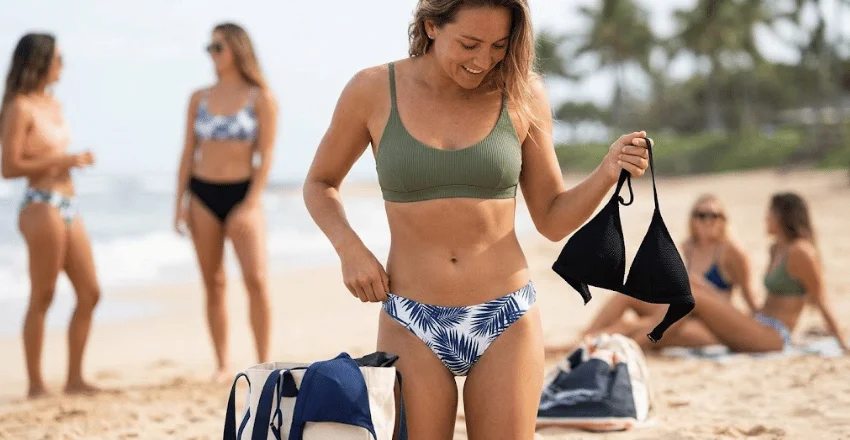
Separate sizing is one of the strongest reasons to shop two-piece swimwear. Choose the top size that feels supportive and the bottom size that feels comfortable. Matching the label size is less important than getting both pieces right.
Color comes later.
Start with one neutral bottom in black, brown, navy, or a shade that suits your wardrobe. Add a printed or textured top, then reverse the formula with a solid top and a patterned bottom. Keeping one color in common makes the pairing feel intentional.
Texture can add interest without requiring a bright print. Ribbing, crinkle fabric, crochet trim, and subtle hardware each create a different mood. Check that decorative details do not rub when you lean back in a lounge chair.
One small swim capsule can be enough for a long weekend. Pack two tops, two bottoms, and one cover-up. Four combinations give you options while leaving room for sunscreen, a book, and dry clothes.
Less can work.
Style the rest of your beach day
A coverup earns its place when it is easy to pull on while your suit is still slightly damp. Try a shirt dress, breezy maxi, oversized button-front shirt, or soft wrap. Choose a fabric that feels comfortable against sun-warmed skin.
Footwear should match the surface and the plan. Flat slides are useful near a pool. Secure sandals are better for uneven paths or a longer walk. These designer sandal styles offer ideas when you want the shoes to feel as considered as the suit.
Keep accessories practical. Bring a sun hat and sunglasses, then add a water-resistant tote or a light layer for air conditioning. Let the swimwear be the color story, then make the rest of the outfit easy.
Practical pieces win.
How to shop with less second-guessing

Before ordering, measure the fullest part of your bust and hips, plus your underbust. Compare those measurements with the brand chart rather than relying on a single familiar clothing size. Swimwear brands can vary widely. Use a USD price range as the final filter after fit and coverage, then consider fabric.
Fit is worth the time.
Read reviews for details about strap length, lining plus stretch, and whether the fabric becomes sheer when wet. Photos can show color, but reviews often reveal how a suit behaves over the course of a full day.
Buy from a retailer with a clear return policy when possible. Keep tags on during your indoor fit test. Try the top with several bottoms, and the bottom with several tops, before deciding what you will keep.
The bottom line
The right bikinis support the way you want to spend the day. Begin with comfort and movement, choose coverage you genuinely enjoy, and use separate pieces to create a fit that feels made for you.
Bikinis FAQ
Underwire, molded cups, bralettes, or longline shapes usually offer more structure than a simple triangle style. Look for a firm band plus adjustable straps, then check that the cups stay close to the body as you move.
Choose the rise that feels most comfortable when you sit and walk. High-waisted styles offer more coverage in the midsection. Low-rise styles sit closer to the hips and can feel lighter.
Yes. Separate sizing is a practical choice, especially when one part of a set fits well, and the other does not. Mix pieces from the same brand first, then use color or texture to coordinate across brands.
It is likely too small if the band rides up, straps dig in quickly, cups expose more than you expect, or the bottom rolls and pinches. Size changes can resolve the issue, but a different cut may do so faster.
Bring a cover-up. Include dry underwear, sunscreen, plus a towel and water. Choose shoes that suit the walk you expect to take. A spare top or bottom can also be handy when you want a dry option after swimming.