

Finding the most comfortable bra is less about choosing the softest fabric and more about getting the right fit. A supportive band, comfortable cups, and straps that stay put can matter more than padding or underwire. The right choice should feel secure without demanding constant adjustments.
Comfort also depends on your bust size, breast shape, clothing, and daily routine. A wireless bralette may feel ideal for working from home but may not work for a fuller bust. This guide compares the main options so you can choose a style that fits your body and wardrobe.
Most Comfortable Bras at a Glance
| Bra type | Best for | Support | Comfort advantage |
|---|---|---|---|
| Structured wireless bra | Everyday wear | Medium to high | Support without a wire |
| Seamless bralette | Lounging and casual outfits | Light | Soft, flexible construction |
| Wireless T-shirt bra | Fitted tops | Medium | Smooth cups and fewer pressure points |
| Cushioned underwire bra | Shaping and lift | High | Structure with softer wire channels |
| Full-coverage wireless bra | Fuller busts | High | Wider band and better weight distribution |
| Cotton bralette | Sensitive skin | Light | Breathable, soft fabric |
| Longline bra | Extra band support | Medium to high | Spreads pressure over more area |
| Plunge wireless bra | Lower necklines | Light to medium | Less center-front coverage |
| Sports-inspired everyday bra | Active days | Medium to high | Stable straps and secure band |
Quick answer: The most comfortable everyday choice for many shoppers is a structured wireless bra with a secure band, soft cups, and adjustable straps. Fuller busts usually benefit from wider bands and stronger cup construction. Smaller busts may prefer flexible bralettes, while cushioned underwire designs can provide greater shaping without sacrificing comfort.
What Makes a Bra Comfortable?
A bra can feel soft in your hand and still become uncomfortable after several hours. Long-term comfort depends on how pressure gets distributed across the band, cups, and straps. Poor fit can turn even expensive materials into an irritating experience.
The band should stay level rather than creeping upward as you move. Cups should contain the breast without obvious gaps or spillover. Straps should remain secure without carrying so much tension that they dig into your shoulders.
Movement matters too. Raise your arms, sit down, bend forward, and turn your torso before deciding whether a bra fits. A design that shifts during these movements will probably require adjustments during a normal day.
1. Structured Wireless Bra: A Strong Everyday Choice
Structured wireless designs combine the softer feel of wire-free underwear with more support than a basic bralette. Many use molded cups, reinforced panels, or firmer bands to create shape. This makes them practical for work, errands, travel, and long periods of sitting.
This category is especially useful if traditional wires tend to poke your ribs. Current comfort-focused bra testing frequently includes structured wireless designs among leading everyday choices. Look for adjustable straps and enough band width to keep the bra stable.
Pros
- No underwire pressure
- More support than most bralettes
- Works with many everyday outfits
- Often available with molded cups
Cons
- Some designs can feel warm
- Thick bands may show under fitted clothing
- Sizing can differ considerably between brands
2. Seamless Bralette: Best for a Barely-There Feel
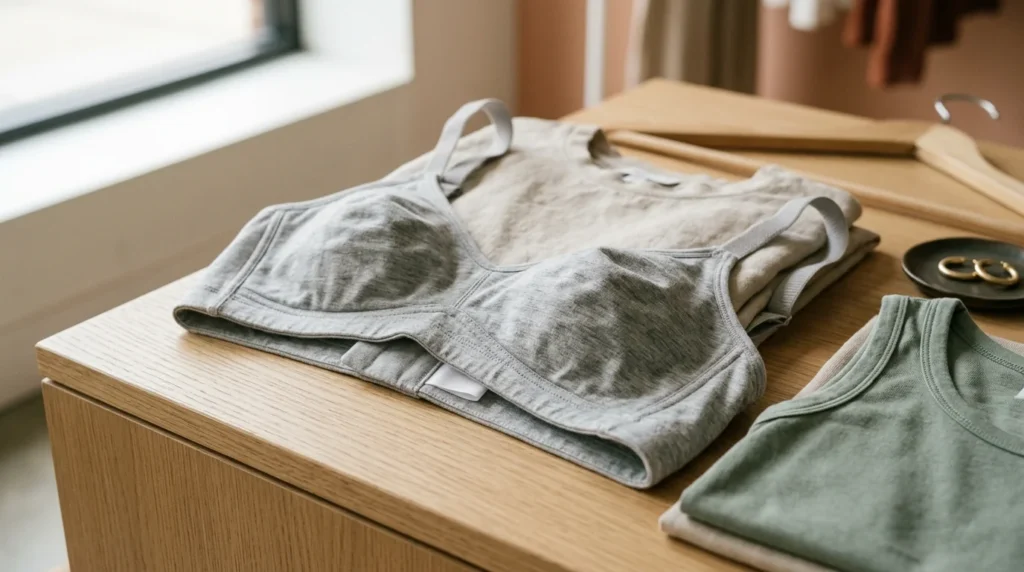
A seamless bralette removes many seams, wires, and stiff components that create pressure points. Stretch fabrics let the garment move with your torso instead of holding one rigid shape. This can make the style comfortable for relaxing, traveling, or working from home.
Support varies widely, though. People with smaller busts may find a simple bralette sufficient for most casual situations. Fuller busts usually need a wider underband, reinforced fabric, or separate cup zones for dependable support.
Pros
- Soft against the skin
- Flexible during movement
- Easy to wear under relaxed clothing
- Few hard components
Cons
- Limited lift in lightweight versions
- Pullover styles can stretch over time
- Alpha sizing can make precise fitting harder
3. Wireless T-Shirt Bra: Best Under Fitted Tops
A wireless T-shirt bra adds smooth, shaped cups without using traditional underwire. Its clean surface can disappear beneath tees, knitwear, and other close-fitting clothing. Light molding can also reduce visible nipple lines without requiring heavy padding.
This style works well when you want everyday polish without rigid construction. Check the cup edges carefully because molded cups can gap when their shape differs from your breast shape. A smooth look under clothing shouldn’t require accepting a poor fit.
For more ideas about building streamlined outfits, StyleBlor’s summer tops coverage can help you pair supportive undergarments with lightweight tops.
4. Cushioned Underwire Bra: Best for Structured Support
Underwire is not automatically uncomfortable. A properly fitted wire should follow the breast crease rather than rest on breast tissue. Softer wire channels and flexible materials can make structured bras surprisingly comfortable.
This style may suit shoppers who want clear separation, shaping, and lift. The center panel should sit comfortably against the body, while the wire should not poke beneath the arms. If the wire hurts quickly, changing the size or cup shape may work better than tolerating it.
Pros
- Strong shaping and separation
- Reliable support
- Wide range of cup shapes
- Useful beneath tailored clothing
Cons
- Incorrect fit can cause pressure
- Less forgiving than stretch bralettes
- Wires may become uncomfortable as a bra wears out
5. Full-Coverage Wireless Bra: Best for Fuller Busts
Fuller busts often need more than soft fabric. Wider bands, adjustable straps, deeper cups, and reinforced panels help distribute weight across a larger area. These features can reduce the load on the shoulder straps.
A full-coverage wireless style can provide that structure without a rigid wire. Look for cups that fully contain the breast and a band that remains level when you lift your arms. Wide straps can improve comfort, but they should not compensate for an overly loose band.
Current editor testing has found supportive wireless options for larger cup sizes, showing that underwire is not the only route to meaningful support. Construction becomes more important as the level of required support increases.
6. Cotton Bralette: Best for Softness and Breathability
Cotton feels familiar, breathable, and soft against the skin. A cotton-rich bralette can work well during relaxed days, especially when heavy padding feels unnecessary. Blended stretch fibers help the garment recover its shape after wear.
The tradeoff is structure. Thin cotton alone usually provides less lift than molded or reinforced synthetic fabrics. Choose a design with a stronger band or double-layer cups if you want more stability.
7. Longline Bra: Best for Spreading Band Pressure
Longline bras extend farther down the torso than standard bands. That additional surface area can distribute pressure instead of concentrating it along one narrow elastic edge. Some people find this especially comfortable during long periods of sitting.
The extra fabric can be a disadvantage in hot weather. A longline design can also roll if it doesn’t match your torso. Test it while seated because standing in a fitting room will not reveal every potential pressure point.
8. Wireless Plunge Bra: Best for Lower Necklines
Plunge bras lower the center front so they can sit beneath V-necks and open necklines. Wireless versions remove the rigid center wires found in many traditional plunge designs. This combination can be useful when comfort and neckline compatibility matter equally.
Less coverage can mean less support, particularly in softer styles. Check that your breast tissue remains contained when you lean forward. For tricky necklines, StyleBlor’s guide to halter tops offers additional ideas for balancing support with more open clothing.
9. Sports-Inspired Everyday Bra: Best for Busy Days
Sports-inspired everyday bras borrow wide straps, stable bands, and stretch materials from activewear. They usually provide less compression than true sports bras. That balance can work well for commuting, walking, travel, and active errands.
Avoid wearing a high-compression sports bra all day solely because it feels secure. Everyday comfort generally benefits from enough room to move and breathe naturally. Choose light or medium support unless your activity requires stronger control.
How to Find the Most Comfortable Bra for Your Body
Start with the band because it provides most of a bra’s stability. It should feel secure and remain level around your torso. A band that climbs upward can indicate that the size or style needs adjusting.
Next, inspect the cups. Your breast tissue should sit inside without obvious spillage, empty fabric, or hard edges digging into your skin. Remember, two bras labeled the same size can fit differently because cup shape and construction vary.
Finish by adjusting the straps. They should stay on your shoulders without digging in. If tightening the straps is the only way to get enough support, reconsider the band or bra construction.
Wireless vs. Underwire: Which Feels Better?
| Feature | Wireless | Underwire |
|---|---|---|
| Softness | Usually higher | Depends on construction |
| Structured lift | Moderate to high | Usually high |
| Flexibility | High | Moderate |
| Fuller-bust options | Increasingly broad | Broad |
| T-shirt compatibility | Excellent in molded styles | Excellent |
| Risk of poking | None from wire | Possible with poor fit or wear |
| Best use | Everyday comfort | Defined lift and shaping |
Neither construction wins for every body. Wireless styles remove one potential pressure point, while well-fitted underwire can provide efficient lift and separation. Your preferred support level and breast shape should guide the decision.
If you wear lightweight or transparent clothing, construction becomes especially visible. StyleBlor’s sheer dress guide recommends smooth, low-profile underlayers for reducing visible seams. That same principle makes bonded and seamless bras work well under thin fabrics.
Comfort Features Worth Paying Attention To
Fabric is only one part of the equation. Wide bands can spread pressure, while adjustable straps let you fine-tune the fit as elastic changes. Flat seams and soft closures can also reduce irritation during long wear.
Cup construction deserves equal attention. Molded cups create shape, while seamed cups can accommodate different breast shapes more naturally. Removable pads add flexibility if you want coverage on some days and less bulk on others.
For hot U.S. summers, breathable materials become more valuable. Lightweight knits and moisture-managing fabrics may feel better than thick foam during warm weather. StyleBlor’s summer dress fabric guide explains how fabric behavior changes in heat and humidity.
Signs Your Bra Is Not Fitting Comfortably
Do not assume discomfort is something you need to tolerate. Persistent slipping, digging, gaping, or riding up usually means something about the size or shape is not working. Trying another construction may solve the problem faster than repeatedly adjusting the same bra.
Watch for these common warning signs:
- The band rises noticeably at the back.
- Straps leave painful grooves or constantly fall down.
- Breast tissue spills over the cup edge.
- Cups wrinkle or gap significantly.
- Underwire sits on breast tissue.
- The center front feels painful or floats far away.
- You repeatedly reposition the bra during the day.
A Practical Comfort Test Before You Keep a Bra
Wear a new bra at home while the return window remains open. Sit for several minutes, raise both arms, bend forward, and walk around. Check whether the band moves or the straps change position.
Then put on a fitted T-shirt. This reveals cup gaping, seams, edge lines, and other fit problems that fitting-room mirrors can hide. Ten minutes of deliberate movement can tell you more than simply standing still.
The Bottom Line
The most comfortable bra matches your body, support needs, and normal day. A structured wireless bra is a practical starting point because it combines flexibility with more support than a simple bralette. Fuller busts should prioritize strong bands and cup structure, while lighter bralettes work well when you need less support.
Do not shop by softness alone. Check the band first, then the cups, straps, and movement. A bra that stays comfortable while you sit, walk, reach, and bend is more useful than one that only feels good for five minutes.
Most Comfortable Bra FAQ
What is the most comfortable bra for everyday wear?
For many people, a structured wireless bra offers a useful balance between support and softness. Look for a stable band, adjustable straps, and cups that suit your breast shape. Getting the correct fit matters more than whether a particular design uses underwire.
Are wireless bras more comfortable than underwire bras?
Wireless bras remove the possibility of a wire pressing or poking the body. They are not automatically more comfortable because weak bands and poorly fitting cups can still cause problems. A properly fitted underwire bra can also remain comfortable throughout the day.
What bra is comfortable for a large bust?
Look for a wide, stable band, deeper cups, adjustable straps, and reinforced cup construction. Full-coverage wireless designs can provide substantial support without underwire. A design sold in band-and-cup sizes may also fit more precisely than broad small-to-extra-large sizing.
Why does my bra hurt after a few hours?
The band may be too tight or loose, the cups may not match your shape, or the straps may be carrying excessive tension. Movement can reveal fit problems that aren’t obvious when you first put the bra on. Try another size or construction instead of assuming discomfort is normal.
How should a comfortable bra band fit?
The band should feel secure and remain approximately level around your torso. It should not repeatedly ride upward as you move. A stable band also reduces the need to overtighten the shoulder straps.
How often should I check my bra size?
Recheck the fit whenever your current bras begin riding up, gaping, spilling, or feeling noticeably different. Body measurements and brand sizing can change, so treat the label as a starting point. The way the bra fits your body matters more than staying loyal to one size.