
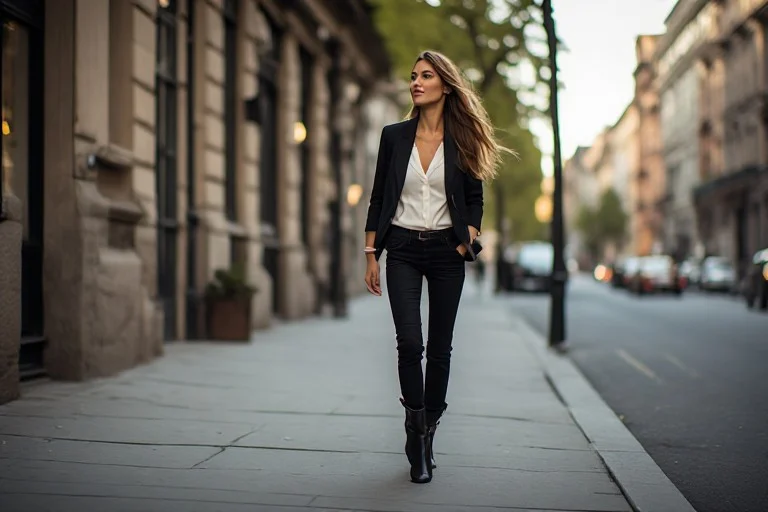
Bootcut jeans are fitted through the upper leg, then open slightly below the knee. That modest shape makes room for shoes while keeping the outfit cleaner and less dramatic than a full flare.
The trick is proportion. Choose a hem that works with your shoes, then keep the top half defined enough to balance the gentle width below.
Quick answer: A well-fitting pair sits securely at the waist, skims the thigh without pulling, and falls near the top of your shoe. Style it with a fitted knit, simple tee, or structured layer, then choose shoes that keep the hem from dragging.
TL;DR
- Bootcut is a small opening below the knee, while a flare is more dramatic.
- Check the inseam with the shoes you expect to wear most often.
- Choose tops that provide some shape near the waist or shoulders.
- Boots, loafers, low heels, and sleek sneakers can all work.
What makes bootcut jeans different?
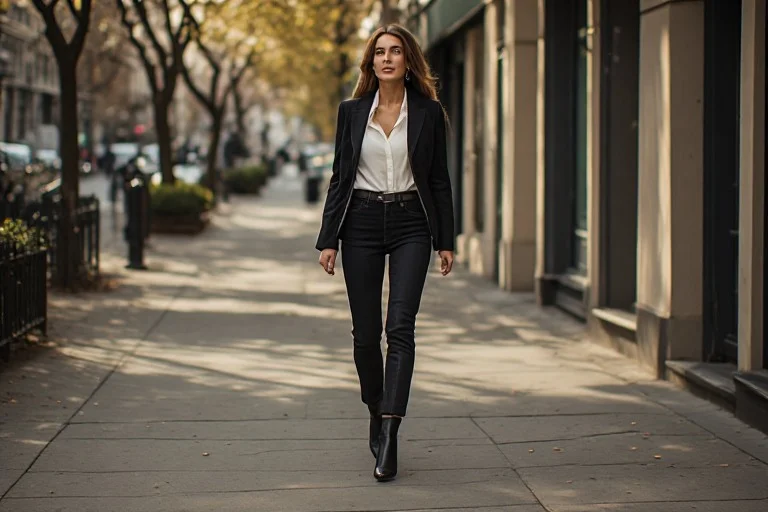
The silhouette stays close through the waist, hip, and thigh. It opens gradually from the knee toward the hem. The result is a long line that feels calmer than a bell shape.
Flare denim widens more visibly and often begins to open earlier on the leg. If you want a clearer comparison, browse this guide to modern flare jean outfits. That bootcut choice is quieter when you want a little movement at the hem.
Wide leg cuts create volume from much higher on the leg. This edit of wide leg jean looks is useful when you are deciding how much total volume you want.
Small differences matter.
| Denim shape | Where the leg opens | Resulting line |
|---|---|---|
| Bootcut | Below the knee | Subtle width with a long line |
| Flare | At or above the knee | More dramatic movement |
| Wide leg | From the hip or thigh | Relaxed volume through the whole leg |
| Straight leg | Very little opening | Even width from knee to hem |
Start with a fit that feels easy
Begin at the waist. Your waistband should stay put when you sit, walk, and bend. If it shifts, gaps at the back, or presses uncomfortably, adjust the size or try another rise.
Next, check the upper leg. Fabric should skim instead of gripping. You need enough ease to take a full stride and sit without pulling across the hip.
The opening should begin below the knee, not at mid thigh. This is the detail that keeps the cut distinct from a flare. Subtle opening also makes the pair easier to style with everyday pieces.
Comfort shows.
Get the inseam and hem right
Bring the shoes you plan to wear most often when you try on a longer pair. The hem should hover near the top of the shoe or skim it lightly. It should not bunch heavily or sweep the ground.
Platform shoes and taller boots lift the hem more than flat shoes. If you change footwear often, pick a length that works with your most common option. Even a slight break is fine, but deep folds can make the line look untidy. There is more on this in Jorts.
Try the seated test too. Sit in a chair, stand up, and look at where the hem settles. Good inseam length creates a smooth line without a pile of fabric at the ankle.
Hem length changes everything.
Choose shoes that support the line

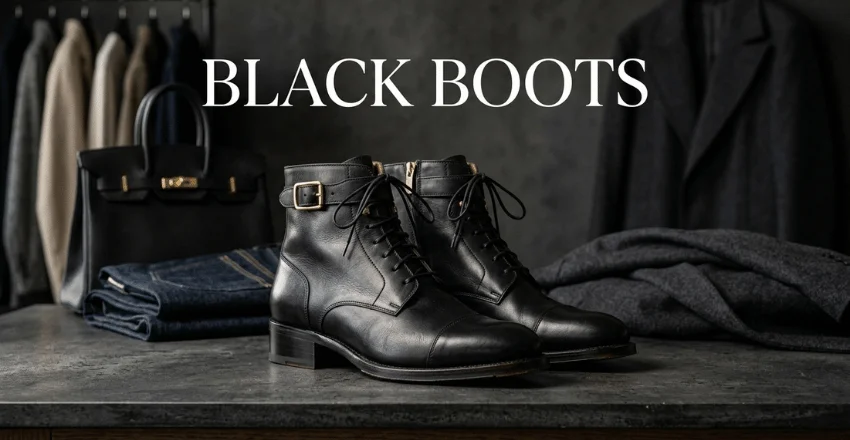
Boots are an obvious choice because the opening can cover the shaft. An ankle boot with a pointed or almond toe creates a neat finish. Taller shafts can also disappear under a full length hem.
Low heels and kitten heels add lift without making the outfit feel formal. These black kitten heel ideas can help when you want a polished shoe under a dark wash.
Loafers work well with a cropped or carefully hemmed pair. Sleek sneakers can work too, especially when the denim rests above the sole instead of folding over it. Keep the shoe shape clean so it does not compete with the hem.
Let the hem lead.
Balance the top half of the outfit
A shorter knit, close fitting tee, tucked shirt, or bodysuit provides a clear counterpoint to the opening below the knee. You do not need a tiny top. You only need enough waist definition to keep the outfit from feeling shapeless.
For a relaxed version, add a tee with a cardigan that ends near the high hip. For a sharper look, tuck in a crisp shirt and add a fitted blazer. Belts can offer a small point of focus when the top is simple.
Proportion matters more than a strict rule. Try on your usual tops before deciding that a cut is not for you. The pieces already in your closet often reveal the easiest formula.
Use what you own.
Build outfits for different plans

For a casual weekday, pair dark wash denim with a fitted tee, light jacket, and clean sneakers. This formula keeps the shape simple and lets the hem add interest without asking for much else.
For a polished lunch or an evening plan, choose a soft blouse or fine knit with a tucked front. Add a low heel or pointed boot. Structured bags give the look a finished feel.
For cooler weather, wear a slim sweater under a blazer or a longer coat. Keep bulky layers from ending at the widest point of the hip. Shorter jackets or longer coats usually create a calmer vertical line.
One pair can travel.
How to choose a wash and rise
Dark wash denim feels polished and works easily for plans that call for a sharper look. Medium blue feels casual and familiar. Black can read sleek, especially with a monochrome top and shoe.
High rise styles can give you a defined waistband for tucked tops. Mid rise options can feel relaxed and work well with shorter layers. Low rise cuts create a different mood and need a length that does not slide when you move.
Start with the rise you already enjoy in other denim. This leg shape is new enough. You do not need to change every part of the fit at once.
Familiarity helps.
A simple try on plan

Wear the undergarments you use most often. Bring one flat shoe and one shoe with height. Test the pair in a mirror from the front, side, and back, then walk around for a few minutes.
Take a photo from several angles. Look for a smooth waist, an easy upper leg, and a hem that falls cleanly. Aim for ease, not perfection. Aim for a pair that feels natural when you move.
Try three top options with the same pair before making a final choice. Try a fitted tee, a tucked button front shirt, or a knit to see whether the cut works across your real wardrobe.
Give it time.
Bottom line
Bootcut jeans work because the shape is subtle and adaptable. Get the waist, upper leg, and hem right, then use shoes and a defined top to create an outfit that feels current without feeling complicated.
FAQs
No. A bootcut opens only a little below the knee. A flare opens more widely and creates a stronger bell shape. Both can work, but they create different proportions.
Boots, loafers, low heels, and sleek sneakers are all good options. Focus on the hem first. Your shoe should give the fabric a clean place to land.
No. It can skim the top of your shoe, but it should not sweep the floor. Fabric that drags wears faster and can make a careful outfit look unplanned.
Yes. Give the outfit one point of definition, such as a tuck, a cropped layer, or a belt. That small choice keeps the opening below the knee in balance.
No. High rise, mid rise, and low rise options can all work. Your preferred rise stays comfortable through a full day of sitting and walking.