
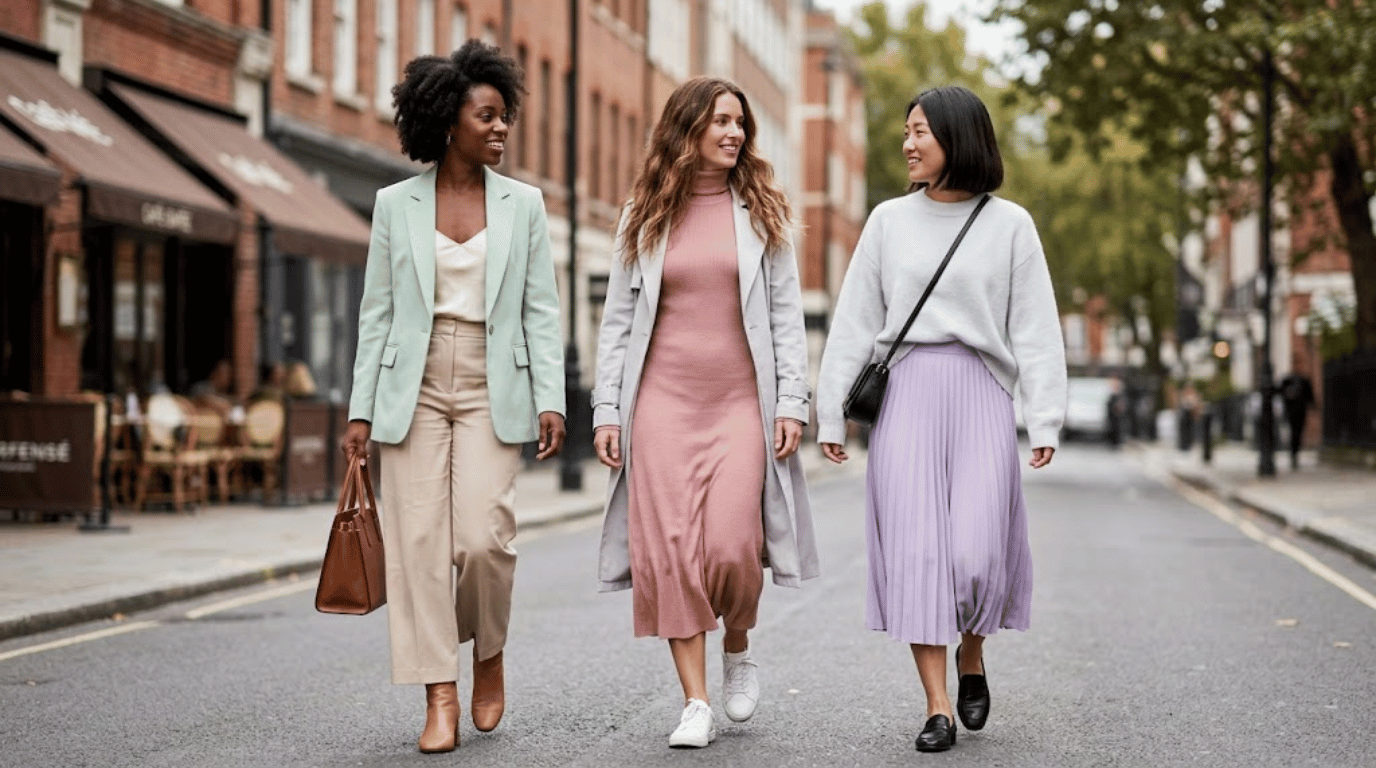
Pastel outfits can look polished, modern, and surprisingly easy to repeat. The key is balancing soft color with familiar shapes, useful neutrals, and intentional contrast. You do not need an entire closet of baby pink or lavender to make the idea work.
Soft shades also have more range than their springtime reputation suggests. Current fashion coverage highlights butter yellow, pale blue, soft pink, and muted green as some of the most wearable recent choices. These colors appear in everything from relaxed basics to tailoring and warm-weather dresses.
| Styling question | Easy answer |
|---|---|
| Easiest pastel to start with | Powder blue, soft pink, sage, or butter yellow |
| Safest neutral pairings | White, cream, denim, gray, tan, chocolate, or navy |
| Best casual formula | Pastel top + straight jeans + simple sneakers |
| Best office formula | Soft-colored blouse or blazer + neutral trousers |
| Best dressy formula | Tonal dress or skirt + restrained accessories |
| Best cold-weather approach | Pastel knit + dark trousers + structured outerwear |
| Easiest way to avoid a childish look | Choose clean shapes and limit decorative details |
| Best color strategy | One pastel plus one or two grounded neutrals |
Quick answer: Start with one soft-colored piece and pair it with clothes you already trust. Denim, cream, chocolate, gray, navy, and white keep lighter shades grounded. Start with simple silhouettes, then add another soft tone once the outfit feels balanced. Texture and proportion usually matter more than matching every color perfectly.
Why Soft Colors Look Better With a Little Contrast
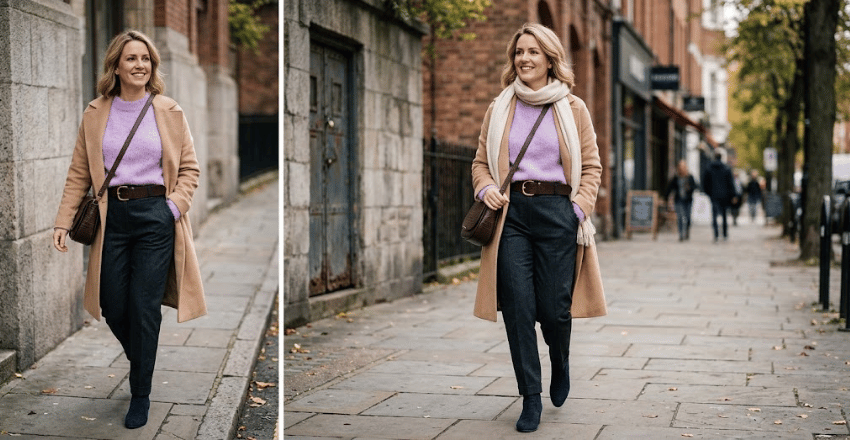
A head-to-toe pale look can work, but contrast makes styling easier. Dark denim, chocolate leather, charcoal trousers, or navy shoes anchor light colors. The stronger element keeps the outfit from feeling washed out.
Texture creates another useful form of contrast. Pair a fuzzy lilac knit with crisp denim or a silky skirt with structured leather. Those differences make similar colors feel intentional, not flat.
Current styling coverage also shows that soft shades work beyond spring. Fashion editors have paired them with tailoring, heavier jackets, knitwear, and other seasonal staples. That means your color palette can stay consistent while your fabrics change.
12 Pastel Outfits You Can Build From Everyday Clothes
1. Powder Blue Shirt With Straight-Leg Jeans
Start with a pale blue button-down and medium-wash straight-leg jeans. Add a brown belt and simple loafers or white sneakers. The denim gives the soft shirt enough contrast for everyday wear.
Keep accessories quiet so the color remains the focus. A tan shoulder bag works without introducing another competing shade. Silver jewelry can make cooler blues feel especially clean.
2. Butter Yellow Top With White Trousers
Butter yellow feels warmer and softer than bright lemon. Pair a simple knit, blouse, or tee with white or cream trousers. Tan sandals or brown loafers keep the look from feeling too pale.
Shade selection matters because yellow undertones vary considerably. Styleblor’s butter yellow dress guide explains how butter, lemon, cream, and chalkier yellow differ. That distinction helps when a yellow looks flattering online but reads differently in person.
3. Blush Pink Blazer With a White Tee
A tailored blazer makes pink feel sharper immediately. Wear it over a plain white tee with straight jeans or charcoal trousers. Clean tailoring offsets the sweetness associated with pale pink.
Choose simple footwear, such as loafers, low-profile sneakers, or pointed flats. Skip bows, pearls, and floral accessories for a cleaner mood. One romantic detail is usually enough.
4. Sage Green Knit With Cream Denim
Sage has enough gray to work almost like a neutral. Try a sage cardigan or lightweight sweater with cream jeans and brown accessories. The result feels softer than olive without looking overly delicate.
This combination also transitions easily between seasons. Wear sandals during warmer months, then switch to suede loafers or ankle boots. A camel coat can carry the same palette into colder weather.
5. Lavender Sweater With Charcoal Trousers
Lavender pairs more easily with a deeper neutral. Charcoal trousers add structure while staying softer than black. Add silver jewelry and gray, burgundy, or black shoes.
Keep the sweater shape relaxed but controlled. A slightly cropped knit suits high-rise trousers, while a longer style looks best with a partial tuck. Clear proportions keep the outfit from appearing shapeless.
6. Pale Pink Shirt With Chocolate Brown
Chocolate brown is one of the easiest ways to mature pale pink. Pair a pink shirt with brown trousers, a midi skirt, or a leather jacket. The darker color creates warmth without the sharpness of black.
Gold jewelry works naturally with this combination. Cream shoes or a cream handbag can lighten the finished look. Keep prints minimal so the color pairing remains clear.
7. Mint Top With Dark Denim
Mint can be difficult next to several other light colors. Dark denim solves that problem with strong but familiar contrast. Choose a mint tee, cardigan, or blouse and keep the bottom half simple.
A black or brown belt can sharpen the outfit further. Sneakers keep it casual, while loafers make it appropriate for lunch or a relaxed workplace. Both options need little extra styling.
8. Tonal Blue From Top to Bottom
Tonal dressing uses related shades instead of exact matches. Try an icy blue shirt with slightly deeper blue trousers or faded blue denim. This approach adds depth without introducing a new color family.
Mix fabrics between pieces for more separation. Cotton, denim, knitwear, and satin reflect light differently even when the colors match. That shift in texture keeps a monochrome outfit interesting.
9. Soft Tailoring for the Office
A muted blazer is an easy way to add color to office wear. Pair pale blue, sage, or restrained pink with navy, charcoal, beige, or cream trousers. Keep the blouse and footwear simple.
Hot weather changes which fabrics feel practical at work. Styleblor’s summer office outfit guide favors breathable pieces balanced by workplace structure. Apply the same principle when choosing lighter-colored tailoring.
10. A Soft Dress With Grounded Accessories
A single-color dress cuts down on matching decisions. Choose a clean midi shape in powder blue, soft yellow, lavender, or muted pink. Then add leather accessories in brown, navy, metallic, or black.
Fabric determines how formal the dress feels. Cotton and linen lean casual, while satin and smoother woven fabrics suit dressier plans. Keep wedding guest etiquette in mind before choosing ivory-adjacent shades.
11. Pastel Knitwear for Fall
Light colors do not need to disappear after August. Combine a pale sweater with dark jeans, brown boots, and a deeper coat. The heavier materials provide enough seasonal weight.
Temperature matters more than an arbitrary color calendar. Styleblor’s fall outfit layering guide organizes clothing around changing temperatures instead of fixed seasonal rules. You can use its layering logic while keeping a softer palette.
12. Romantic Details Without Looking Costumed
Soft colors naturally suit romantic styling, but restraint keeps the result wearable. Try one lace-trim camisole, Mary Jane, ribbon, or delicate cardigan with simple separates. Avoid stacking every decorative detail into one look.
This principle also works with the coquette aesthetic. Styleblor’s coquette style guide recommends grounding romantic elements with denim, knitwear, or tailoring. That balance makes softer clothing useful beyond themed outfits.
How to Choose Soft Shades for Your Coloring
Hold the color near your face in daylight. A flattering shade usually lets your complexion remain the focus instead of turning gray or overly red. Whenever possible, compare two versions of the same color.
Cooler coloring often works comfortably with icy blue, lavender, blue-based pink, and cooler mint. Warmer coloring may suit peach, butter yellow, sage, or softer coral better. These are useful starting points, not strict rules.
You can also move a difficult color away from your face. Wear it as trousers, a skirt, shoes, or a handbag instead. A neutral neckline then separates the shade from your skin.
Easy Color Pairings That Rarely Fail
You do not need complicated color theory for a useful wardrobe. Build combinations around one soft shade and a dependable neutral. Add a second color only after the first pairing feels balanced.
| Soft color | Easy neutral | Stronger accent |
|---|---|---|
| Powder blue | White or navy | Burgundy |
| Blush pink | Chocolate or cream | Deep red |
| Lavender | Charcoal or gray | Navy |
| Sage | Cream or tan | Chocolate |
| Butter yellow | White or denim | Brown |
| Peach | Beige or ivory | Rust |
| Mint | Dark denim or gray | Black |
These formulas also make shopping more disciplined. Before buying something, identify three pieces already in your closet that match it. If you cannot find three, the new item may have limited repeat value.
How to Wear Pastel Outfits Without Looking Too Sweet
Choose shape before decoration for a modern result. Straight trousers, boxy shirts, simple tanks, structured blazers, and clean dresses provide useful foundations. Then let a softer color add visual interest.
Footwear can change the mood quickly. Loafers, minimal sneakers, boots, and slim sandals can ground lighter shades. Highly decorative shoes can work, but they push the outfit toward a more romantic direction.
Also watch the number of delicate details. Lace, bows, ruffles, pearls, and pale colors each add softness. Use one or two together unless that decorative effect is your goal.
Can You Wear Soft Colors All Year?
Yes, because seasonality depends heavily on fabric and layering. Cotton and linen work in heat, while wool and brushed knits make the same colors work in cold weather. Current fashion coverage still shows pale shades outside traditional spring dressing.
Winter styling benefits from deeper anchors. Try lavender with charcoal, pale blue with navy, or pink with chocolate. Those pairings keep the color while adding enough visual weight for colder months.
For summer, focus on airflow and practical fabric choices. Styleblor’s summer tops guide covers breathable shapes that pair easily with shorts, skirts, or trousers. Color works best when the clothing stays comfortable.
Frequently Asked Questions
What colors go best with pastels?
White, cream, gray, denim, navy, tan, chocolate, and black are dependable partners. Choose a neutral that matches the mood you want. Darker neutrals create stronger contrast, while cream keeps the result soft.
How do I make pastel outfits look more grown-up?
Use clean silhouettes, structured pieces, and restrained accessories. Mix a light shade with denim, tailoring, leather, or a darker neutral. These elements add visual weight without hiding the color.
Can I mix two pastel colors together?
Yes, but keep one color slightly quieter than the other. Powder blue with pale pink and lavender with soft yellow can work well. Repeating one neutral in shoes or accessories helps tie the combination together.
Which shoes work with light-colored clothing?
White sneakers, loafers, brown leather shoes, slim sandals, and simple flats cover most casual needs. Black shoes create stronger contrast and suit sharper outfits. Metallic footwear works well for dressier occasions.
Are pastels only for spring and summer?
No, because fabric weight can change while the color stays similar. A pale cotton shirt suits summer, while a lavender wool sweater works during fall. Darker shoes and outerwear make lighter shades easier to carry into winter.
Build the Look From What You Already Own
You do not need a separate wardrobe for soft color. Begin with one piece, then surround it with denim or neutral basics you already wear. This approach costs less and makes it easier to repeat each purchase.
Pay attention to proportion, fabric, and contrast before chasing another trend shade. A well-shaped pale shirt can earn more wear than five difficult statement pieces. Once one combination works, repeat its formula with another color.