
Most people arrive at light brown hair from one of two directions. Some are coming down from bleach. Others are climbing up out of near black. Same end shade, wildly different work, cost, and risk.
Light brown covers levels 5 through 7, the band between dark brunette and dark blonde. Reaching it from black means lifting pigment with bleach or a high-volume developer, which exposes warmth. Reaching it from blonde means putting pigment back, usually with a filler first. One route damages the hair shaft. The other mostly does not.
Key Takeaways
- Going darker to light brown is cheaper, faster, and far gentler than lifting to it.
- Lifting is where brass, breakage, and color correction bills come from.
- Orange is not a mistake. It is the pigment sitting underneath your natural level.
- Ash, neutral, golden, caramel, mushroom, and bronde are all the same family with different tones.
- Grow-out is soft so that root touch-ups can stretch to 10 or 12 weeks.
The Two Journeys To Light Brown Hair
Stylists price these as separate services because they are separate services. Lifting removes melanin, then a toner corrects what the removal exposed. Darkening deposits new pigment onto hair that is already porous. Only one of those involves a chemical that can burn a scalp.
| Factor | Going lighter (from dark brown or black) | Going darker (from blonde) |
| Chair time | 3 to 5 hours, sometimes two visits | 60 to 90 minutes |
| Typical 2026 salon cost | $150 to $450 | $75 to $200 |
| Main chemical | Bleach powder plus peroxide developer | Demi-permanent or permanent deposit |
| Biggest complaint | Brassy orange, dryness, snapping ends | Muddy, flat, or a green cast |
| Damage risk | High, cumulative with every session | Low |
| Fix if it goes wrong. | Toner, sometimes a full correction | Clarify and re-glaze |
| Realistic first attempt | Salon | Home is workable with care |
The Shade Family, From Cool To Warm
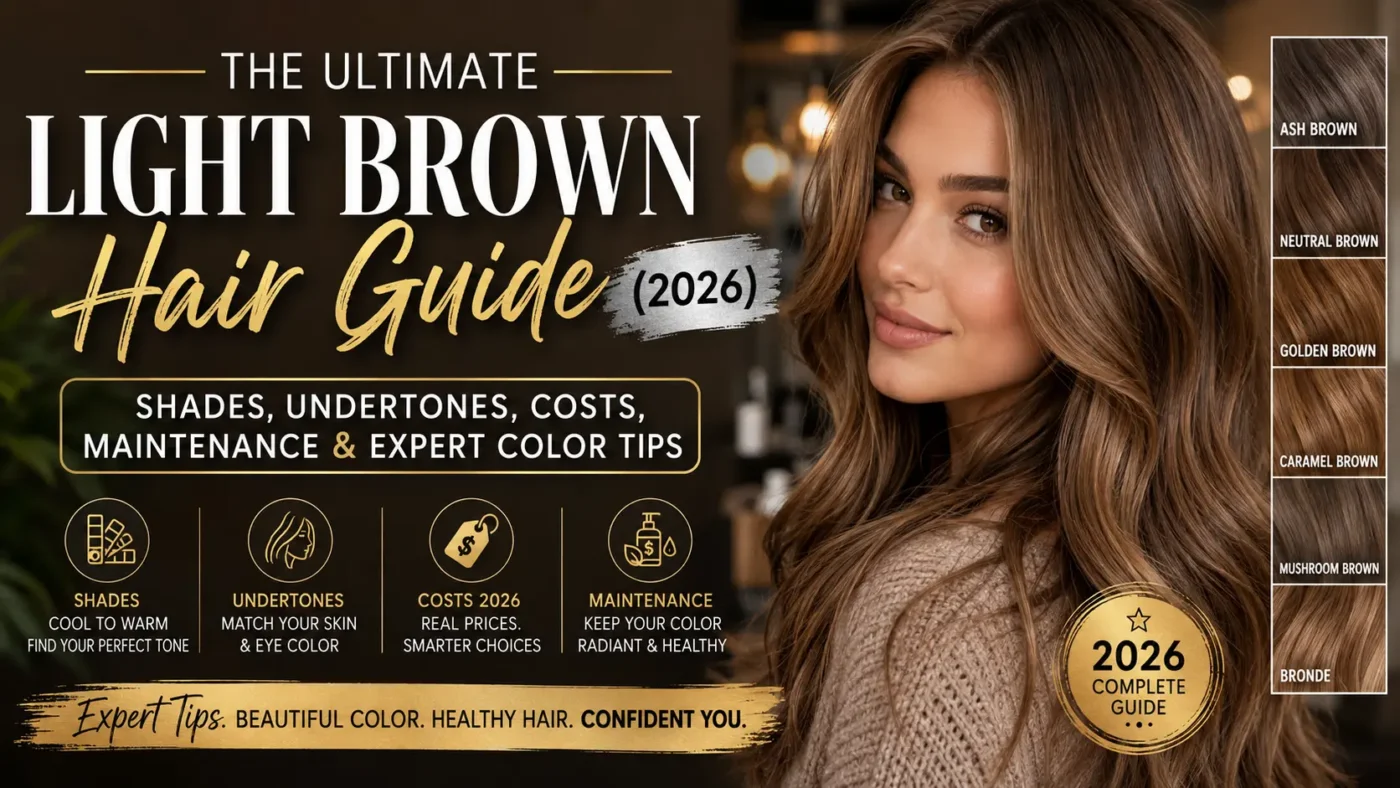
These names get thrown around loosely. Here is what colorists actually mean.
- Ash brown. Cool, smoky, blue-violet-based. It reads expensive and fades fastest.
- Neutral brown. No obvious warmth or coolness. The safest pick and the hardest to get wrong.
- Golden brown. Sunny and yellow-leaning. Reads soft on olive skin.
- Caramel. Warm amber, usually painted through in ribbons rather than applied all over.
- Mushroom brown. Taupe, slightly gray, the most 2026 of the group. Refinery29 stylists have been calling variations of it ecru and khaki bronde.
- Bronde. The border shade. Light brown base with fine blonde wisps woven through the mid lengths.
Picking By Undertone And Eye Color
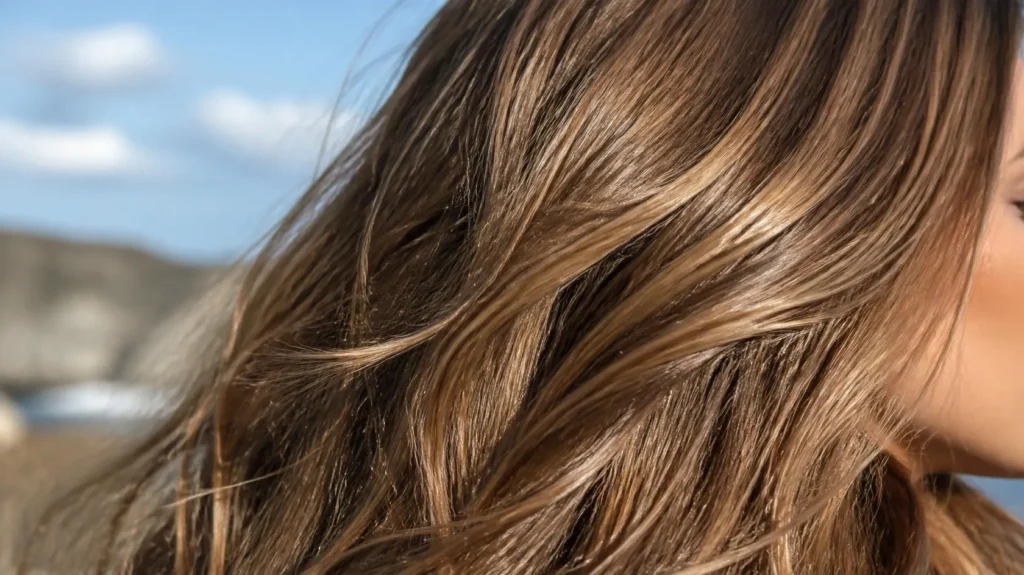
Look at the veins on your inner wrist in daylight before choosing a light brown hair shade. Blue or purple veins usually indicate cool undertones, making ash or mushroom tones especially flattering. Green veins suggest warm undertones, so caramel and golden shades help keep your complexion from looking washed out. Hazel and amber eyes pair beautifully with warm browns, while gray and cool blue eyes stand out against ash tones. If your veins appear to be a mix of both, you likely have neutral undertones, meaning almost any shade in the family will suit you well. For the full picture, read Copper Hair.
Pull it together with the rest of what you wear. Warm shades sit beautifully against gold jewelry and layered chains, while ash tones look cleaner with silver.
Going Lighter: Where The Damage And The Brass Live
Bleach does not add color. It opens the cuticle and dissolves melanin, and the cuticle does not fully close again afterward. That is why lifted hair feels rougher, drinks conditioner, and tangles at the ends.
The evidence is not subtle. A 2016 scanning electron microscopy study in the International Journal of Trichology examined hair from 19 people who had bleached, dyed,d or straightened it. Of those, 42.1% showed Grade 2 damage, meaning severe cuticle lifting with visible cracks and holes. In the untreated control group, nobody scored that badly.
Two practical rules follow. Never lift more than two levels in one sitting if your hair is already fine or previously colored. And patch test 48 hours ahead of any permanent dye, because allergic contact dermatitis from dye ingredients shows up on the scalp and hairline, not on the strand.
Why Does It Turn Orange?
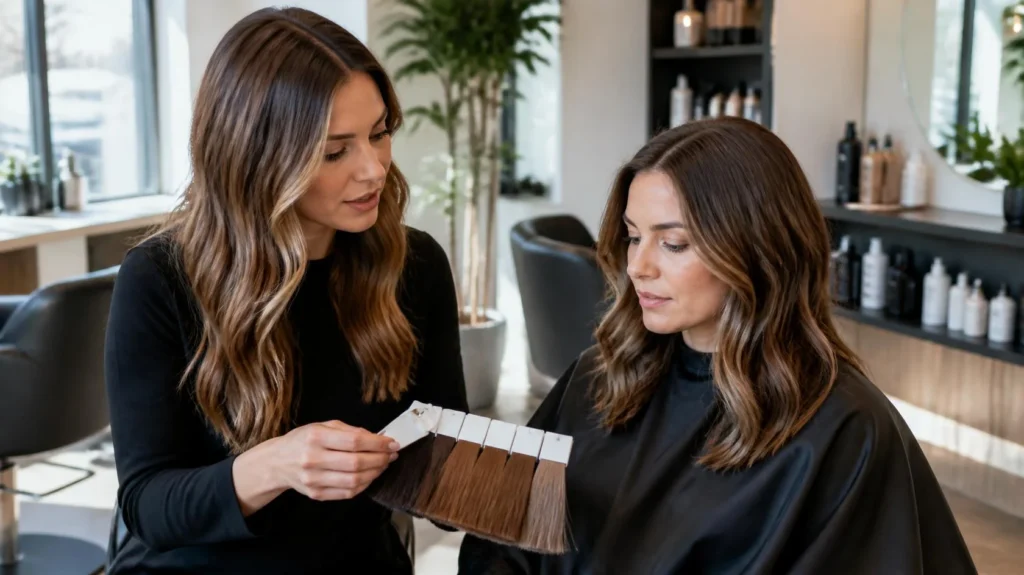
Because the orange was always there, dark hair holds warm red and orange pigment underneath the brown, and bleach removes the cool tones first. Lift a level 3, and you pass through red. Keep going, and you hit orange at level 5, then yellow orange at 6, then yellow at 7.
Light brown lands right in that orange-to-gold window, which is exactly why so many people end up brassy instead of beige. The lift was not the problem. Nobody neutralized what the lift uncovered.
Blue cancels orange. Purple cancels yellow. A blue-based toner or a blue shampoo is what a brunette needs, not the purple bottle everyone buys by default.
Going Darker: The Cheap, Forgiving
Blonde to light brown fails for one reason. Bleached hair has no warm pigment left in it, so a cool brown applied straight over the top grabs unevenly and turns muddy, ashy, or faintly green.
The fix is a filler, sometimes called pre-pigmentation. Your colorist puts a warm red, copper, or gold shade back into the hair first, roughly two levels lighter than the target, then applies the brown on top of it. Porous hair also drinks color darker than the box suggests, so pick a shade a level lighter than the one you want.
Finish with a gloss. It seals tone, adds shine,e and buys you a few extra weeks before the first fade.
What It Costs In 2026?
Prices vary hugely by market. These are national averages, and coastal cities run well above them.
| Service | 2026 US range | Which journey | How often |
| Single process color | $75 to $200 | Going darker | Every 8 to 12 weeks |
| Root touch-up | $65 to $165 | Both | Every 6 to 10 weeks |
| Partial highlights | $95 to $250 | Going lighter | Every 10 to 14 weeks |
| Full highlights | $130 to $350 | Going lighter | Every 12 to 16 weeks |
| Balayage | $150 to $450 | Going lighter | Every 3 to 5 months |
| Gloss or toner refresh | $40 to $90 | Both | Every 6 to 8 weeks |
A drugstore box sits under $20, which is tempting. It is also the single most common cause of the correction bills at the top of that table.
Roots, Regrowth And Why This Shade Forgives You
Here is the quiet advantage nobody advertises about light brown hair. Most natural hair in the United States sits somewhere between level 3 and level 6, which puts this shade within touching distance of many people’s natural roots. A soft two-level gap between the root and mid-lengths reads as dimension rather than a harsh line. Compare that with platinum on dark hair, where a quarter inch of regrowth creates a visible stripe. Balayage and babylights push the contrast even farther down the strand, so even when you stretch appointments, the color still looks intentional.
Ten to twelve weeks between salon visits is normal on this shade. That is the real reason it keeps trending. For more shade breakdowns and grow-out strategy, browse our hair color and styling guides.
Keeping The Tone: An Honest Maintenance Plan
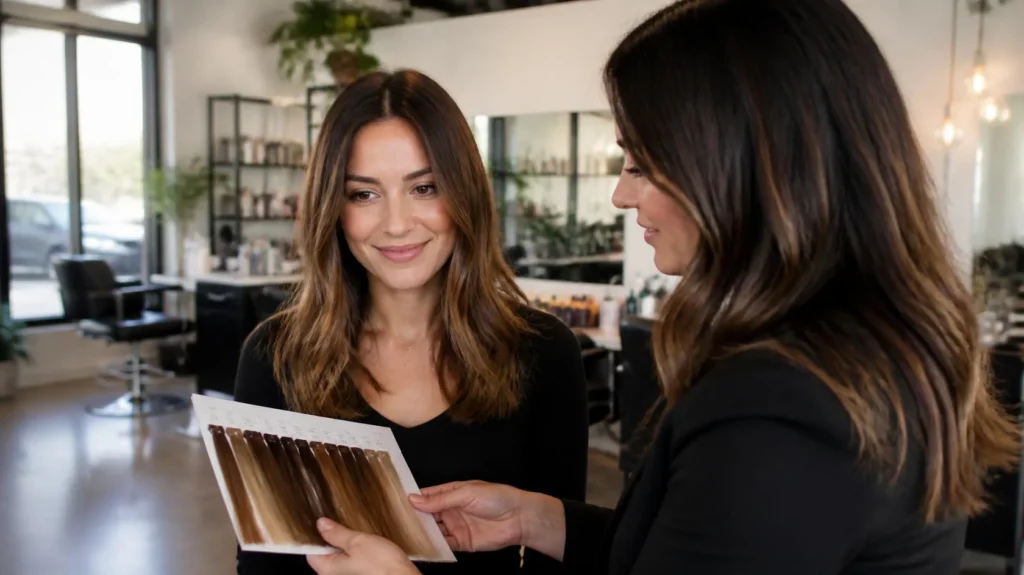
Color fades from the outside in, and tone goes before depth does. Ash goes first, usually within four to six washes.
- Wash two or three times a week, not daily, with a sulfate-free shampoo.
- Use a blue toning shampoo once a week if you lifted. Skip it if you went darker.
- Book a gloss every 6 to 8 weeks. It costs a fraction of a correction.
- Rinse cool. Hot water swells the cuticle and pushes pigment out.
- Use heat protectant above 300°F, and a bond repair treatment weekly on lifted ends.
- Chlorine and hard water both drag brown toward brass. Rinse after swimming.
Sun does the same thing over a summer. A hat helps more than any bottle.
Your Next Step
Decide which direction you are traveling before you book anything. If you are going darker from light brown hair, buy a filler or ask for one by name, and budget one afternoon. If you are lifting to a lighter shade, book a consultation first, ask how many levels you can realistically achieve, how many sessions it will take, and get the plan in writing.
Then plan the rest of the look around it. Our fashion edit is a good place to see how warm and cool browns behave against different palettes.
FAQ
Not in one step, and rarely at all. Box dye labeled light brown deposits color; it does not remove it, so on black hair the result is invisible. You need a lightener or high-lift color, and from level 1 or 2, that is a two-session job.
It fades toward orange rather than washing out to it. Ash pigment is the smallest molecule in the formula, and it leaves first, so the underlying warmth resurfaces. A blue-based gloss every six weeks holds it.
Expect rougher texture, more tangling, and some loss of elasticity. Fine hair feels it most. Ask for a bond builder in the bleach and cut half an inch off afterward.
For the hair shaft, yes, because no melanin is being removed. Permanent dye still carries a scalp sensitization risk, so patch test either way.
Very well. Light brown reads close enough to salt and pepper that grays blur into it instead of glinting, especially in a neutral or mushroom tone.