

Summer office outfits work best when they solve two problems at once. You need breathable clothing for hot sidewalks, parking lots, and train platforms. You also need enough polish and layering for cold conference rooms and client meetings.
The easiest approach is building outfits around lightweight fabric, simple tailoring, and one removable layer. Linen, cotton, and light blends can reduce bulk while keeping a structured shape. Shoes and accessories then determine whether the outfit feels casual, creative, or corporate.
Summer Workwear at a Glance
| Office situation | Easy outfit formula | Best fabric choice | Shoes | Desk layer |
|---|---|---|---|---|
| Business casual | Sleeveless shell + wide-leg trousers | Cotton or linen blend | Loafers | Light blazer |
| Corporate office | Short-sleeve blouse + tailored pants | Cotton poplin or lightweight crepe | Slingbacks | Blazer |
| Creative workplace | Knit tank + midi skirt | Fine cotton knit | Flats | Cardigan |
| Casual Friday | Polo + straight trousers | Cotton piqué | Clean sneakers | Overshirt |
| Client meeting | Matching vest + trousers | Linen blend | Low heels | Coordinating blazer |
| Hot commute | Shirtdress | Cotton poplin | Loafers or flats | Cardigan |
Quick answer: Build warm-weather work outfits around breathable fabrics, relaxed tailoring, and a removable third piece. Start with linen trousers, cotton shirts, midi skirts, or simple dresses. Add loafers, slingbacks, or polished flats. Keep a lightweight blazer or cardigan at your desk for cold air-conditioning.
Key Takeaways
- Choose breathable fabric before chasing a seasonal trend.
- Use one tailored piece to make lighter clothing look work-ready.
- Keep a blazer, cardigan, or overshirt available for strong air-conditioning.
- Match skin exposure to your workplace rather than outdoor temperatures.
- Repeat reliable outfit formulas with different colors and accessories.
- Let footwear move an outfit from casual toward professional.
What Makes a Summer Office Outfit Work?
Heat changes which clothes feel practical, but it does not erase workplace expectations. A good outfit gives your body room without looking unfinished. The most dependable combinations pair one relaxed item with one structured item.
Fabric matters as much as silhouette during a U.S. summer. StyleBlor’s guide to summer tops favors breathable shapes that allow airflow without excessive fabric. That principle works equally well for shirts, trousers, dresses, and skirts.
Your office dress code still sets the boundary. A sleeveless shell may work in a business-casual company but feel underdressed in a traditional firm. Keep the base outfit simple when you are uncertain, then add structure through shoes and tailoring.
11 Summer Office Outfits You Can Repeat
1. Linen Trousers With a Sleeveless Shell
Start with softly tailored linen trousers and a high-neck sleeveless shell. Choose navy, olive, camel, charcoal, or cream for an easy office palette. Add leather loafers and a narrow belt for a cleaner finish.
Linen looks more professional when the cut has definition around the waist. StyleBlor’s guide to linen pants for women explains how structure pulls the fabric away from beachwear. Keep a lightweight blazer nearby if your office runs cold.
2. A Cotton Shirtdress With Polished Flats
A cotton shirtdress removes most morning decision-making. Look for a defined collar, useful waist shaping, and enough length for comfortable sitting. Poplin works especially well because it can hold a crisp shape.
Finish the dress with ballet flats, loafers, or a low slingback. Add a slim belt if the original shape feels too loose. A small cardigan handles air-conditioning without changing the clean silhouette.
3. Wide-Leg Trousers With a Short-Sleeve Button-Down
Wide-leg trousers create airflow without exposing more skin. Pair them with a short-sleeve cotton shirt or lightweight knit polo. Tuck the top fully or partially to keep the waist visible.
This formula suits business-casual offices because both pieces have familiar workwear shapes. Choose trousers that skim rather than drag across the floor. Simple loafers keep the look practical for commuting.
4. A Midi Skirt With a Fine-Knit Top
A straight or gently flowing midi skirt works across several office dress codes. Pair it with a fitted cotton knit or smooth sleeveless top. The contrast between movement and definition keeps the proportions balanced.
Avoid overly thin skirts that cling after sitting. StyleBlor’s maxi skirt guide also explains how fabric weight affects drape and movement. Similar rules apply when selecting a work-friendly midi.
5. A Matching Vest and Trouser Set
A tailored vest offers the visual structure of a jacket without long sleeves. Wear it with matching trousers for meetings, presentations, or more polished workplaces. Choose a linen blend if pure linen wrinkles too quickly for your schedule.
Keep the vest fit secure around the armholes and neckline. Add the matching blazer only when the setting requires it. This three-piece approach lets you adjust throughout the workday.
6. An A-Line Dress With Loafers
An A-line dress gives the body space while maintaining a deliberate shape. Cotton, linen blends, and lightweight woven fabrics work well in hotter regions. A knee-to-midi length also makes the dress easier to wear across different offices.
Loafers add structure without requiring a heel. StyleBlor’s guide to loafers for women breaks down which shapes read more professional. Horsebit and streamlined penny styles are particularly easy with work dresses.
7. An Unstructured Suit With a Simple Tank
A relaxed summer suit can handle offices where tailoring still matters. Choose a single-breasted blazer and trousers with enough room for airflow. Wear a high-neck cotton or knit tank underneath.
The underlayer should look complete if you remove the jacket. Avoid lingerie-style straps when your workplace leans conservative. StyleBlor’s guide to pant suits for women offers more detail on warm-weather suiting fabrics.
8. An Office-Ready Polo With Tailored Pants
A knit polo gives you a collar without the stiffness of a standard button-down. Pair it with ankle trousers or a softly wide-leg shape. Fine cotton knits usually appear sharper than heavy athletic versions.
Keep logos small or absent for a cleaner office appearance. Finish with loafers, slingbacks, or simple leather flats. The same trousers can support several different tops during the week.
9. A Button-Down Shirt With a Column Skirt
A lightweight button-down remains useful when you need more coverage. Wear it with an ankle-length column skirt for a modern silhouette. Roll the sleeves neatly if your dress code allows it.
The skirt should offer enough walking room through a back or side slit. Choose a fabric that does not become transparent in direct sunlight. Minimal jewelry keeps the outfit focused and professional.
10. Tailored Bermuda Shorts With a Blazer
Long shorts can work in creative or relaxed offices. Choose a tailored pair that reaches near the knee and resembles cropped trousers. Pair them with a tucked shirt and a polished belt.
This look depends heavily on workplace culture. Skip it for conservative offices, formal presentations, or unclear dress codes. A linen blazer and closed-toe flats can make the combination feel more intentional.
11. Straight Trousers With a Draped Blouse
Straight trousers and a fluid blouse create an easy middle ground between formal and casual. Look for tops with short sleeves, modest necklines, and fabric that does not trap heat. Keep the color palette coordinated for a cleaner appearance.
This formula also works when your schedule changes during the day. Add a blazer for an unexpected meeting, then remove it during your commute. One structured tote completes the outfit without extra styling decisions.
How to Dress for a Hot Commute and Cold Office
Think of your outfit as two layers instead of one complete temperature solution. The base should handle outdoor heat comfortably. Your removable layer should handle indoor air-conditioning.
A cardigan, lightweight blazer, or oversized button-down can stay at your desk. That prevents you from wearing heavy fabric during the commute. It also lets one summer wardrobe work across buildings with different thermostat settings.
Footwear needs the same practical treatment. Choose shoes you can comfortably walk in before considering the trend value. Keep a more formal pair at work if your commute demands sneakers.
Best Fabrics for Hot-Weather Work Clothes
Cotton remains useful because it feels familiar, launders easily, and appears in many office-friendly weaves. Poplin shirts can look crisp while still feeling lighter than heavy shirting. Cotton knits also work for polos, shells, and cardigans.
Linen allows strong airflow and develops natural creasing during wear. A linen blend can give you similar visual lightness with fewer wrinkles. Choose more structured cuts when you want linen to read as professional.
Lyocell and similar lightweight fabrics can add drape to blouses and trousers. Check each garment’s transparency before relying on it for work. A fabric can feel cool while still needing lining or a more substantial weave.
How to Make Business Casual Look Polished in Summer
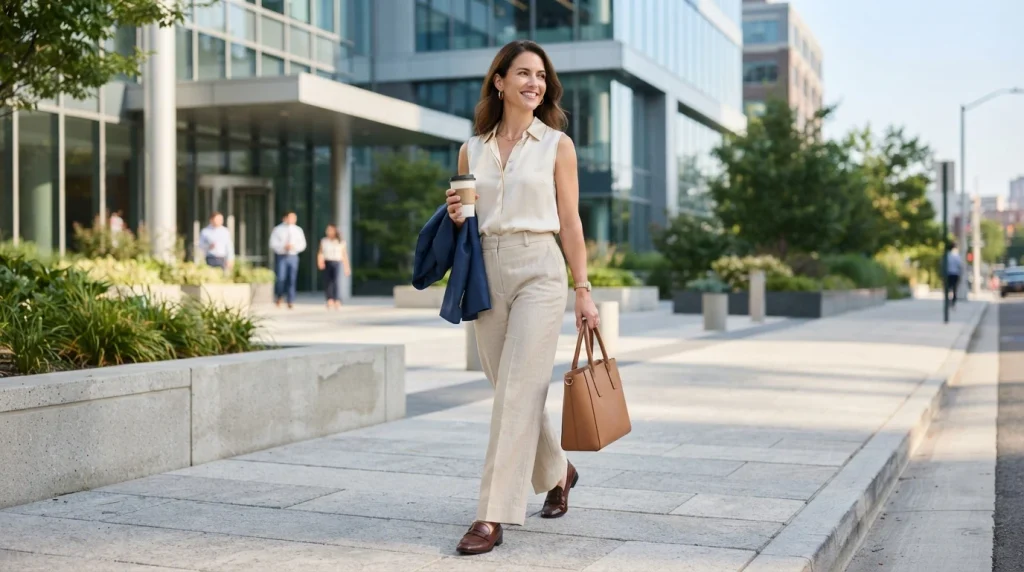
Start by deciding which item carries the structure. That could be tailored trousers, a blazer, a sharp skirt, or polished shoes. The remaining pieces can then feel lighter without making the outfit look unfinished.
Pay close attention to fit around shoulders, waistlines, and hems. Heat may tempt you toward oversized everything, but excessive volume can look shapeless. A relaxed cut works better when at least one area has visible definition.
Accessories should finish the outfit rather than compete with it. A leather belt, structured tote, watch, or small jewelry can add enough detail. You rarely need all of them at once.
What to Avoid in Summer Workwear
Do not assume a high temperature automatically changes your company’s dress code. Very short hems, transparent fabrics, beach sandals, and athletic clothing may still be unsuitable. When unsure, follow what respected coworkers wear during comparable weather.
Avoid buying clothes that only work with one complicated styling combination. Summer wardrobes become easier when tops and bottoms can rotate freely. Repetition is useful when the underlying formula works.
Heavy synthetics can also make commuting less comfortable. Check fabric labels before judging a garment by appearance alone. A lightweight-looking blouse may still feel warmer than a simple cotton alternative.
A Simple Five-Day Summer Workwear Plan
You can build a full week from a small group of interchangeable pieces. Choose two trousers, one skirt, four tops, one dress, and two lightweight layers. Add two shoe options that work with every bottom.
| Day | Outfit |
|---|---|
| Monday | Linen trousers + sleeveless shell + loafers |
| Tuesday | Shirtdress + flats + cardigan |
| Wednesday | Midi skirt + knit top + slingbacks |
| Thursday | Wide-leg trousers + short-sleeve shirt + loafers |
| Friday | Polo + straight trousers + clean leather sneakers |
Keep the colors related so the pieces can switch places. Navy, cream, tan, black, soft blue, and olive mix without much planning. One brighter color can add variety without reducing versatility.
Frequently Asked Questions About Summer Office Outfits
What should I wear to the office when it is 90°F outside?
Choose a breathable base such as a cotton top with linen-blend trousers or a simple shirtdress. Add polished flats and carry a lightweight layer for indoor air-conditioning. Avoid unnecessary layers during the commute.
Can sleeveless tops be business casual?
Sleeveless tops can work in many U.S. business-casual offices. A higher neckline and substantial straps usually appear more polished than thin straps. Keep a blazer available when meetings or company norms call for more coverage.
Are sandals appropriate for an office?
That depends on your employer and industry. Minimal leather sandals may work in creative or relaxed workplaces. Closed-toe flats, loafers, or slingbacks remain safer when the dress code is unclear.
Is linen professional enough for work?
Yes, when the garment has a clean cut and appropriate coverage. Linen trousers, shirts, dresses, and blazers can all look professional. Blends may suit people who want fewer wrinkles during long workdays.
How can I make summer work clothes look less boring?
Change color, proportion, or accessories before buying more clothing. A colored shirt, modern flats, or a different belt can refresh a repeated formula. Keep the underlying silhouette simple so the detail feels intentional.
Build Your Warm-Weather Work Uniform
The most useful summer work wardrobe does not require a different outfit for every day. Build several repeatable formulas, then adjust colors, shoes, and layers around your schedule. You will spend less time deciding what works before a hot commute.
Start with the pieces your calendar needs most, then fill genuine gaps. Breathable trousers, polished tops, reliable shoes, and one desk layer cover many U.S. workplaces. That small system can carry you from early summer heat through the final warm weeks of the season.