
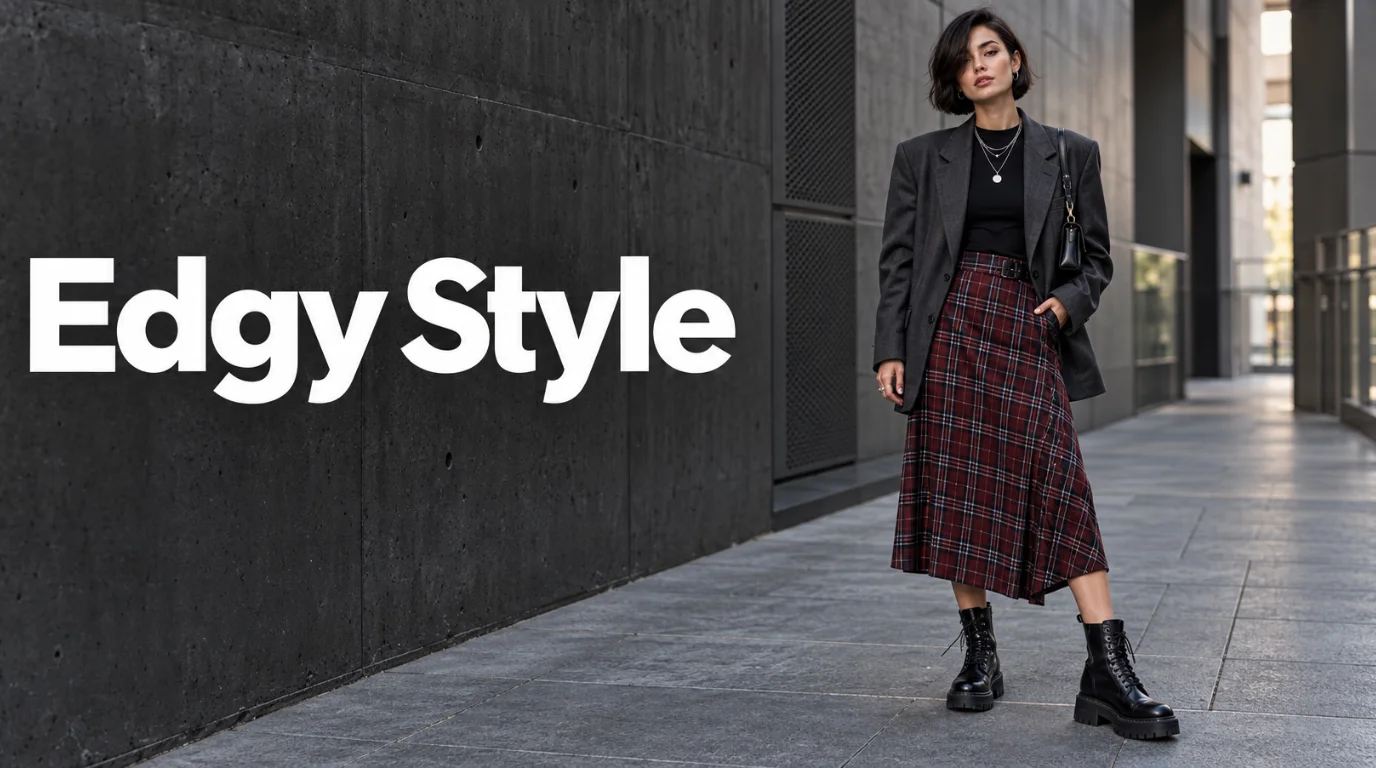
Edgy style works best when your outfit looks intentional rather than overloaded. You don’t need head-to-toe black, chains, and leather together. A few controlled contrasts can make everyday basics look sharper, stronger, and more personal.
The goal isn’t to dress like a character from a specific subculture. Instead, build tension between familiar pieces and something unexpected. That balance makes the look easier to wear repeatedly.
| Style element | Easy starting point | Effect |
|---|---|---|
| Color | Black, charcoal, white, oxblood, washed denim | Creates a strong base |
| Texture | Leather, denim, mesh, distressed cotton | Adds visual contrast |
| Silhouette | Oversized jacket, fitted top, wide pants | Creates tension |
| Footwear | Combat boots, chunky loafers, sneakers | Grounds the outfit |
| Hardware | Buckles, zippers, chains, silver jewelry | Adds sharper detail |
| Plaid, leopard, graphic motifs | Adds personality |
Direct answer: Start with familiar basics, then change one or two elements. Add darker color, heavier footwear, sharper hardware, or contrasting texture. Keep the remaining pieces simple. The strongest outfits usually mix one rebellious detail with clothes you already feel comfortable wearing.
TL;DR: The Formula That Works
- Start with a neutral or dark base.
- Add one strong texture.
- Create contrast through fit or proportion.
- Choose footwear with visual weight.
- Use hardware or jewelry selectively.
- Stop before every piece becomes a statement.
What Makes an Outfit Look Edgy?
The look comes from contrast more than any single garment. A leather jacket alone doesn’t automatically create a bold outfit. Its effect depends on what you wear with it. You might pair leather with a plain white tee and straight jeans. Another option combines a slip skirt with heavy black boots. Both outfits create tension between different moods.
Dark colors remain useful because they make unusual textures easier to combine. Still, black isn’t mandatory for creating visual attitude. Burgundy, gray, olive, silver, and washed denim can work equally well. Readers who prefer a darker alternative aesthetic can also explore Styleblor’s goth style guide. It offers a stronger focus on expressive textures and dark wardrobe foundations.
Edgy Style Starts With Controlled Contrast
Trying to make every garment dramatic usually weakens the final outfit. Your eye needs somewhere to rest between stronger details. Simple basics give statement pieces enough room to matter. Think about contrast across four areas: color, texture, shape, and detail. You rarely need to push all four simultaneously. Changing two usually creates enough visual tension.
A fitted black tank can balance oversized cargo pants. A romantic dress can work with substantial boots. Straight jeans can support a cropped moto jacket without competing for attention.
1. Build Around One Strong Piece
Choose the garment you want people to notice first. That could be a moto jacket, distressed denim, platform boots, or a graphic tee. Keep supporting pieces calmer and easier to combine. This approach also makes shopping more disciplined. You aren’t searching for an entirely new wardrobe identity. You’re adding individual pieces that change clothes you already own.
Statement items also become easier to repeat this way. A dramatic jacket can work with denim, dresses, trousers, and skirts. Different supporting pieces create a new result each time.
2. Use Texture Before Adding More Accessories
Texture can create depth without making an outfit look busy. Leather, faded denim, ribbed knits, mesh, and distressed cotton offer easy contrast. Mixing two textures often feels stronger than stacking several accessories. Consider black jeans with a soft knit and leather jacket.
The colors stay controlled while the surfaces remain different. That keeps a monochrome outfit from looking flat. You can also combine polished and worn finishes. Sleek boots beside faded denim create useful tension. Silver jewelry can sharpen softer cotton or knit layers.
3. Make Proportion Do Some Work
Silhouette can change an outfit before you add any unusual detail. Pairing fitted and oversized shapes creates visual tension quickly. It also prevents loose clothing from feeling accidental. Try a fitted tee with baggy jeans and heavier shoes. Another formula uses slim pants beneath an oversized bomber. Both combinations create deliberate differences in volume.
Styleblor’s guide to baggy clothes explains how fit and proportion affect relaxed outfits. Those same principles work well with alternative wardrobe pieces.
4. Choose Shoes With Enough Visual Weight
Shoes can completely change how familiar clothing reads. Combat boots make a floral dress feel tougher. Chunky loafers can sharpen a simple skirt and tee.
You don’t need extreme platforms for this effect. Black ankle boots, substantial sneakers, and lug soles can provide enough contrast. Choose a pair that works for your everyday routine. Footwear should also make sense with the pants above it. Wide hems usually need visible structure underneath. Slim bottoms give bulkier footwear more space to stand out.
Key Pieces Worth Building Around
You don’t need every item in this table. Start with two or three categories that fit your existing wardrobe. Add more only after those pieces become easy to wear.
| Piece | Why it works | Easy pairing |
|---|---|---|
| Moto jacket | Adds structure and texture | Tee + straight jeans |
| Graphic tee | Adds personality cheaply | Blazer + trousers |
| Black boots | Gives outfits visual weight | Dress + denim jacket |
| Wide jeans | Creates stronger proportion | Fitted top + belt |
| Cargo pants | Adds utility details | Tank + cropped jacket |
| Silver jewelry | Adds controlled hardware | Knit + dark denim |
| Mesh layer | Introduces texture | Tank + jeans |
| Oversized blazer | Adds sharp structure | Tee + boots |
| Distressed denim | Adds a worn finish | Clean knit + loafers |
A dark wardrobe can overlap with several aesthetics without becoming locked into one. Punk, grunge, goth, and streetwear all offer useful references. Take individual elements rather than copying a full uniform.
Styleblor’s mall goth guide shows how heavier footwear and oversized shapes can reference early-2000s alternative fashion. Borrowing one idea usually feels more current than copying everything together.
7 Easy Outfit Formulas to Copy
These formulas use common wardrobe pieces, so you can easily adjust them. Swap individual items based on weather and comfort. Keep the contrast principle even when changing colors or fabrics.
- White tee + black straight jeans + moto jacket + boots.
- Slip dress + oversized denim jacket + chunky shoes.
- Graphic tee + tailored trousers + silver jewelry + sneakers.
- Fitted tank + wide cargo pants + cropped jacket.
- Black knit + faded jeans + belt + platform loafers.
- Mini skirt + oversized sweater + tights + combat boots.
- Blazer + band tee + relaxed jeans + pointed ankle boots.
You can also soften these formulas using vintage or casual pieces. An old cardigan can work beside distressed denim and heavier footwear. A worn tee can ground a polished skirt or tailored trousers. For more relaxed combinations, Styleblor’s indie aesthetic guide offers useful ideas around vintage denim and graphic pieces. These references can make bold dressing feel more curated than bought.
Use the “Edge Dial” Instead of Dressing by Rules
Think of boldness as a dial rather than an on-off switch. This makes the aesthetic easier to adapt across different settings. You can change intensity without changing your entire personal style.
| Level | What to change | Example |
|---|---|---|
| 1: Subtle | One detail | Silver jewelry with jeans and a tee |
| 2: Noticeable | Two contrasting elements | Leather jacket with chunky boots |
| 3: Strong | Shape, texture, and detail | Wide cargos, mesh layer, hardware |
| 4: Statement | Several coordinated elements | Dramatic outerwear, boots, jewelry |
Level one works well for offices or conservative settings. Level two suits most casual outfits and social plans. Higher levels work when you deliberately want clothing to lead the look. This framework also helps prevent impulse purchases. Ask whether a new item adds something your wardrobe lacks. Skip it when several existing pieces already create the same effect.
How to Make the Look Work for Everyday Life
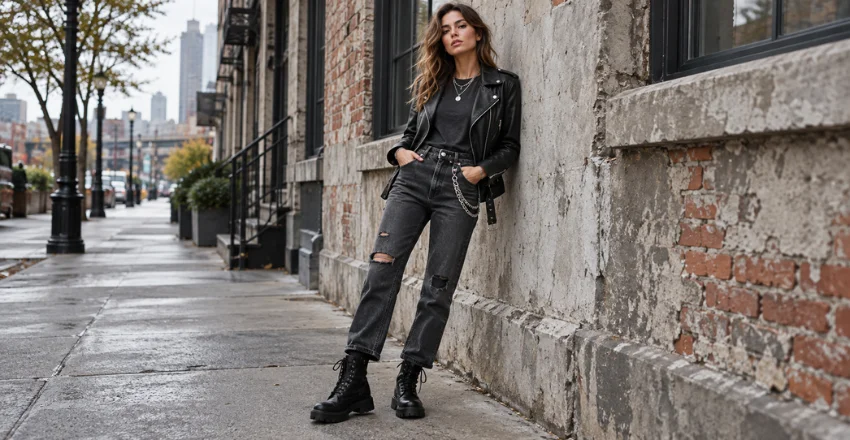
For work, focus on structure instead of distressed details. Try tailored trousers, a dark blazer, loafers, and simple silver jewelry. The outfit can feel sharp without conflicting with a professional dress code. For weekends, you can push texture and proportion further.
Wide jeans, vintage tees, leather layers, and heavier sneakers work easily in casual settings. Choose one practical layer so the outfit still works throughout your day. For warmer weather, reduce fabric weight rather than losing contrast. Try black tanks, loose denim, mesh layers, metallic accessories, and substantial sandals. Strong proportions can create attitude without heavy outerwear.
Common Styling Mistakes to Avoid
The biggest problem is adding recognizable “edgy” pieces without considering balance. Several statement items can fight for attention instead of supporting each other. Editing usually improves the result faster than adding something new.
- Wearing leather, chains, studs, distressed denim, and heavy boots together automatically.
- Buying uncomfortable shoes because they fit an aesthetic.
- Assuming every outfit must be black.
- Copying one subculture without adapting it to your personality.
- Ignoring fit because a garment looks dramatic.
- Adding accessories after the outfit already feels complete.
- Buying statement pieces that only work with one outfit.
Another mistake is treating bold dressing as a costume reserved for certain occasions. Small details can work with everyday clothing. Consistency usually makes personal style feel stronger than occasional extremes.
How to Make Your Wardrobe Feel Personal
Start by identifying the clothes you already repeat most often. Those pieces reveal which fits, fabrics, and proportions make you comfortable. Build your stronger outfits around that existing foundation. Then choose one source of tension that feels natural. You might prefer heavy shoes, dark colors, silver hardware, distressed fabric, or oversized layers.
You don’t need every category to create personality. Photos can help you identify patterns across successful outfits. Look for recurring combinations rather than individual statement pieces. Those patterns become your personal formulas for future outfits.
Frequently Asked Questions
Can edgy style still look feminine?
Yes, because bold and feminine elements can work together easily. Try lace with leather, a slip dress with boots, or soft knits with hardware. Contrast often makes both sides of the outfit appear more intentional.
Do I need to wear black?
No, although black provides an easy foundation for stronger details. Charcoal, burgundy, olive, cream, silver, and denim also work well. Keep the palette controlled when mixing several textures or unusual shapes.
How can I dress this way without looking like I’m wearing a costume?
Limit the outfit to one or two obvious statement elements. Keep the remaining clothes familiar, comfortable, and simple. Your usual jeans or tee can anchor a stronger piece.
What should I buy first?
Start with footwear or outerwear, since both can transform many existing outfits. Black boots and a structured jacket offer several combinations. Add smaller details after you understand which direction suits you.
Build the Look From Clothes You Already Own
A stronger wardrobe doesn’t require replacing every basic you own. Start with your most reliable jeans, tee, dress, or trousers. Then change one detail and notice how the entire outfit shifts. Start with heavier shoes, then experiment with texture or proportion. Add hardware only when the outfit still needs another focal point.
Repeating this process helps you develop a consistent visual identity. Your clothes should still feel like yours after the styling changes. That’s the difference between personal fashion and wearing an aesthetic as a costume. Start small, edit carefully, and build from combinations you’ll want to wear again.