
Vintage mens clothing can add character, better fabrics, and unusual details to an everyday wardrobe. The easiest approach is mixing older pieces with simple modern basics. Good fit matters more than buying everything from one decade.
Quick answer: Start with one strong vintage piece, then keep the rest of your outfit familiar and restrained. Jackets, denim, knitwear, shirts, and accessories offer the easiest starting points. Check garment measurements carefully, inspect condition, and choose pieces that already work with clothes you own.
| What to consider | Best starting point | Why it matters |
|---|---|---|
| First purchase | Jacket, denim, knitwear, or shirt | Easy to combine with modern basics |
| Era | 1950s through 1990s | Many shapes still work naturally today |
| Fit | Use garment measurements | Vintage labels rarely match modern sizing |
| Condition | Check seams, fabric, stains, and hardware | Repairs can change the real purchase cost |
| Styling | One vintage focal piece | Prevents the outfit from feeling theatrical |
| Shoes | Loafers, boots, sneakers, or derbies | Footwear controls the outfit’s formality |
| Best buying rule | Buy for wearability first | Useful pieces earn more wardrobe time |
Key Takeaways
- Start with one older garment rather than dressing head to toe from one era.
- Prioritize jackets, denim, knitwear, shirts, and simple accessories.
- Compare measurements instead of trusting the size printed on the label.
- Inspect collars, cuffs, seams, zippers, lining, and fabric before buying.
- Mix distinctive vintage shapes with quieter contemporary basics.
- Choose pieces that create at least three outfits with your existing wardrobe.
- Tailoring can improve many purchases, but difficult structural alterations cost more.
What Counts as Vintage Mens Clothing?
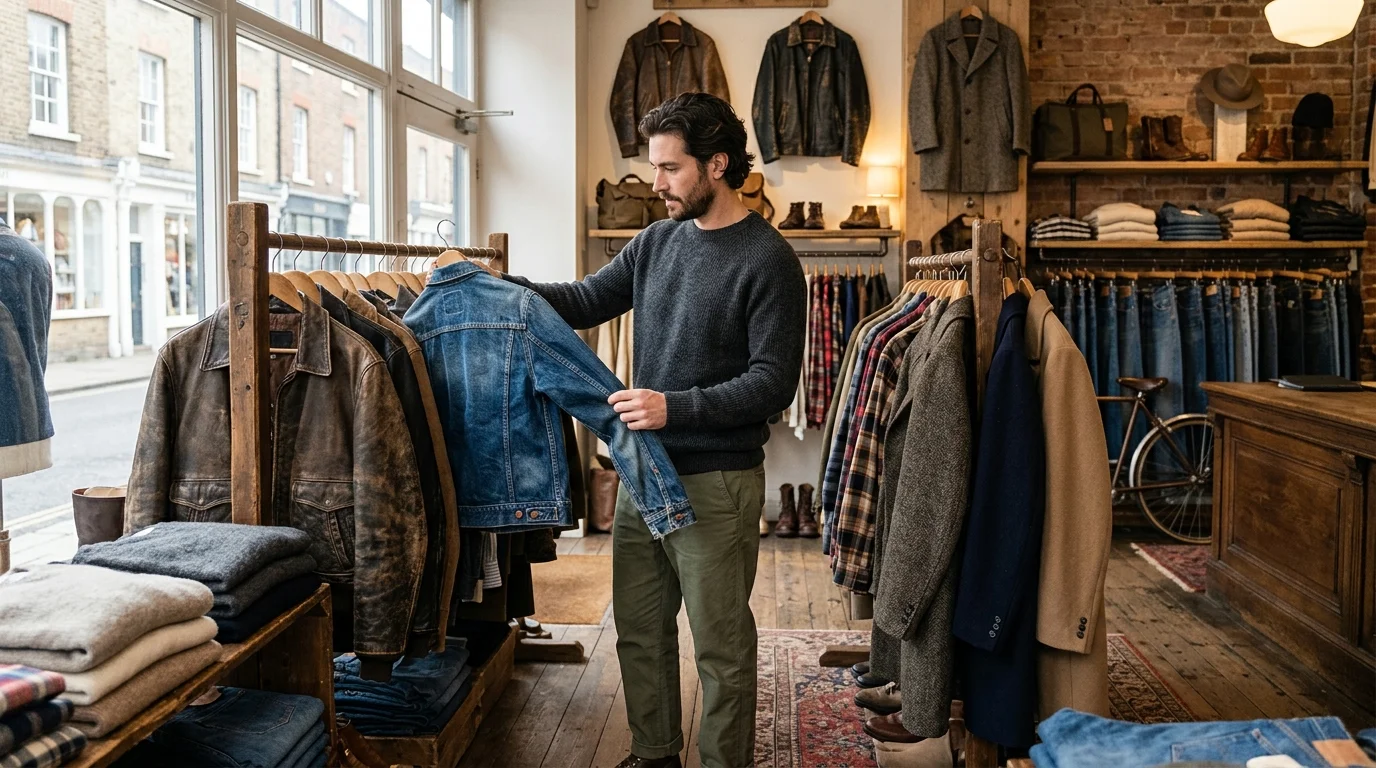
Vintage mens clothing usually refers to older garments with clear links to a previous fashion period. The term differs from retro, which often describes new clothing inspired by older styles. Secondhand clothing can be recent, so age alone does not describe every resale piece.
For everyday dressing, strict labels matter less than construction, condition, and usefulness. An older wool coat can be valuable without having a rare designer label. A famous label can still be a poor buy when the garment is damaged.
The strongest pieces often show details that are harder to find in current mass-market clothing. Look for substantial fabrics, unusual buttons, distinctive pockets, or period-specific proportions. Those details create character without requiring a full historical outfit.
The 9 Vintage Pieces Worth Buying First
1. Denim Jackets
A denim jacket gives beginners an easy way into older menswear. Faded color and natural wear can make genuine older denim especially appealing. Pair it with a plain T-shirt, chinos, or dark trousers.
Choose a shoulder width that lets your arms move comfortably. Sleeves can often be adjusted, but major shoulder alterations are difficult. Avoid buying an undersized jacket because the label looks familiar.
2. Straight or Relaxed Jeans
Older denim often has a higher rise and straighter leg than recent slim cuts. That shape works well with T-shirts, knitwear, work jackets, and casual shoes. It can also balance roomier vintage outerwear.
Measure the actual waistband, rise, thigh, inseam, and leg opening. Do not rely on the number printed inside the jeans. Washing and years of wear may have changed the original dimensions.
3. Leather Jackets
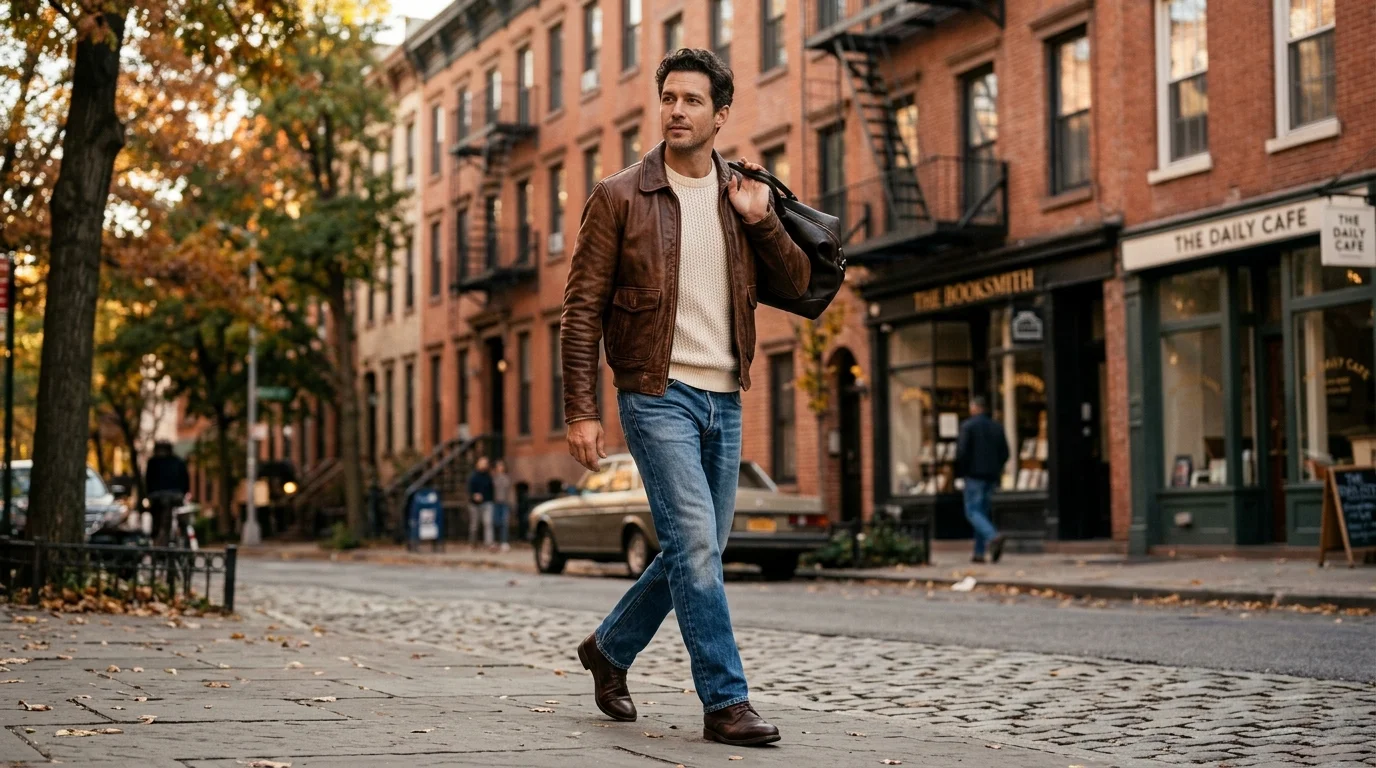
A broken-in leather jacket can bring texture without needing extra accessories. Simple bomber, racer, and casual zip shapes are easier to style daily. Wear one with modern denim and an understated shirt.
Check leather for deep cracking, dry areas, damaged lining, and weak zippers. Minor surface wear can look attractive, but structural damage creates expensive problems. Strong odors can also be difficult to remove completely.
4. Wool Coats and Overcoats
Older wool outerwear can offer substantial fabric and traditional tailoring. Dark navy, charcoal, camel, and brown are especially easy to reuse. A clean overcoat can work with jeans or tailored trousers.
Fit the coat over the layers you plan to wear. The shoulders should stay clean without restricting movement. Styleblor’s Chesterfield coat guide explains classic proportions and modern styling in more detail.
5. Knitwear
Crewnecks, cardigans, sweater vests, and textured knits make practical secondhand purchases. They bring color and texture without controlling the entire outfit. Neutral wool, cotton, and lambswool pieces are especially versatile.
Inspect knits against good light before paying. Tiny moth holes can hide around cuffs, hems, and underarms. Also check whether the garment has shrunk unevenly during previous washing.
6. Oxford and Camp-Collar Shirts
Vintage shirts range from conservative button-downs to expressive patterned designs. Start with solids, subtle stripes, or restrained prints if versatility matters. A louder shirt works best when the trousers and shoes stay quiet.
Older shirts may fit differently through the chest and sleeves. Measure a shirt you already like, then compare those numbers. This method works better than translating an old size into today’s labels.
7. Workwear Jackets
Chore coats, canvas jackets, utility layers, and old work shirts fit easily into American casual wardrobes. Their practical pockets and sturdy fabrics add interest without looking formal. Straight jeans or chinos keep the combination simple.
Fading can improve workwear, but weakened fabric is different from attractive wear. Check elbows, cuffs, pocket corners, and stress points carefully. Repairs should feel secure rather than decorative alone.
8. Tailored Trousers
Pleated or higher-rise trousers can give a basic outfit a stronger shape. Gray, tan, brown, navy, and olive work with many modern shirts. Loafers or simple sneakers can change their level of formality.
Waist and hem alterations are often manageable for a competent tailor. Major changes through the seat and rise are less straightforward. Start as close to your natural fit as possible.
9. Classic Accessories
Belts, watches, ties, scarves, and simple bags are low-commitment ways to try older style. They can add history without changing your usual silhouette. One accessory is often enough for a restrained outfit.
Footwear matters too because shoes can make older clothing feel polished or casual. Styleblor’s guide to essential shoes for men offers a useful foundation. Build that footwear rotation before chasing highly specific period shoes.
Vintage Mens Clothing by Era: What Works Today?
| Era | Useful pieces | Typical character | Easy modern pairing |
|---|---|---|---|
| 1950s | Bombers, loafers, trousers, denim | Clean and structured | T-shirt and straight jeans |
| 1960s | Knitwear, polos, tailored coats | Neat with sharper lines | Chinos and simple sneakers |
| 1970s | Leather, textured shirts, pleats | Relaxed and expressive | Plain tee and dark denim |
| 1980s | Bombers, denim, sweatshirts | Roomier and sportier | Straight trousers and clean shoes |
| 1990s | Workwear, flannel, denim, sportswear | Relaxed and casual | Minimal modern basics |
The 1950s through 1990s offer many pieces that connect naturally with current wardrobes. You do not need to reproduce each period accurately. Borrowing one recognizable shape usually feels more relaxed.
Earlier clothing can also work, but distinctive period details become harder to neutralize. Very wide lapels or formal historical shapes may attract more attention. Decide whether that effect matches your personal style before buying.
How to Wear Vintage Without Looking Like a Costume
The simplest rule is to let one piece lead. Wear an older leather jacket with a current T-shirt and straight jeans. Pair pleated trousers with a clean knit rather than several period accessories.
Color can also keep the outfit grounded. Navy, cream, brown, gray, olive, and washed blue create easy combinations. Save louder prints for one focal garment instead of stacking several together.
Styleblor’s indie aesthetic guide shows another useful approach to mixing worn denim and textured knitwear. Its styling logic works because personality comes from selected details. The entire wardrobe does not need to match one theme.
Alternative wardrobes follow the same principle. Older leather, denim, and dark layers can fit naturally with newer pieces. See Styleblor’s goth style guide for examples of building a strong look from wearable basics.
How Vintage Sizing Works
Vintage size labels are unreliable guides for modern shoppers. Brand standards changed, garments shrank, and previous alterations may affect dimensions. Your own measurements give you a much safer reference.
Measure a garment that already fits you well. Record the chest, shoulders, sleeve, length, waist, rise, thigh, and inseam where relevant. Compare those figures with the seller’s garment measurements.
Ask for missing measurements before ordering online. Photographs alone cannot show how a jacket fits through the shoulders. A return policy also matters when buying from an unfamiliar seller.
How to Check Condition Before You Buy
Begin with the fabric because serious deterioration can outweigh a good price. Look for thinning, holes, stubborn discoloration, dry leather, and weakened seams. Strong mildew or smoke odors deserve caution.
Then test the parts that receive regular stress. Check zippers, buttons, pocket edges, cuffs, linings, and waistbands. Replacement hardware can be easy, but matching unusual vintage parts may take work.
Finally, calculate the realistic total cost. A $30 jacket needing cleaning and major repairs may cost more than a ready-to-wear $70 option. Buy the better value rather than the cheaper tag.
Where to Shop in the U.S.
Local thrift stores offer low prices and the chance to inspect garments personally. Their drawback is inconsistent inventory and limited size selection. Regular visits usually work better than expecting one perfect shopping trip.
Curated vintage stores cost more because someone has already sorted the inventory. They can save time when you want a specific era or garment type. Staff may also know more about construction and condition.
Online marketplaces offer the broadest selection, especially for exact measurements or rare sizes. Search with specific terms such as era, fabric, color, and garment type. Always review seller photos, measurements, condition notes, and return policies.
A Smarter Way to Build Your First Vintage Wardrobe
Start with three jobs rather than three random purchases. Choose one outer layer, one everyday top, and one bottom that work with your current closet. This gives you multiple combinations immediately.
Next, test each purchase against a three-outfit rule. You should be able to name three realistic outfits before buying. If you need several new items first, the piece may be too specialized.
Add distinctive garments after the foundation works. Patterned shirts, unusual tailoring, or collectible pieces make more sense later. A small wearable rotationmen’sts a crowded closet of interesting mistakes.
Vintage Mens Clothing FAQ
Is vintage mens clothing worth buying?
It can be worthwhile when condition, fit, and price make sense together. Older garments may offer unusual fabrics, construction, and shapes. Age alone does not guarantee better quality, so inspect each piece individually.
How can I tell whether vintage clothing will fit?
Compare garment measurements with clothing you already own and wear comfortably. Focus on shoulders, chest, waist, rise, and length instead of label size. Ask sellers for missing measurements before purchasing online.
What vintage piece should a beginner buy first?
A denim jacket, knit, workwear jacket, or simple shirt is usually easy to wear. These pieces combine naturally with current jeans and trousers. Choose the category that fills a real gap in your wardrobe.
Can I mix different decades?
Yes, but keep the combination visually controlled. Several strongly recognizable period pieces can make an outfit feel themed. Mix quieter items across decades, then use one piece as the clear focal point.
How do I clean vintage clothing safely?
Always start with the care label when one remains readable. Delicate wool, leather, embellished garments, and unstable dyes may need specialist cleaning. Test conservative methods before using heat, strong chemicals, or aggressive washing.
Build Around Clothes You Will Actually Wear
A good vintage wardrobe should make getting dressed easier, not turn every morning into styling work. Start with fit, condition, and compatibility before worrying about rarity. The strongest purchases will work with clothes already hanging in your closet.
Choose one useful piece, wear it several ways, and notice what your wardrobe still needs. Add the next garment only when it solves a clear problem. That approach creates personal style without forcing a complete decade onto every outfit.