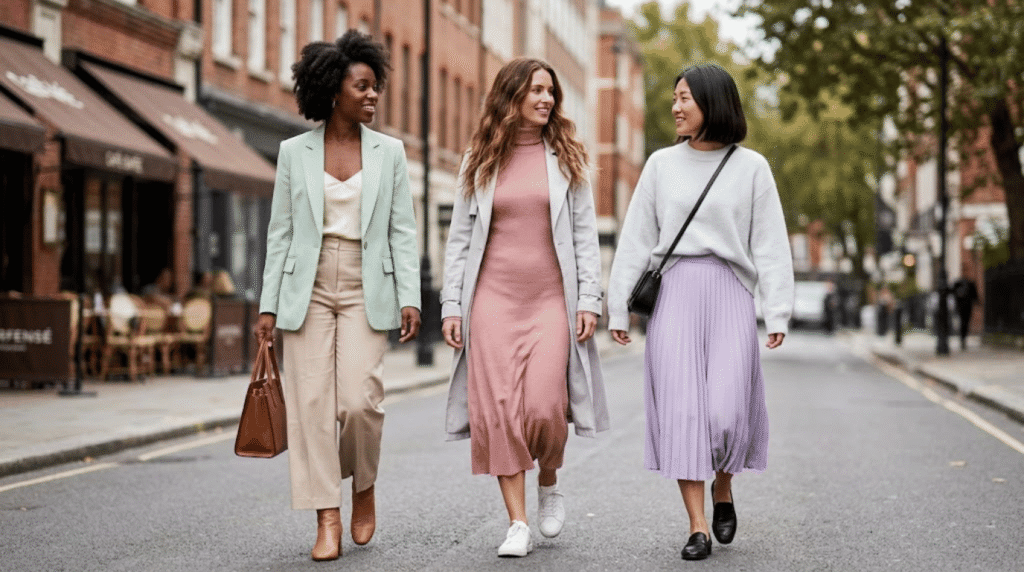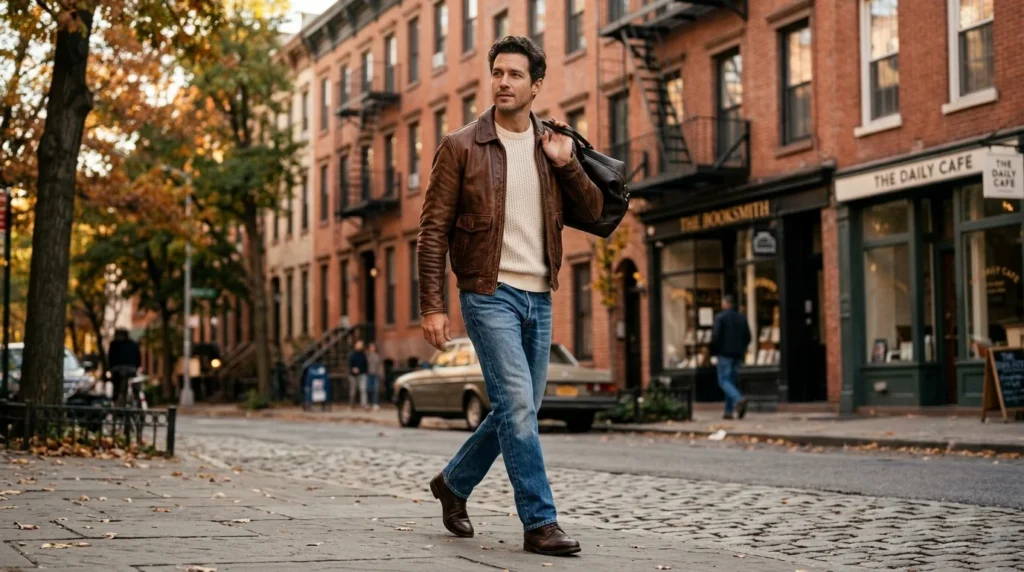

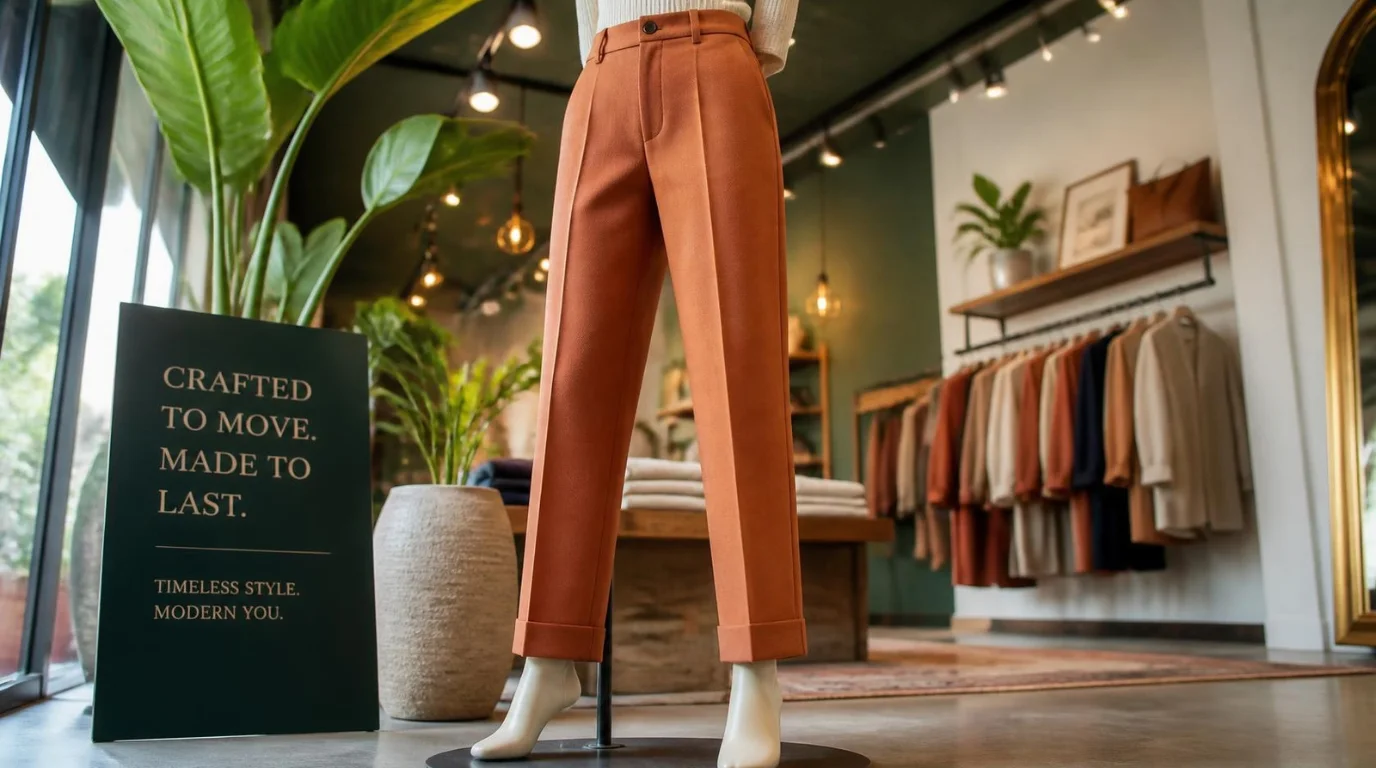
Hemmed pants have a finished lower edge that sets the final leg length. That small alteration can change how the entire outfit looks. A good hem keeps fabric controlled around your shoes without unwanted dragging or bunching.
Quick answer: A proper trouser hem finishes the fabric at a deliberate length and prevents the raw edge from unraveling. The best position depends on the leg shape and your shoes. Straight trousers usually allow a slight break, while wider styles often look cleaner when they skim the shoe without pooling.
| Trouser style | Good starting length | Shoe relationship | Main fit check |
|---|---|---|---|
| Straight leg | Top of shoe to slight break | Light contact with shoe | Avoid heavy folds |
| Wide leg | About ½ inch above floor | Measure with chosen shoes | Prevent dragging |
| Flare | Close to floor without touching | Shoe height matters greatly | Preserve the flare shape |
| Cropped | Around the ankle area | Leave shoe visible | Avoid awkward calf length |
| Tapered | Little or no break | Clean line above shoe | Keep ankle area tidy |
Key Takeaways
- Choose the shoes before marking a full-length hem.
- Judge the break, leg width, and footwear as one silhouette.
- Wide and flared trousers usually need more precise length control.
- Cropped styles should look intentionally short rather than accidentally altered.
- Test the length while standing, walking, and sitting.
- Tailoring is often worthwhile when the fabric, lining, or original finish is difficult to reproduce.
How Hemmed Pants Should Fit Around Your Shoes
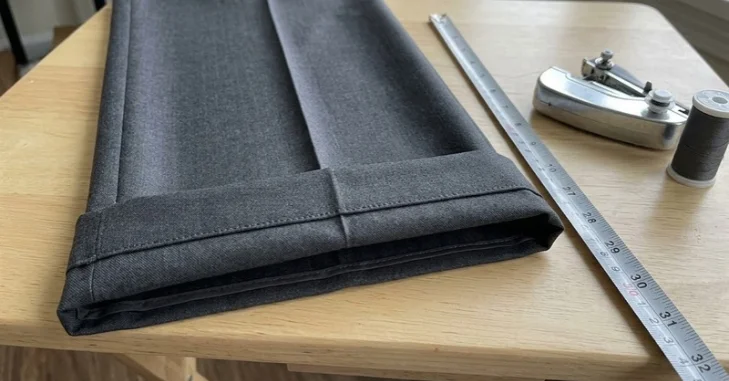
The Hemmed Pants lower edge should look deliberate from the front, side, and back. Fabric should not collect in several heavy folds above your footwear. It also should not drag under your heel during a normal stride.
The correct position changes with the trouser shape. Straight cuts can tolerate a small break because the leg falls vertically. Wider cuts usually need a cleaner bottom line because extra fabric creates more visible volume.
Flared styles demand especially careful measuring because their shape widens toward the floor. Removing too much length can also reduce the visual width of the flare. Styleblor’s guide to flare jeans and hem length explains that relationship in greater detail.
Understand No Break, Slight Break, and Full Break
A “break” is the fold created where a trouser leg meets the shoe. A no-break finish ends with little or no visible fold. It creates a clean appearance and shows more of the footwear.
A slight break creates one modest crease at the front. This option works well for many straight or tailored cuts. It gives you some extra length without making the lower leg look crowded.
A fuller break creates more fabric over the shoe. It can suit traditional tailoring or deliberately relaxed styling. Still, uncontrolled stacking can make a pair appear too long instead of intentionally relaxed.
Modern casual styling gives you more freedom than formal tailoring. The useful test is whether the fabric looks controlled. Styleblor’s guide to baggy clothes and relaxed proportions shows why a clean lower boundary matters with larger silhouettes.
Choose the Hem Length by Trouser Shape
Straight-leg trousers are the easiest place to start. Let the lower edge reach the shoe with no break or one small fold. Check the back to confirm the fabric remains clear of the ground.
Wide-leg trousers need more attention because their larger opening can hide footwear. A full-length pair should skim the shoe and remain safely above the floor. Check both legs because posture and body measurements are rarely perfectly symmetrical.
Flared trousers should be measured with the shoes you expect to wear most. Their long line depends on the relationship between floor clearance and heel height. A dramatic change in shoe height can make the same length suddenly look short or excessive.
Tapered cuts usually look strongest with less fabric at the ankle. Heavy stacking can fight the narrower shape near the bottom. A clean break keeps the taper visible and makes the shoe easier to see.
Cropped styles follow a different rule because the exposed ankle becomes part of the outfit. Aim for a length that appears clearly intentional. Styleblor’s barrel jeans fit guide offers another useful example of how hem width changes proportion.
Measure the Length With the Shoes You Will Wear
Start by putting on the footwear you expect to use with that pair. Stand naturally on a flat surface rather than looking down at your feet. Looking down can shift your posture and change where the fabric falls.
Have another person pin the length when possible. Pins should sit parallel to the floor while you stand normally. Walk several steps after pinning to see whether the fabric catches under your heel.
Check the front and back separately before cutting anything. Wide and flared legs can appear longer at the back because they fall over the shoe differently. The final line should look balanced from several viewing angles.
If you alternate between flats and high heels, one full-length measurement may not serve both. Consider choosing the footwear you wear most often. Another option is keeping separate pairs for noticeably different shoe heights.
Match the Hem to Your Shoes
Shoes affect more than the measurement. Their toe shape, sole thickness, and heel height change how the fabric falls. A slim loafer creates a different lower silhouette than a chunky sneaker.
Wide trousers can cover delicate footwear if the leg opening is large. A structured loafer, boot, or visible sole can give the outfit more definition. Styleblor’s guide to loafers for women explains how sole shape works with different trouser widths.
Cropped trousers place more attention on the footwear because little fabric overlaps the shoe. Clean loafers, flats, slingbacks, and low-profile sneakers can all work. The choice depends on whether you want the outfit to feel tailored, casual, or dressy.
Workwear needs the same proportion check. Your trousers should remain comfortable while sitting and walking during a full day. Styleblor’s interview outfit guide also emphasizes fit and clean footwear for professional settings.
When Professional Tailoring Makes Sense
Simple cotton trousers can be manageable for someone comfortable with basic sewing. More complex garments may require a tailor because the original construction matters. Linings, cuffs, delicate materials, and unusual leg shapes increase the difficulty.
Denim can also require special treatment when you want to preserve the factory-finished edge. Cutting and sewing a new edge changes the original stitching and fading. An original-hem alteration can retain more of that familiar finished appearance.
Expensive trousers deserve extra caution because cutting fabric is difficult to reverse. Pin the proposed length first and wear the garment indoors. That trial can reveal whether you need another quarter-inch or a different shoe choice.
A professional alteration is especially useful when the waistband and upper fit already feel right. Replacing a good pair because of excess length wastes an otherwise suitable garment. A precise alteration can solve the problem without changing the rest of the silhouette.
Common Hemming Mistakes to Avoid
The first common mistake is measuring barefoot for clothing worn with shoes. Even a modest heel or thick sole can change the required length. Measure the garment in the footwear that will actually support it.
The second mistake is choosing length without considering leg width. A narrow opening and a wide opening interact with shoes differently. Judge width, length, and footwear together rather than treating the measurement alone.
Another mistake is cutting before testing movement. Sit, walk, climb a step, and turn before making the alteration permanent. Clothing can settle differently once your body moves.
Finally, avoid copying another person’s inseam as a fixed rule. Two people of similar height can have different leg proportions. Your garment, footwear, preferred break, and body measurements should determine the finished length.
How to Make the Finished Look More Intentional
Start with a clean lower line before adding styling details. A precise length makes inexpensive trousers look more considered because the proportions appear deliberate. It also keeps attention on the whole outfit rather than excess fabric near the floor.
Next, repeat some visual weight elsewhere in the outfit. Wider bottoms can pair well with a structured jacket, fitted knit, or defined waist. The goal is balance rather than hiding or changing your body shape.
For tailored outfits, keep the shoe and lower edge especially clean. Styleblor’s guide to pant suits for women recommends treating trouser length as an important fit decision. The same principle works for separates, office trousers, and dressier wide-leg styles.
Try the complete outfit before deciding that the alteration is wrong. A different shoe can change the result immediately. The final measurement should support the footwear and silhouette you actually plan to wear.
The Bottom Line
The best hem is not one universal measurement. It depends on leg shape, footwear, fabric, and the amount of break you prefer. Treat those decisions together and the finished garment will look more deliberate.
Start by wearing your usual shoes and pinning the length before making permanent changes. Check the front, back, and side while standing and walking. Once the proportion looks balanced, you have a dependable measurement for that particular pair.
Frequently Asked Questions
What are hemmed pants?
Hemmed pants have a finished lower edge that establishes the final leg length. The fabric is folded and secured instead of remaining raw at the bottom. Hemming can also shorten a garment that was originally made longer.
How long should trousers be?
The best length depends on the cut and the footwear. Straight trousers can sit near the top of the shoe with a modest break. Wide and flared styles usually need enough length for flow without touching the ground.
Should trousers touch the floor?
Full-length styles generally should not drag on the floor during normal movement. Contact with the ground can dirty the fabric and damage the lower edge. Wide styles can sit close to the floor while remaining clear of it.
Should I measure before or after choosing shoes?
Choose the shoes first whenever footwear changes the effective height of the outfit. Measure while wearing the pair you expect to use most often. This step matters most with full-length wide or flared silhouettes.
Can I hem trousers myself?
Basic alterations can be suitable for home sewing when the construction is simple. Practice helps because cutting too much fabric is difficult to correct. Consider professional help for lined garments, cuffs, expensive fabrics, or original denim finishes.