
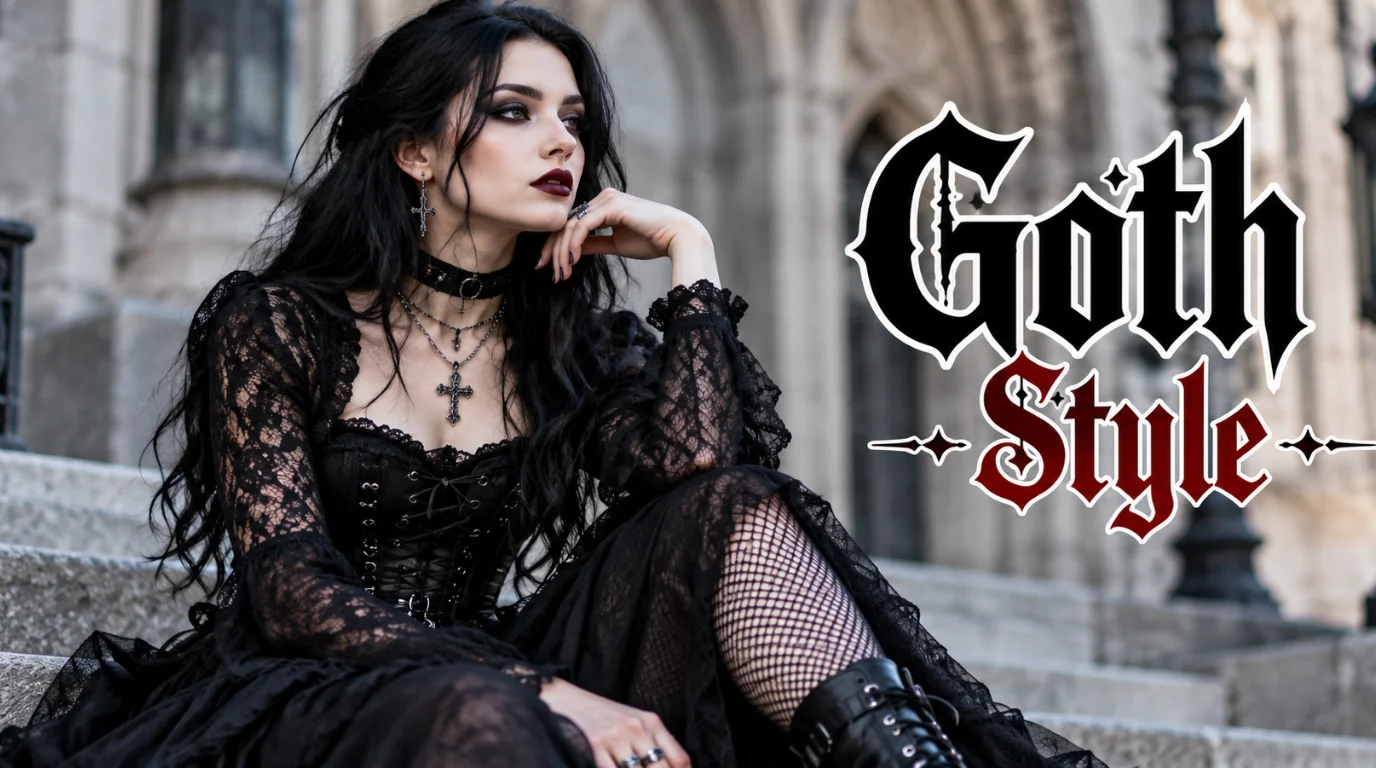
Goth style combines dark clothing, dramatic texture, expressive silhouettes, and roots in the goth music subculture. You do not need an all-black closet or theatrical pieces. Start with strong basics, then add texture, proportion, and details that reflect your taste.
Direct answer: A wearable dark wardrobe starts with black basics, substantial footwear, and one expressive texture. Add lace, mesh, velvet, leather, or metal details in small doses. Build around one statement piece instead of stacking every recognizable symbol together. That approach feels personal, repeatable, and easier to wear every day.
| Element | Easy starting point | What it adds |
|---|---|---|
| Color | Black, charcoal, oxblood, plum | A dark, controlled base |
| Texture | Lace, mesh, velvet, leather | Depth without extra color |
| Silhouette | Long skirt, fitted top, wide trousers | A clear visual direction |
| Footwear | Combat, platform, or pointed boots | Weight and structure |
| Accessories | Silver jewelry, belts, chokers | Focused detail |
| Beauty | Dark liner or deep lip color | Optional contrast |
Key Takeaways
| Principle | Practical approach |
|---|---|
| Start with clothes you already own. | Add one dark anchor piece before buying more. |
| Use texture to keep black outfits from looking flat. | Mix matte, sheer, soft, and structured surfaces. |
| Choose one statement per outfit. | Let boots, makeup, hardware, or silhouette lead. |
| Learn the roots without treating fashion like a uniform. | Personal style matters more than copying a checklist. |
What Goth Style Means Today
The look grew from late-1970s and early-1980s post-punk culture in Britain. Clubs such as London’s Batcave helped shape its visual language during the early 1980s. Music, nightlife, punk, theatrical makeup, and dark romantic references all influenced the emerging subculture.
Fashion history also explains why lace, corsetry, frock coats, and Victorian references appear so often. Vogue distinguishes historical Gothic design from the later subcultural look. The modern aesthetic mixes several influences instead of copying one historical period.
That history matters, but your wardrobe does not need museum accuracy. Contemporary outfits can be subtle, romantic, punk-influenced, minimal, or streetwear-focused. The strongest looks usually feel collected over time, not purchased as one matching set.
The Building Blocks of a Wearable Dark Wardrobe
Start with a few black or charcoal basics that fit your daily life. A tee, fitted knit, trousers, skirt, or simple dress can anchor many outfits. A good fit gives you more flexibility than buying a highly themed garment. Next, add one texture that contrasts with the base. Lace, mesh, velvet, distressed denim, and leather each change the mood differently.
Mixing two textures often creates more depth than adding several accessories. Footwear adds weight and defines the silhouette. Combat boots work with denim, skirts, dresses, and oversized layers. Styleblor’s black boots guide shows how shaft height and shape affect different hems.
Five Common Dark-Fashion Directions
You do not need to choose one category forever. Most wardrobes borrow from several directions because the pieces overlap. Use these labels as references, not rules for belonging.
| Direction | Typical pieces | Visual focus |
|---|---|---|
| Traditional | Band tees, leather, fishnets, pointed boots | Post-punk references and dramatic styling |
| Romantic | Lace, velvet, long skirts, fitted waists | Soft texture and historical influence |
| Minimal | Clean black layers, simple jewelry, sleek boots | Shape, proportion, and restraint |
| Mall-inspired | Wide pants, graphic tees, chains, platforms | Late-1990s and early-2000s alternative fashion |
| Corporate | Tailoring, long skirts, dark knits, refined shoes | Work-friendly structure with darker details |
Mall-inspired outfits are especially familiar in the United States. They combine dark basics with band merchandise, oversized pants, platforms, and visible hardware. Styleblor’s mall goth guide covers that early-2000s branch in greater detail.
How to Build Your First Outfit
A beginner outfit works better when each piece has a clear job. Choose your silhouette first, then add texture and hardware. This keeps the finished look intentional, not crowded.
- Choose one dark base. Start with black jeans, a skirt, trousers, or a simple dress.
- Add one contrasting top or layer. Try mesh, a fitted knit, a band tee, or a lace blouse.
- Pick shoes with visual weight. Combat boots, platforms, or pointed ankle boots all work.
- Add one metal detail. Use a belt, chain, ring stack, or simple silver necklace.
- Check the proportions. Balance wide bottoms with a fitted top, or reverse that relationship.
- Stop before every detail competes. Save another statement for tomorrow’s outfit.
Loose silhouettes can fit the aesthetic without feeling shapeless. Wide trousers can work with a fitted mesh top and sturdy boots. Styleblor’s baggy clothes guide offers more help with balancing volume and structure.
How to Use Color Without Losing the Mood
Black is useful because it creates cohesion, but it is not your only option. Oxblood, burgundy, plum, forest green, gray, and navy can all support a dark palette. White or ivory can create sharp contrast through shirts, lace, or collars. Choose one accent color and repeat it once or twice.
A burgundy lip can connect with a bag, knit, or skirt detail. This makes color feel deliberate rather than disconnected from the outfit. Pastels can also work when the rest of the styling keeps a darker structure. A pale top beside black hardware creates contrast without losing the alternative mood. The key is controlling proportion, texture, and accessory choices together.
How to Keep the Look From Feeling Like a Costume
The fastest mistake is wearing every recognizable symbol at once. Fishnets, chains, platforms, corsetry, dramatic makeup, and multiple motifs can compete. Choose one or two focal elements and let simpler pieces support them. Fabric quality and fit also change how themed clothing reads.
Matte cotton, worn denim, good knitwear, and sturdy leather usually feel easier to wear daily. Shiny costume fabric can look less natural outside events or nightlife. Personal context matters too. Your school, workplace, climate, and transportation all affect practical choices. Everyday style lasts longer when the clothes work with your schedule.
Everyday Outfit Formulas for U.S. Closets
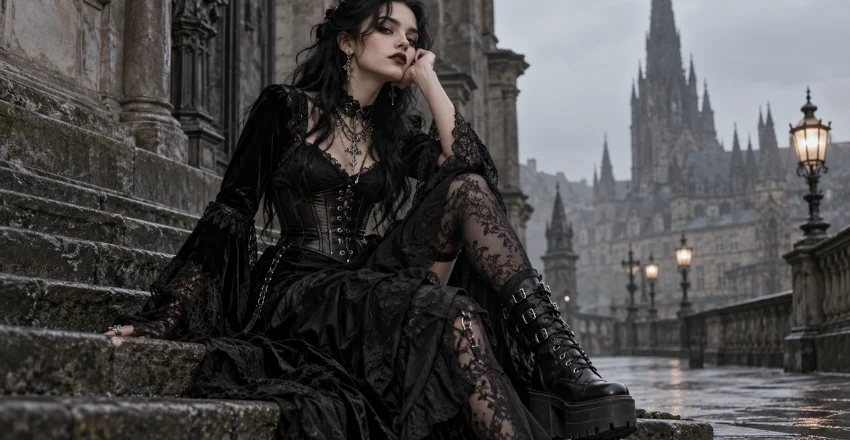
You can create several outfits without buying specialty clothing. Black straight jeans work with a fitted tee, silver jewelry, and combat boots. A long black skirt works with a ribbed knit, belt, and pointed ankle boots. For warmer weather, use cotton, linen blends, or lightweight mesh instead of heavy velvet. Keep layers airy and let accessories carry more visual weight.
Dark sandals, a belt, and silver jewelry can replace winter boots and coats. For a relaxed streetwear direction, pair wide trousers with a close-fitting top. Add a cropped jacket or compact bag to sharpen the proportions. Styleblor’s indie aesthetic guide can help if you like the overlap between vintage and alternative.
How to Shop Without Rebuilding Your Closet
Begin with a closet audit before buying anything new. Set aside black basics, dark denim, boots, belts, and silver-toned jewelry. You may already own enough pieces for several strong outfits. Secondhand stores are useful for leather, denim, lace blouses, long skirts, and unusual jewelry. Online resale also makes older alternative pieces easier to find.
Check measurements because vintage and specialty sizing can vary widely. Buy the gap that changes the most outfits. Better boots may help more than five new tops. A versatile jacket or skirt can also connect pieces you already wear.
Build One Outfit Before You Buy More
Choose one outfit from pieces you already own this week. Add one texture, one strong shoe, and one detail that feels personal. Wear it twice before deciding what your wardrobe needs next.
Frequently Asked Questions
What is goth style?
It is a dark fashion language connected to the goth music subculture and later alternative fashion. Common elements include black clothing, expressive silhouettes, textured fabrics, substantial footwear, and dramatic details. No single item makes an outfit authentic.
Do you have to wear all black?
No, although black remains a useful foundation for many outfits. Burgundy, plum, forest green, gray, navy, white, and muted pastels can all appear. Keep the palette controlled so the colors support the mood.
Can beginners wear this aesthetic casually?
Yes, and casual outfits are often easier to repeat. Start with black jeans, a fitted top, boots, and one accessory. Add more texture only after the base feels comfortable.
What shoes work well for everyday outfits?
Combat boots are flexible because they work with pants, skirts, and dresses. Pointed ankle boots create a sharper, slimmer line. Platforms add drama, but choose a height you can walk in comfortably.
What is the difference between Gothic and goth?
Gothic can describe older artistic, architectural, literary, and fashion references. “Goth” usually refers to the later music-based subculture and its associated fashion. Modern styling often borrows historical Gothic details without copying historical dress.