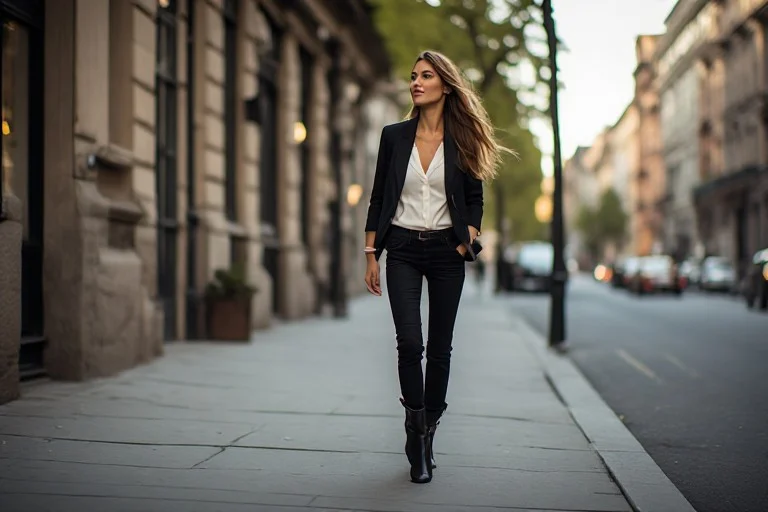

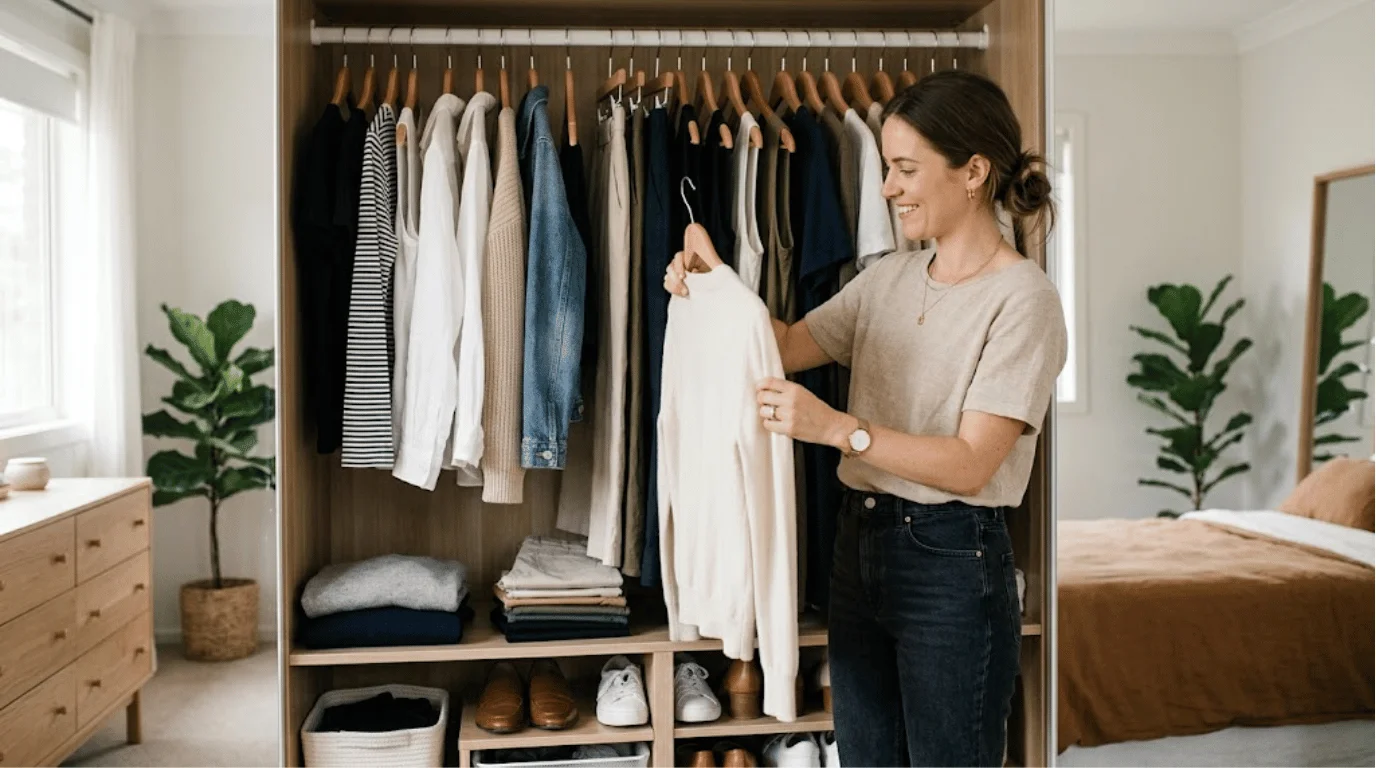
What is a capsule wardrobe? It is a smaller, intentional collection of clothes that work together for your actual life. The point is not owning a certain number of pieces. The point is making everyday outfits easier.
A useful edit contains items you reach for often, plus a few pieces that help those favorites work across different plans. For workdays, these business casual outfit formulas can help you identify useful roles. Start with your own closet before deciding anything needs to change.
Quick answer: A capsule is a flexible group of mixable clothes, shoes, and layers. Choose pieces for the weather, activities, and dress codes in your week. Keep what you wear, set aside what does not serve you, then notice the few gaps that remain.
TL;DR
- A capsule is built around real routines, not a rigid piece count.
- Begin with clothes you already enjoy wearing.
- Use a few reliable colors so more pieces mix easily.
- Test outfit formulas before adding new items.
What is a capsule wardrobe meant to do?
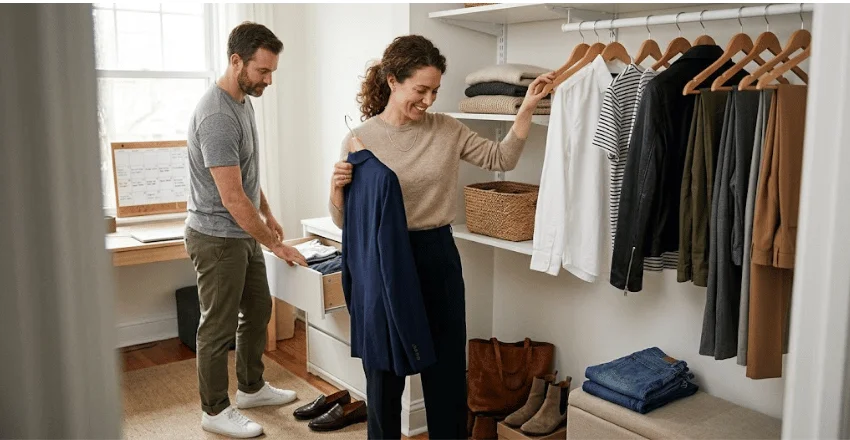
Its job is to reduce friction when you get dressed. Instead of facing many disconnected options, you have a smaller group with clear roles. Each piece should pair with several others and fit at least one recurring part of your life. For a closer look at this, see Barrel Jeans.
That can mean a work-focused edit, a casual edit, or a mix of both. Someone who works from home needs different pieces from someone who is in an office most days. Your routine decides the categories. Open your calendar before your closet, because it shows how often you need work clothes, relaxed layers, walking shoes, and an option that feels right for an evening plan.
There is no magic count. Some people feel comfortable with fifteen pieces for one season. Others need more because their week includes varied weather, travel, workouts, or formal events.
Real life comes first.
| Category | Purpose in an edit | Questions to ask |
|---|---|---|
| Tops | Create everyday combinations | Can each top work with two bottoms? |
| Bottoms | Anchor the silhouette | Do they suit your common plans? |
| Layers | Adapt to weather and dress codes | Do they work open and closed? |
| Shoes | Shift an outfit from casual to polished | Can they handle your usual walking? |
| Accent pieces | Add personality | Do they pair with core colors? |
Start with a wear-first closet audit
Pull out the clothes you wore in the last few weeks. Notice the repeats. They show the fabrics, fits, colors, and shapes that already feel right to you.
Then create three simple groups: pieces you wear often, pieces you might wear with a partner, and pieces that no longer fit your life. The middle group deserves a closer look before you make any decision.
Try the uncertain pieces with your favorites. A shirt may seem difficult on its own, but it works perfectly with your usual trousers and shoes. If an item has no easy pairing after a few tries, place it aside for now.
Wear patterns tell you more than trends.
Choose colors that make mixing simple
Pick two or three core colors that already appear in your closet. Black, navy, brown, cream, gray, denim blue, and olive often make useful foundations, but your own favorites matter more.
Add one or two accent colors if they make you happy. An accent can be a bright top, a printed skirt, or a colored shoe. It works best when at least one core color appears elsewhere in the outfit. Elsewhere on the site: Dark Autumn Color Palette.
You do not need matching shades everywhere. You need enough overlap that getting dressed feels easy. A warm brown layer can connect with cream, soft blue, and dark denim without looking identical.
A breathable pant can be a useful warm weather anchor. These linen pants outfit ideas show one way to use that category for casual days and polished plans.
Keep the palette flexible.
Build around categories, not a shopping list
Start with the categories you use most. Many people need a few everyday tops, a favorite bottom shape, an outer layer, and shoes that handle a normal day. Your list may also include a dress, activewear, or special-event pieces.
For workdays, choose pieces that can handle your routine without feeling costume-like. Focus on layers and shoes that move easily between meetings and everyday tasks.
Begin with useful categories.
Use outfit formulas to test the edit
An outfit formula is a repeatable combination that you know works. It saves time because you start with a structure rather than starting from nothing. Think top plus bottom plus layer, then change the fabric or color.
Try five formulas over a week. For example, wear a knit with trousers and loafers. On another day, wear a tee with a skirt and cardigan. For an evening plan, switch the layer and shoes while keeping one core piece.
The goal is variety without confusion. If several pieces only work in one exact outfit, they may belong in a separate mini collection. If they work with many favorites, they are doing capsule work.
Outfits reveal gaps quickly.
Make shoes part of the plan
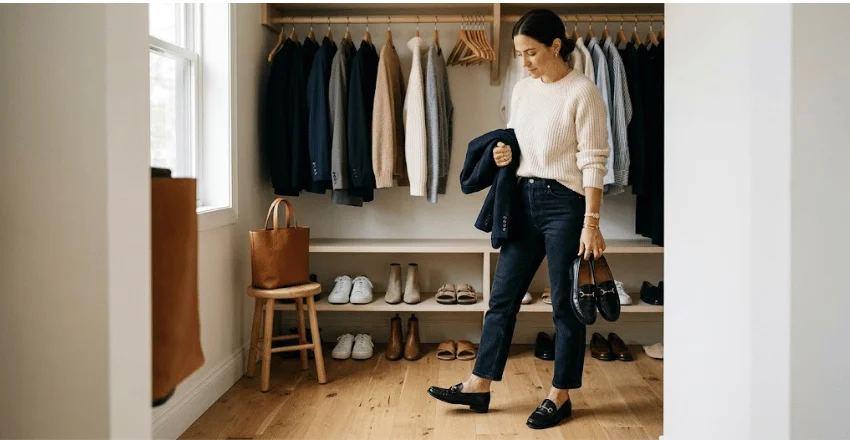
Shoes shape how practical an outfit feels. A good capsule often includes a casual pair, a polished pair, and something that suits weather changes. Choose based on where you walk and how long you stand.
Loafers are especially useful when you want something more polished than a sneaker without moving into a formal look. These women’s loafer outfit ideas can help you see how they fit into casual and work-focused combinations.
Do not save practical footwear for last. Shoes influence the hem lengths, layers, and bags that make an outfit feel complete. Test them with the clothes you wear most often.
Good shoes unlock outfits.
Separate core pieces from seasonal layers
Core pieces usually work through several months. They may include a beloved pair of trousers, a shirt you layer often, or a simple knit. Seasonal pieces add comfort when the weather shifts.
Keep a small group of warm-weather pieces nearby during summer. When the season changes, trade some of them for heavier layers, closed shoes, and different textures. The core can stay steady while the outer edge changes.
This approach prevents the edit from feeling frozen. Your closet can reflect a new season without becoming an entirely different collection.
Let the weather lead.
Build an edit for a busy week

For a busy week, build around the plans that happen most often. Choose your most useful work outfit, your casual daytime outfit, and one option for a social plan. Then look for pieces that can cross between those roles.
A blazer might work over a tee for a meeting, then over a knit for dinner. A simple pair of trousers can work with a relaxed shirt on Friday and a polished top on another day. Repetition becomes a strength when the pieces feel like you.
Keep a note on your phone for missing categories. You may discover that you need a lighter layer or a second pair of polished shoes. That is more useful than a long list of random items.
Small adjustments are enough.
Bottom line
In practice, it is a flexible system built from clothes you wear and enjoy. Start with your real routine, test combinations, and let your own patterns shape the result.
Capsule wardrobe FAQ
There is no required number. What is a capsule wardrobe if not a group that supports you through the week? Start with enough clothes to cover your routine comfortably, then adjust for work, weather, or family plans.
No. You can begin by placing a selected group at the front of your closet. Keep the rest nearby while you learn what you truly miss and what you never reach for.
Yes. Color and prints bring personality. Use them when they connect with at least one neutral or recurring color in your edit, so they can work with multiple outfits.
Choose shapes, textures, and accent colors you genuinely enjoy. A capsule should make dressing easier, not erase your style. One interesting shoe, print, or layer can change a familiar outfit.
Review your pieces when the weather shifts or your routine changes. Add or remove layers as needed, then repeat your outfit tests before deciding on the next adjustment.