

Super hold hairspray is made for styles that need more control than a flexible finishing spray provides. It can secure updos, preserve volume, control flyaways, and help hair resist humid conditions. The right formula should hold your shape without making every strand feel rigid.
Direct answer: A strong finishing spray works best when you need structured, longer-lasting control for curls, updos, smooth styles, or lifted roots. Choose a fine mist with humidity resistance and brushable hold. Apply light layers from about 8–12 inches away instead of soaking one section.
| What to check | What it means for your hair |
|---|---|
| Hold level. | Strong or maximum control for styles that must stay shaped |
| Mist quality | Fine sprays distribute product more evenly. |
| Humidity resistance | Helps reduce frizz and shape loss in damp weather |
| Brushability | Makes restyling and removal easier |
| Drying speed | Reduces wet spots and product buildup |
| Finish | Can range from natural and touchable to firm and highly structured |
| Best uses | Updos, curls, volume, sleek styles, flyaways, event hair |
What “Super Hold” Really Means
Hold labels are not standardized across every brand. One company may call a formula “strong,” while another uses numbers or terms such as maximum hold. Kenra, for example, places its Volume Spray 25 within its high-hold range.
A stronger formula usually creates more structure around the finished style. That can help curls keep their shape and keep lifted roots from collapsing. It can also reduce movement if too much product is applied. Modern strong formulas do not automatically mean helmet-like hair.
Several current brands specifically promote fine mists, brushable finishes, or reduced flaking. Those qualities matter when you want control without a visibly coated finish.
When Super Hold Hairspray Makes the Most Sense
A maximum-control formula earns its place when the hairstyle matters more than free movement. Wedding hair, formal updos, polished ponytails, lifted blowouts, and defined event curls are common examples. Stronger control also helps hair that drops quickly after styling.
Humidity is another reason to increase hold strength. Moist air can disturb a carefully formed shape and encourage frizz. Many current strong formulas specifically include humidity-resistance claims for that reason. You may not need maximum control for every style.
Loose waves, soft texture, and everyday movement often suit medium or flexible formulas better. Matching the product to the hairstyle prevents unnecessary stiffness.
Strong Hold vs. Flexible Hold: Which Should You Choose?
| Feature | Super or strong hold | Flexible or medium hold |
|---|---|---|
| Control | High | Moderate |
| Movement | Limited to moderate | Greater movement |
| Best for | Updos, polished styles, lasting volume | Waves, soft curls, everyday styling |
| Restyling | Depends on formula | Usually easier |
| Humidity support | Often emphasized | Varies |
| Risk from overapplication | Stiffness or buildup | Less severe |
| Ideal stage | Final setting | Styling and finishing |
Verdict: choose stronger control when your finished shape must survive hours of wear. Choose flexible control when movement and easy restyling matter more. A fine, buildable mist offers the best middle ground for many people.
7 Ways to Get a Strong Hold Without Crunching
1. Start With Completely Dry Hair
Finishing spray usually works best after the style is already dry. Moisture can change the finished shape while the product sets. Several professional formulas specifically direct users to apply the spray to dry, styled hair. Finish your blowout, curls, or smoothing work first. Let heated sections cool before the final application. Cooling helps the style settle before you lock it down.
2. Keep the Can Away From Your Head
Spraying too close concentrates the product on a small area. That can create wet patches, stiffness, and visible residue. Current manufacturer directions commonly suggest distances around 8–12 inches. Use short, controlled bursts rather than one long spray. Move your hand as you apply the mist. The goal is an even veil across the finished shape.
3. Build Hold in Thin Layers
One heavy application can overwhelm fine or easily weighed-down hair. Two lighter passes usually give you more control over the result. Layering also lets you stop when the style feels secure. Let each mist settle for a few seconds before adding more. Check movement with your fingers before the next layer. This method helps preserve shape without immediately creating a hard finish.
4. Target the Areas That Need Support
Your entire head rarely needs the same product amount. Roots may need lift, while the surface only needs flyaway control. Targeted application helps keep the finished look lighter. Kenra advises spraying between layers near the base when building volume. IGK suggests putting a small amount on the hand for controlled work around bangs.
Both approaches use placement instead of excess product. This technique also works well with highly layered styles. A shag haircut depends on visible separation and crown movement. Concentrating spray only where support is needed helps preserve that texture.
5. Match the Strength to Your Hair Type
Fine hair can benefit from firm control, but heavy application may flatten its volume. Thick hair can often tolerate more product because it has more mass to support. Curly hair usually benefits from careful sectioning instead of coating every curl together.
Shorter cuts need thoughtful placement too. Styleblor’s short-hair guide explains how shorter shapes expose roots and growth patterns more clearly. Use finishing spray to support the intended shape rather than forcing every strand into place.
6. Use the Smallest Amount That Works
More product does not always create a better finish. Excess spray can make strands stick together and reduce natural movement. Start conservatively, then add another light layer only where the shape feels weak. This matters around bangs and face-framing pieces.
The fringe haircut guide shows how different bang shapes have different movement and maintenance needs. A blunt fringe may need stronger direction than a soft curtain shape.
7. Choose Brushability When You Need Flexibility
Firm control and brushability can exist in the same product. Several current formulas specifically claim strong hold while remaining workable or easy to brush through. That feature is useful when you want control without committing to a completely fixed surface.
Brushable control also makes sense for cuts with several moving sections. A bixie haircut mixes short structure with longer pieces around the front. Light, selective finishing lets those sections stay recognizable.
What to Look for Before Buying
Start with the finish rather than the strongest claim on the can. Look for words such as fine mist, fast-drying, brushable, flake-free, or humidity-resistant. Those details tell you more about everyday performance than a dramatic hold label alone.
Consider fragrance and aerosol format as well. Strong scents can remain noticeable after styling, while aerosol and non-aerosol sprays distribute product differently. Check the label if either factor matters to you.
Price also varies widely across the U.S. market. Mass-market and salon formulas can both provide strong control, so cost alone does not predict performance. Focus on the features your hairstyle needs most.
Useful Buying Priorities
- For fine hair: lightweight mist, buildable application, volume support.
- For thick hair: firm control, broad coverage, humidity resistance.
- For curls: fine mist, low residue, targeted application.
- For updos: maximum control, quick drying, and flake resistance.
- For sleek styles: anti-frizz support and a clean surface finish.
- For frequent restyling: brushable or workable control.
Common Mistakes That Make Strong Spray Feel Worse
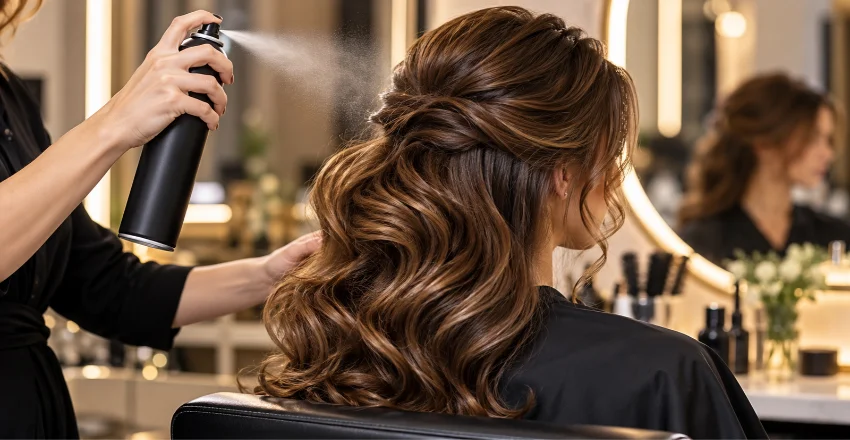
The biggest mistake is treating finishing spray like paint. Saturating one area makes the product more visible and removes natural movement. Distance, movement, and layering produce a cleaner result. Another mistake is using maximum hold before the hairstyle is finished. A firm product can make later adjustments harder.
Use lighter styling products during construction, then save strong control for the final shape. Brushing aggressively through a firmly set style can also create unnecessary friction. If you expect to reshape the hair later, choose a product described as workable or brushable. Otherwise, wash the product out instead of repeatedly forcing a brush through fixed sections.
Safety Matters With Aerosol Formulas
Many aerosol finishing products are flammable and packaged under pressure. Keep the can away from flames, sparks, smoking materials, and high heat. Follow the warning and storage instructions printed on your specific product.
Avoid spraying directly toward your eyes or face. Use the product in a ventilated space and only as directed. The package label should remain your main safety reference.
Frequently Asked Questions About Super Hold Hairspray
Does super hold hairspray make hair crunchy?
It can if too much product lands in one place. Fine-mist formulas and layered application can reduce that problem. Look for brushable, workable, or non-sticky claims when softness matters.
Is strong finishing spray good for fine hair?
Yes, especially when fine hair loses volume or shape quickly. Use light layers because too much product can weigh down the roots. Targeting the base is usually better than soaking the full length.
Can it help with humidity?
Many strong formulas are designed with humidity resistance in mind. Their job is to help preserve structure and reduce frizz when moisture rises. Performance still varies by formula and hair type.
How far away should I spray?
Many professional directions fall around 8–12 inches from the hair. That distance helps distribute the mist instead of creating a concentrated wet spot. Always follow the directions on your own first.
Should I use strong spray before or after styling?
Use it mainly as a finishing step unless your product specifically supports working or restyling. Build the shape first, then lock it in with short bursts. This approach gives you more control over the final movement.
The Bottom Line
Strong finishing spray works best when it supports the hairstyle instead of covering it. Match the hold level to your style, use a fine mist from the proper distance, and build control gradually. Those three choices usually matter more than buying the most aggressive hold label.
For more styling guidance, explore Styleblor’s hair guides before choosing your next cut or finishing routine. Think about the movement your hairstyle needs, then choose products that preserve that movement. A well-matched spray should make your styling easier, not more noticeable.
—–