

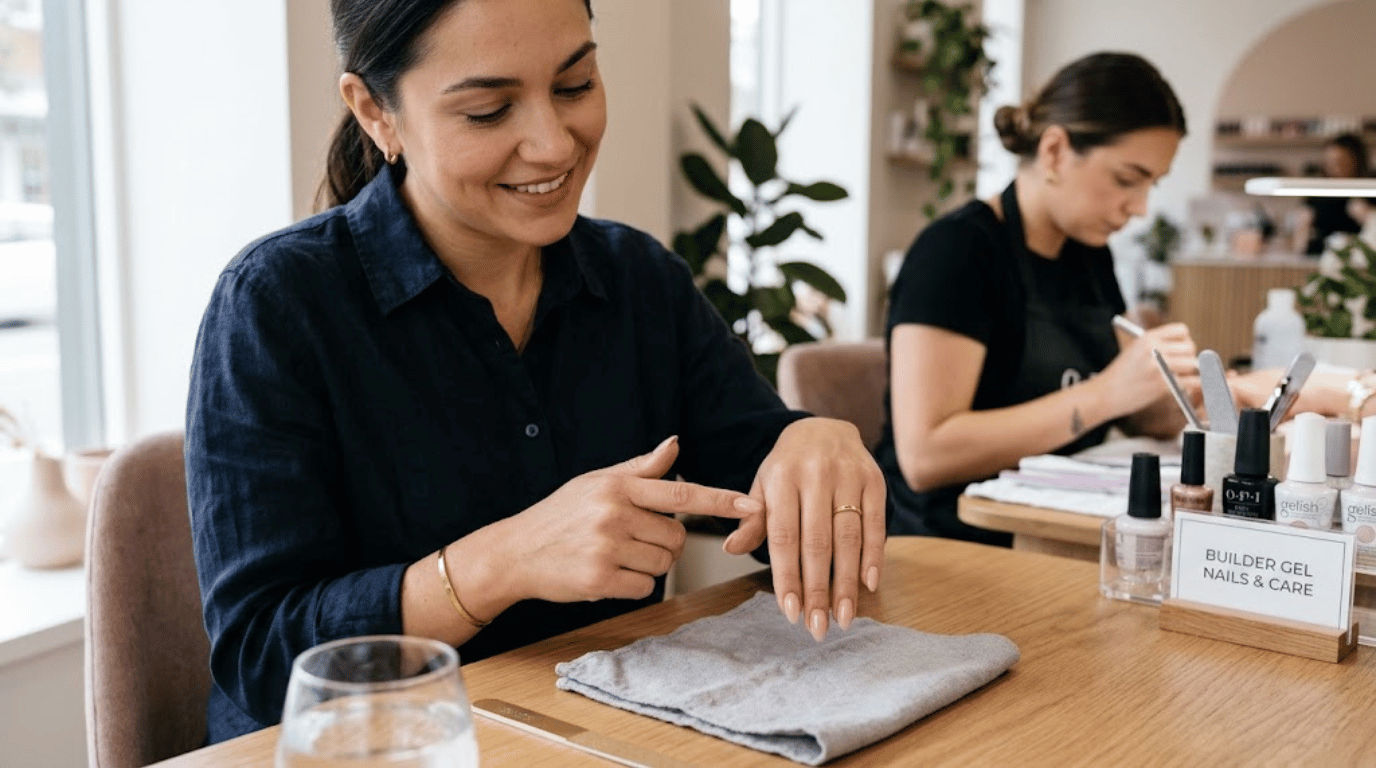
If you’re wondering how long does builder gel last, plan on about three to four weeks between appointments. Some sets need attention sooner, while others remain intact beyond four weeks. Nail growth, application quality, lifestyle, and aftercare all influence your personal schedule.
Builder systems are designed to add structure instead of providing color alone. That extra support can reduce everyday chipping compared with thin polish. Your natural nail keeps growing underneath, so maintenance matters even when the surface still looks good.
| Builder manicure question | Typical answer |
|---|---|
| Normal wear time | About 3–4 weeks |
| Common fill schedule | Every 3–4 weeks |
| Can it last longer? | Sometimes, depending on product and nail growth |
| Main reason for maintenance | Regrowth, lifting, or structural imbalance |
| Compared with gel polish | Usually thicker and more supportive |
| Best response to lifting | Book maintenance instead of picking |
| Removal | Depends on whether the formula is soak-off or file-off |
Quick answer: A professionally applied builder manicure usually wears for about three to four weeks before maintenance. Fast nail growth, lifting, long lengths, or heavy hand use can shorten that window. Even an intact set may need rebalancing as the natural nail grows forward.
How Long Does Builder Gel Last Before You Need a Fill?
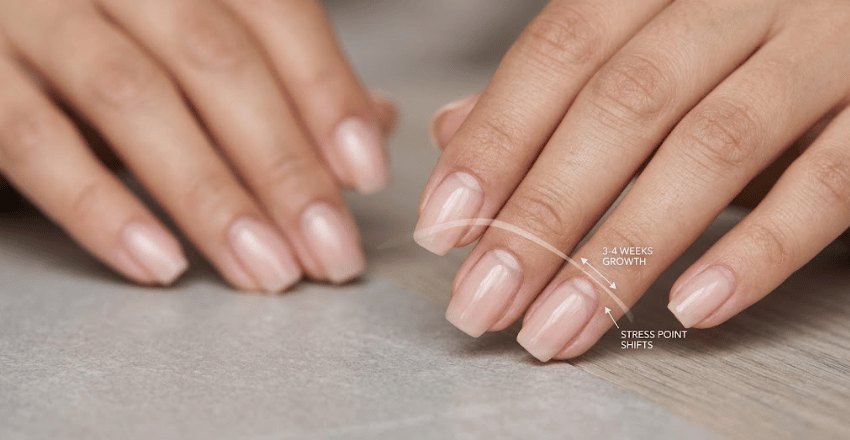
Three to four weeks is the most useful planning range for most clients. Brands that make BIAB systems commonly recommend maintenance around three to four weeks, and some salons allow a broader three-to-five-week window.
That range describes maintenance timing, not a guaranteed failure date. Your coating does not suddenly expire at the end of week four. Instead, new nail growth gradually shifts the enhancement’s placement.
Fresh product is strongest when its structure matches the nail beneath it. As the nail grows, the built-up stress area moves farther toward the tip. A technician can restore that balance during a fill.
A fill normally addresses the visible gap near the cuticle. The technician can also inspect lifting, reshape the nail, and restore its structure. Waiting much longer may make a simple maintenance visit more difficult.
What Builder Gel Does Differently From Regular Gel Polish
Builder gel is a thicker gel system designed to add structure to the natural nail. Technicians can use it for overlays, reinforcement, repairs, and limited added length. Regular gel polish mainly adds color and shine without building the same structure.
That structural difference affects how each manicure wears. A thin color coat follows the natural nail’s movement more closely. A correctly built overlay can provide more support around the nail’s stress areas.
The products also may require different removal methods. Some soft formulas can soak off with acetone, while hard formulas require careful filing. Ask your technician which system was used before attempting removal.
| Feature | Structured overlay | Regular gel polish |
|---|---|---|
| Main purpose | Strength and structure | Color and shine |
| Typical maintenance | Around 3–4 weeks | Often around 2–3 weeks |
| Thickness | Thicker | Thin |
| Fill possible | Often yes | Usually removed and reapplied |
| Added structure | Yes | Limited |
| Removal | Formula-dependent | Commonly soak-off |
Why Builder Gel Sometimes Lifts Before Three Weeks
Early lifting often starts with adhesion problems rather than weak product. Oils, moisture, cuticle residue, or product touching surrounding skin can interfere with bonding. Correct preparation therefore matters as much as the gel itself.
Natural nail characteristics also change wear time. Manufacturer guidance notes that softer or oilier nails may have shorter adhesion times. Faster-growing nails also show a maintenance gap sooner.
Daily habits also matter after the appointment. Using fingernails to open containers creates force near the free edge. Repeated impact can eventually encourage cracks or lifting around stressed areas.
Longer nails create more mechanical leverage during everyday tasks. A small impact at the tip produces more force farther down the nail. Shorter structured manicures may therefore feel easier to maintain for active hands.
Existing nail damage can also affect how reliably an enhancement adheres. Peeling or heavily compromised nail plates provide a less consistent surface. A qualified nail professional can assess whether application should be delayed.
What Happens During Weeks One Through Four?
The first week normally gives you the cleanest cuticle line. Growth is limited, and the structure remains close to its original position. If problems appear within days, you can contact your salon.
During week two, most well-applied sets should still look polished. A small area of natural growth may become visible near the cuticle. Your individual growth speed determines how noticeable that gap becomes.
Week three is a common maintenance checkpoint. The manicure may remain fully intact, but regrowth becomes easier to see. This is also a useful time to inspect every nail for lifting.
By week four, many clients are ready for an infill or rebalance. Product makers commonly recommend maintenance around this stage. Stretching appointments further should depend on nail condition rather than appearance alone.
How to Make Builder Gel Last Longer
Good wear begins before your hands leave the salon. Proper preparation, suitable products, and correct curing create the foundation for reliable adhesion. Home care then protects that work from unnecessary stress.
Treat your nails as finished enhancements, not household tools. Use an opener for cans, packages, and stubborn lids. Wear gloves when cleaning, gardening, or doing wet household jobs.
Keep the skin around your nails comfortable with regular moisturizing. Dermatologists recommend moisturizing nails and cuticles between gel manicures, and they warn against picking at gel coatings.
Try these habits between appointments:
- Apply cuticle oil or moisturizer regularly.
- Wear gloves when cleaning or using household chemicals.
- Avoid picking lifted edges.
- Don’t use your nails as scraping tools.
- Keep your scheduled maintenance appointment.
- Contact your salon if a crack develops.
- Have damaged enhancements repaired promptly.
Upkeep habits carry over to other looks too, such as this short hair maintenance guide. Your nail length should also suit your routine. Someone who types all day has different stresses than someone handling tools. A technician can adjust thickness, length, and shape around those demands.
When Should You Remove It Instead of Getting a Fill?
A fill makes sense when the remaining product is secure and structurally sound. Your technician removes any compromised areas before replacing missing product near the cuticle. The finished nail is then reshaped and rebalanced.
A complete removal may be better when extensive lifting affects several nails. Significant cracking, product breakdown, or a planned system change can also justify removal. Your technician should decide after inspecting the set.
Never peel an enhancement from the natural nail. Peeling can pull surface layers from the nail plate along with the coating. Dermatologists specifically advise against picking gel manicures as they begin coming loose.
Removal instructions also depend on the exact formula. A soak-off product and hard gel should not be treated identically. Confirm the product type before attempting any home removal.
Is Four Weeks Too Long?
Four weeks can be a normal maintenance point for a sound manicure. BIAB makers commonly recommend maintenance every three to four weeks. Some formulas advertise longer wear under suitable conditions.
That does not mean everyone should automatically stretch appointments to five weeks. Visible lifting, cracks, discomfort, or a badly shifted structure should prompt earlier maintenance. Condition matters more than achieving a specific number.
Pay special attention to the area near the cuticle and sidewalls. A clean growth gap is different from a separated product edge. Contact your nail technician if you cannot tell which one you see.
UV and LED Lamp Care Matters Too
Gel enhancements require curing under a compatible lamp system. Lamp exposure is separate from wear time, but it’s part of responsible manicure care. Correct curing also depends on following the product manufacturer’s instructions.
Dermatologists recommend protecting your hands before gel manicures with broad-spectrum, water-resistant SPF 30 or higher on exposed skin. Dark, opaque fingertip-free gloves are another option.
Avoid mixing products and curing equipment without checking compatibility. Cure schedules differ among professional systems. An improperly cured coating can create performance and safety concerns.
Planning Beauty Maintenance Around Your Manicure
Beauty maintenance becomes easier when recurring appointments share one calendar. Nail fills, hair trims, color visits, and other services often follow predictable cycles. Planning them together can simplify budgeting and scheduling.
For another maintenance-focused guide, StyleBlor explains what changes after choosing short hair. Readers considering color can also review the site’s light brown hair maintenance guide. Both explain how appearance choices create ongoing upkeep, not one-time appointments.
If jewelry and beauty styling are part of your routine, read StyleBlor’s helix piercing planning guide. It covers placement, costs, and aftercare considerations for another long-term style choice. Thinking ahead about upkeep can prevent several appointments from landing in the same week.
Signs It Is Time to Book Your Next Appointment
Visible regrowth alone is often enough to schedule routine maintenance. Act sooner if the product begins lifting, cracking, or separating. Discomfort is another reason to stop stretching the appointment.
Do not glue down a lifted area or cover damage with another cosmetic layer. That hides the problem without restoring the nail’s structure. A professional can remove compromised material and decide whether repair or replacement makes sense.
Seek medical advice for persistent redness, swelling, pain, or unusual nail changes. Cosmetic services should not replace medical assessment for ongoing nail problems. See a board-certified dermatologist for persistent concerns.
FAQ
How long does builder gel last on natural nails?
Most professionally applied structured manicures need attention after about three to four weeks. Your growth rate and daily habits can move that schedule earlier. Proper application and maintenance also affect how long the set stays secure.
Can builder gel last five weeks?
Some formulas and clients can reach five weeks without obvious chipping. Manufacturer claims vary, and nail growth continues regardless of product durability. A long-lasting surface doesn’t automatically mean the structure needs no maintenance.
How often should I get a builder manicure filled?
A three-to-four-week schedule is a practical starting point. Faster growth, lifting, or longer nails may require earlier appointments. Your technician can adjust the schedule after seeing how your first sets wear.
Why does my manicure lift after one week?
Premature lifting can come from preparation, nail chemistry, application, curing, or daily stress. Product touching skin can also interfere with clean adhesion. Ask your technician to inspect the failure pattern before changing products.
Is builder gel more durable than regular gel polish?
It usually provides more structure because it’s thicker and shaped to reinforce the nail. Gel polish mainly supplies a thin color coating. Exact wear varies by product, application, and the person wearing it.
Should I peel off lifting gel?
No, avoid peeling or picking at a lifting enhancement. Pulling it away can remove surface layers from your natural nail. Arrange safe removal or repair instead.
The Bottom Line
Expect a structured manicure to need professional attention about every three to four weeks. Nail growth often determines that schedule before the coating itself wears out. Lifting, cracks, or structural changes are better signals than chasing a maximum wear claim.
Protect the set between visits and resist picking at loose areas. Book maintenance while most of the enhancement remains secure. That approach keeps your manicure polished without pushing wear past what your nails can comfortably handle.