
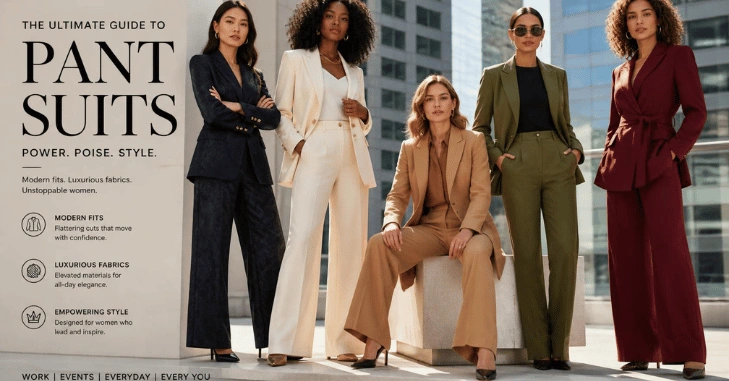
Pant suits for women are no longer limited to formal offices. The strongest 2026 versions balance clean tailoring, comfortable movement, and styling flexibility. Choose the silhouette for your calendar first, then refine fabric, color, and shoes.
Quick answer: Start with fit at the shoulders, waist, and trouser hem. Choose crepe or wool blends for work, linen blends for warm weather, and satin or fluid crepe for events. Then adjust the styling with tops, shoes, and jewelry instead of buying a new suit.
| Decision | Reliable starting point | Why it works |
| Work | Single-breasted blazer with straight or softly wide trousers | Clean, adaptable, and easy to separate |
| Wedding or cocktail event | Fluid crepe, satin, velvet, or subtle jacquard | Looks celebratory without heavy embellishment |
| Warm weather | Linen blend or lightweight twill | Feels lighter while keeping more shape than soft jersey |
| Versatile color | Navy, charcoal, black, camel, or deep brown | Works with common shoes, bags, shirts, and knits |
| First alteration | Hem trousers for your most-used shoe | Improves proportion and prevents pooling |
Key takeaways
- Pick the occasion before choosing the cut.
- Shoulders and trouser length matter more than decorative details.
- Modern tailoring includes relaxed, oversized, and waist-defined shapes.
- Use tops, shoes, and accessories to change the suit’s formality.
- Buy separates you can wear on their own whenever possible.
Are Pant Suits for Women in Style in 2026?
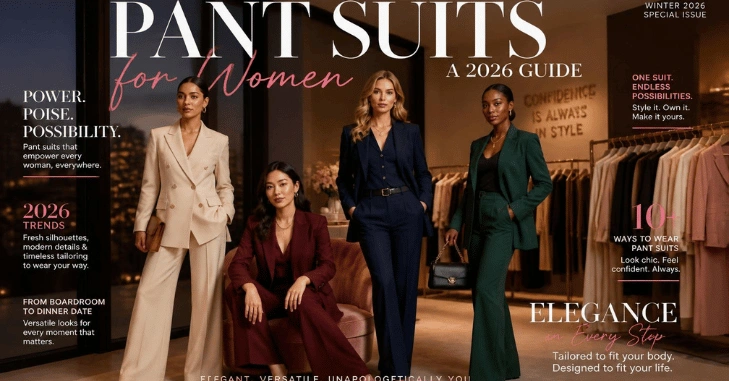
Yes, Pant suits for women, but the modern suit is less rigid than older corporate versions. CNA reported softer cuts, oversized proportions, relaxed trousers, and lighter fabrics across current designer tailoring. Vogue Business also identified bigger shoulders and cinched waists within the 2026 silhouette shift.
That range gives you two useful directions: relaxed volume or sharper waist definition. Both work when the proportions feel intentional, and movement stays easy. Let your frame, setting, and personal style guide the choice rather than a single trend.
Choose the Right Pantsuit for Your Occasion
For work, start with a single-breasted blazer and straight or softly wide trousers. Navy, charcoal, black, camel, and deep brown pair easily with office basics. Styleblor’s business casual guide for women also favors tailored bottoms, finished necklines, and structured layers.
For weddings or cocktail events, fabric should look more celebratory than office suiting. Satin, polished crepe, velvet, or subtle jacquard can add depth without heavy decoration. Styleblor’s cocktail dress code guide also supports tailored trouser outfits when the finish feels refined.
For everyday wear, relaxed tailoring gives you more room to mix pieces. Wear the blazer with jeans, or pair the trousers with a knit and sneakers. A linen blend or softer twill keeps the outfit from reading like an office uniform.
| Style | Best for | Advantages | Watch for |
| Single-breasted tailored | Work, interviews, dinners | Versatile, easy to layer, simple to separate | Can feel plain without thoughtful accessories |
| Double-breasted | Creative offices, dinners, fashion-led workwear | Strong shape and visual presence | Extra fabric can overwhelm smaller proportions |
| Relaxed oversized | Everyday wear, travel, creative settings | Comfortable and current | Needs controlled trouser length and sleeve proportion |
| Three-piece with waistcoat | Events, work, transitional seasons | More combinations from one set | Several layers can feel bulky in warm weather |
| Satin or fluid crepe | Weddings, cocktail events, evening dinners | Dressier surface and softer movement | Shine can emphasize wrinkles or poor fit |
| Linen blend | Summer workdays, travel, daytime events | Light and relaxed | Wrinkles more readily than wool blends |
For most wardrobes, choose a single-breasted two-piece in midweight crepe or a wool blend. Pick straight or softly wide trousers, then tailor the hem. This combination moves from work to dinner and separates easily.
How Should a Women’s Pant Suit Fit?
Fit starts at the shoulder because that area is difficult to alter cleanly. The seam should meet your natural shoulder unless the jacket is intentionally oversized. The collar should sit close without lifting away from your neck.
Across the bust and waist, the jacket should close without pulling. Horizontal stress lines usually mean the body is too tight. Extra fabric collapsing around the waist can mean the cut is too large.
Trouser fit depends on the intended leg shape. The waistband should stay secure without digging, and the pockets should lie flat. Full-length hems should skim the shoe without pooling on the floor.
Before keeping a suit, sit, reach, and walk in the full outfit. Styleblor’s interview outfit guide uses the same movement test for professional clothing. A suit that needs constant adjustment will feel distracting after an hour.
Choose Fabric by Season and Purpose
Wool blends and midweight crepe are dependable choices for year-round indoor wear. They hold a clean line better than many soft knits. Look for enough structure to keep lapels and trouser creases defined.
Linen and linen blends suit hot weather because they feel light—pure linen wrinkles quickly, which can work for relaxed styling. Styleblor’s linen pants guide explains why fabric weight changes drape, opacity, and structure.
Velvet, satin, and heavier crepe suit evening events better than everyday office use. Their surface catches light and makes simple tailoring feel more festive. Keep accessories restrained when the fabric already has shine.
Use Color to Control the Mood
Neutral suits earn their place because each piece workson its own.. Black, navy, charcoal, cream, camel, and brown mix easily with shirts and knitwear. Choose the neutral that already matches most of your shoes and bags.
Color can be the strongest part of the outfit, especially for events. Cobalt, burgundy, emerald, red, and powder blue can make simple tailoring feel intentional. Keep the top and shoes quieter when the suit carries the color.
What to Wear Under a Pantsuit
Your base layer controls whether the same suit reads corporate, casual, or evening. A crisp shirt feels professional, while a fine knit softens the look. A satin shell or fitted bodysuit can make the set feel more evening-ready.
Neckline matters with lapels. Crew, scoop, square, and soft V-necks usually sit cleanly under most jackets. Avoid bulky layers that bunch at the armholes or push the blazer away from your shoulders.
Try the full outfit before buying the underlayer. Raise your arms, sit down, and check the jacket from the side. The best base layer stays smooth and does not need frequent pulling.
Match Shoes to the Trouser Shape
Choose shoes based on trouser length before heel height. Wide-leg pants need enough shoe presence to stay visible under the hem. Pointed pumps, loafers, boots, and structured flats can all work with balanced proportions.
Cropped trousers expose more of the shoe, so cleaner shapes usually look sharper. Loafers, slingbacks, ballet flats, and slim ankle boots are easy options. Styleblor’s guide to loafers for women explains how sole thickness changes the mood of tailored outfits.
For long workdays, comfort should affect the decision. Choose a heel you can walk in, or use polished flats instead. The right hem should still work with the shoe you plan to wear most often.
Style One Suit Four Different Ways
A versatile suit should create several outfits without new tailoring. Start with the full matching set, then separate the jacket and trousers. This approach increases wear and helps you judge whether a suit deserves closet space.
- Work: Add a fine knit, loafers, and a structured tote.
- Interview: Choose a crisp shirt, low heel, and quiet jewelry.
- Dinner: Swap in a satin shell, pointed shoe, and statement earrings.
- Weekend: Wear the blazer with jeans, or pair the trousers with sneakers.
If your schedule includes interviews, use a quieter version of the work formula. Keep the palette controlled and the shoes polished. Save stronger color, shine, or oversized jewelry for less formal settings.
Common Pantsuit Mistakes to Avoid
Most suit problems start before styling. Buyers often focus on color while ignoring shoulder fit, trouser length, or how the fabric behaves. Check those structural details before adding shoes or jewelry.
- Buying a jacket that pulls across the bust or back.
- Keeping trousers too long because the original hem feels permanent.
- Choosing evening shine for a conservative daytime office.
- Adding several statement accessories to an already bold suit.
- Buying a matching set whose jacket and trousers do not work separately.
A Simple Buying Order That Saves Time
A fixed order can reduce fitting-room confusion. Start with the hardest details to change, then move toward styling choices. This prevents a strong color or sale price from hiding a poor fit.
- Choose the main occasion.
- Check the shoulder line and collar.
- Check the bust, waist, and sleeve movement.
- Check the trouser rise, seat, and leg shape.
- Judge the fabric in natural light.
- Try the suit with the shoes you plan to wear.
- Decide whether both pieces work separately.
Frequently Asked Questions
Are pantsuits appropriate for weddings?
Yes, when the suit matches the invitation and venue. Choose polished fabric, intentional tailoring, and event-ready shoes for cocktail or formal celebrations. Avoid white or bridal shades if the couple hasn’t invited that color.
Which pant suits for women offer the most everyday versatility?
A single-breasted two-piece in navy, charcoal, black, camel, or deep brown is easy to repeat. Straight or softly wide trousers work with many shoe shapes. Midweight crepe or a wool blend also transitions well between seasons.
Can I wear sneakers with a pantsuit?
Yes, when the setting is casual or creative. Choose clean, low-profile sneakers and keep the trouser hem controlled. For traditional offices or formal events, polished loafers, flats, or heels are safer.
Should a pantsuit blazer be fitted or oversized?
Either can work if the proportions look deliberate. A fitted jacket creates more waist definition, while an oversized cut feels relaxed. Keep sleeves, shoulders, and trouser volume balanced so the shape looks intentional.
What color suit should I buy first?
Start with a color that already works with your shoes, bags, and tops. Navy, charcoal, black, camel, and brown are easy to remix. Choose a brighter suit first only if a strong color already fits your wardrobe.