
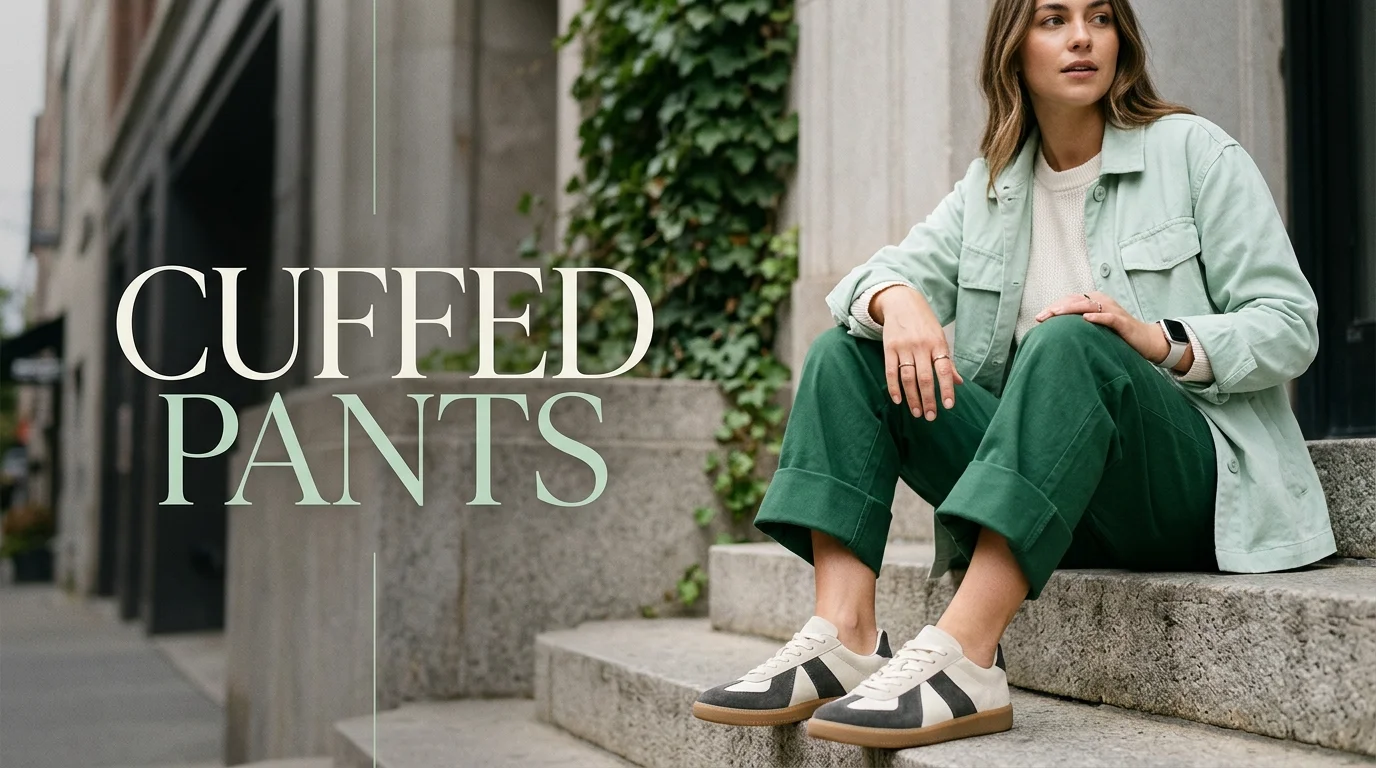
Cuffed pants can make a simple outfit look sharper without adding another accessory. The folded hem creates structure and draws attention toward your shoes. The key is choosing a cuff that suits the fabric, leg shape, and occasion.
Quick answer: A good cuff should look intentional, sit evenly, and complement the width of the leg. Slimmer trousers usually need a smaller fold. Relaxed jeans can handle a deeper statement cuff. Keep your footwear clearly visible without leaving an awkward gap above the shoe.
Cuffed Pants at a Glance
| Styling question | Practical starting point |
|---|---|
| Best cuff for tailored trousers | Clean, narrow, pressed fold |
| Best cuff for relaxed denim | One wider, structured turn-up |
| Easiest shoes | Loafers, sneakers, flats, ankle boots |
| Best leg shapes | Straight, relaxed, wide, or gently tapered |
| Main fit concern | Finished length after folding |
| Smart-casual formula | Trouser + knit + loafer |
| Casual formula | Denim + tee + sneaker |
| Biggest mistake | Repeated small rolls that look bulky |
Key Takeaways
- Use one clean fold when you want the hem to look modern and deliberate.
- Match cuff depth to the leg’s width and weight.
- Check the finished length while wearing your intended shoes.
- Let a statement cuff frame footwear instead of covering it.
- Avoid adding bulk around a narrow ankle with several thick rolls.
- Tailored cuffs work best when the fabric holds a crisp line.
What Are Cuffed Pants?
A cuff is a folded section of fabric at the bottom of a trouser leg. It may be permanently stitched or created by folding the existing hem. Either version changes the visual weight near the ankle.
Traditional tailoring often uses a fixed cuff to add structure to the lower leg. Casual denim uses the same idea with less formality. Recent fashion coverage also favors larger, cleaner folds on relaxed jeans.
The effect depends more on proportion than on any fixed fashion rule. A wide fold creates a stronger horizontal line near your feet. A shallow fold looks quieter and suits more polished outfits.
Are Cuffed Pants in Style in 2026?
Yes, the detail remains current in 2026, especially on relaxed and wide denim. Recent runway tracking recorded cuffed jeans in both womenswear and menswear collections. Fashion publications have also featured clean, single-fold hems throughout the year.
The current version looks more deliberate than the tight rolls common in earlier casual styling. Wider folds appear on straight and roomy silhouettes. They often stop around the ankle, framing footwear.
That does not mean every trouser needs a dramatic turn-up. Classic tailored cuffs remain quieter and more permanent. The better choice depends on your leg shape, fabric, shoes, and setting.
Choose the Cuff Width for the Leg Shape
Narrow trousers usually look better with a restrained fold. Too much fabric can overwhelm the ankle and shorten the visible leg. A clean inch or similar modest depth often feels balanced.
Wider denim gives you more room to exaggerate the detail. A single deep fold can reinforce the relaxed shape. Keep both sides even so the result looks designed rather than accidental.
Barrel and tapered styles require more care near the opening. Extra thickness can make an already narrow hem look heavy. Styleblor’s barrel-jeans coverage can help you compare how tapered volume behaves around the ankle.
For broader silhouettes, Styleblor’s bootcut-jeans guide offers another useful lesson about proportion and footwear. Bootcut hems usually work better at full length than with a large roll. The opening needs enough length to retain its intended shape.
Get the Finished Length Right
Always judge the length after creating the cuff. Folding removes visible inseam length and changes where the lower leg ends. A pair that looks perfect uncuffed may become too short after two turns.
Put on the shoes you plan to wear before deciding where to fold. The hem and footwear should look connected, not separated. A large gap can make the lower leg appear visually chopped.
For denim, ankle-length results can work well with loafers, flats, and slim sneakers. Boots need enough space to prevent fabric from bunching around the shaft. Heavier shoes can support a wider cuff better than delicate footwear.
Permanent tailoring needs even more precision because the fold cannot change daily. A tailor should measure the finished hem with your usual shoe height. That approach reduces unwanted break and uneven fabric stacking.
The Best Shoes to Wear With a Cuffed Hem
Loafers are one of the easiest choices because the fold naturally frames them. A clean cuff exposes the vamp and keeps the shoe visible. This combination works with denim, chinos, and tailored trousers.
Styleblor’s loafers-for-women guide recommends controlling the space between denim and the shoe. That principle matters because the exposed ankle becomes part of the outfit. A deliberate gap looks cleaner than random bunching.
Minimal sneakers work well with casual straight or relaxed denim. Keep the fold crisp enough to prevent the outfit from looking unfinished. Chunkier sneakers can support a deeper cuff on wider legs.
Ankle boots create a stronger visual base during colder months. Stop the hem near the top of the boot rather than stacking fabric around it. Pointed boots can also extend the leg line beneath cropped styles.
Flats and low heels suit cleaner, less bulky turn-ups. They work especially well with dark denim or tailored separates. Keep the fold flatter when the shoe itself has a refined shape.
Easy Outfit Formulas for Women and Men
The simplest casual formula starts with straight denim, a plain tee, and clean sneakers. Add one neat fold to expose the shoe. Finish with a short jacket or lightweight overshirt.
For a smarter outfit, try dark denim with a button-down shirt and loafers. A blazer can raise the formality without fighting the relaxed hem. Keep the cuff structured rather than rumpled.
Women can pair roomy denim with a fitted knit and pointed flats. The contrast between volume and a slim upper body creates balance. A belt can add another defined point near the waist.
Men can use chinos, a crewneck knit, and leather loafers for smart-casual settings. A modest trouser cuff keeps the combination classic. Avoid an oversized roll when the rest of the outfit is traditionally tailored.
Double denim also works because the folded hem adds separation near the bottom. Styleblor’s Canadian-tuxedo guide explains how wash contrast keeps denim outfits from looking flat. Use the cuff as a finishing detail rather than another competing statement.
Tailored Cuffs Versus Casual Rolled Hems
A tailored cuff is typically pressed, measured, and set in place. It adds weight near the hem and creates a traditional finish. Dress trousers and structured chinos suit this treatment well.
A casual roll remains adjustable and usually feels less formal. You can change its depth depending on footwear or weather. Denim and casual cotton fabrics work best for this approach.
The difference matters because each finish communicates something different. A stitched cuff looks intentional before you style the outfit. A rolled hem feels more relaxed and adaptable.
Very formal evening trousers usually look cleaner with a plain hem. Business separates and smart-casual tailoring can comfortably use cuffs. For casual clothing, personal proportion matters more than traditional rules.
Common Cuffing Mistakes to Avoid
Several small rolls can create unwanted bulk around the ankle. That problem becomes more obvious on heavier denim. One or two controlled folds usually look cleaner.
Uneven folds can also make a polished outfit feel careless. Check both legs in a full-length mirror before leaving home. Small differences become noticeable when the cuff creates a strong horizontal line.
Avoid hiding the entire shoe beneath a wide hem. The fold should help frame footwear rather than compete with it. If the hem collapses over the shoe, reduce its depth or change the length.
Do not force every silhouette into the trend. Flares and many bootcut shapes need their original length to work properly. Styleblor’s flare-jeans guide shows how strongly those shapes depend on hem placement.
How to Make a Temporary Cuff Stay Neat
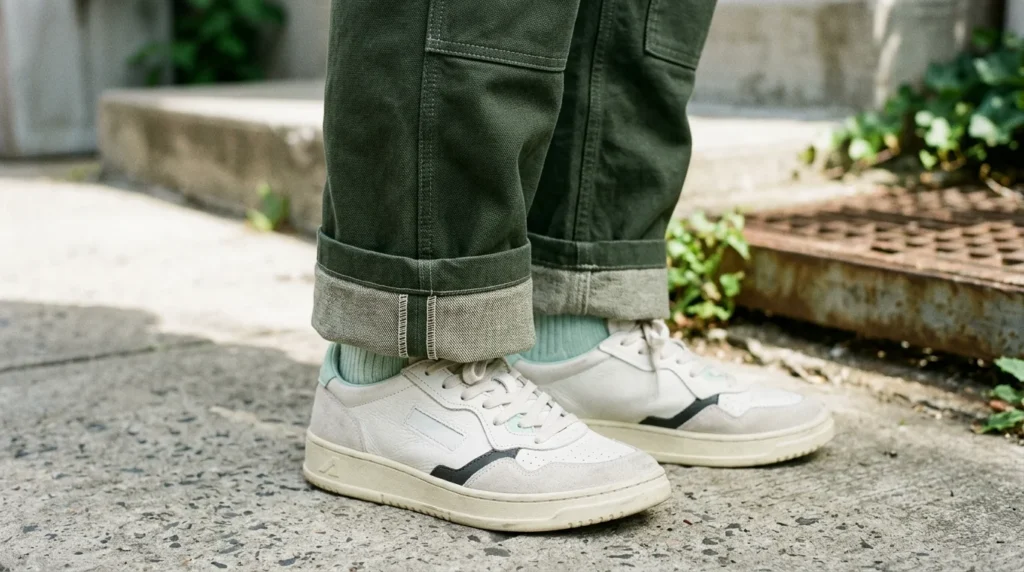
Lay the fabric flat around the ankle. Smooth any twisting before making the first fold. This gives you a clean edge and keeps both sides aligned.
Make one firm turn-up and press it by hand. Add a second fold only when the fabric remains flat. Thick denim often looks better with one larger fold.
A light iron can sharpen cotton trousers or denim when the care label permits. Avoid excessive heat on stretch fibers. Steam can also help create a cleaner crease without heavy pressure.
If a cuff constantly falls, the fabric may be too soft for that depth. Try a shallower fold instead. A tailor can create a permanent finish for consistent results.
When You Should Skip the Cuff
Skip the fold when it damages the intended silhouette. Flares usually need length to create their full line. Many dressier wide-leg styles also look better when they fall smoothly to the shoe.
Also reconsider a cuff when it makes your legs look visually shorter. Reduce the depth before abandoning the look completely. Matching shoe and trouser colors can also create a longer continuous line.
Heavy bunching is another sign the fold is fighting the fabric. Thick materials need room to sit cleanly. A plain altered hem may look better than forcing extra layers around the ankle.
How to Style Cuffed Pants Without Looking Shorter
Keep the fold proportional rather than automatically choosing the widest option. A deep cuff creates a strong line across the lower leg. That horizontal break can shorten the visual silhouette.
Try a smaller fold with footwear close to your trouser color. The reduced contrast keeps the eye moving downward. A higher rise or defined waist can also improve the overall proportion.
Pointed shoes may help create a longer visual line beneath cropped hems. Sleek loafers can achieve a similar effect. Avoid combining a huge fold, high-contrast socks, and bulky footwear unless that contrast is intentional.
Your Next Step
Start with a pair you already own before buying a specialized style. Test one clean fold with three shoe options from your closet. Compare the proportions from the front, side, and back.
Keep the combination that makes both the trouser shape and footwear look clearer. Change the cuff depth before changing the whole outfit. Small adjustments often improve the look more than buying another pair.
For more proportion ideas, explore Styleblor’s guides to baggy clothes, loafers, and different denim shapes. Those guides can help you match hem width with footwear and upper-body volume. Use the same proportion rules across your wider wardrobe.
Frequently Asked Questions
What are cuffed pants?
They are trousers or jeans with fabric folded upward at the bottom of each leg. The fold can be permanently stitched or temporarily rolled. They add visual weight and change the finished length.
Should cuffs touch the top of your shoes?
They can sit close to the shoe, but heavy bunching usually looks untidy. Cropped casual styles can reveal some ankle or sock. Tailored versions usually keep the transition cleaner and more conservative.
How wide should a trouser cuff be?
No single measurement fits every leg shape. Narrower trousers generally suit smaller folds. Wider and heavier jeans can support deeper cuffs without looking top-heavy.
Can short people wear cuffed pants?
Yes, but proportion matters more when the fold creates a strong horizontal line. Use a modest cuff and keep footwear visually connected to the hem. A defined waist can also help maintain length.
Are cuffs appropriate for dress trousers?
Yes, cuffs are a traditional option for many tailored trousers. They work especially well with business and smart-casual clothing. Plain hems remain preferable for many highly formal evening styles.
Are cuffed jeans still fashionable?
Yes. Cuffed denim has appeared throughout 2026 fashion coverage and runway reporting. Current versions often use a clean, noticeable single fold rather than several narrow rolls.