
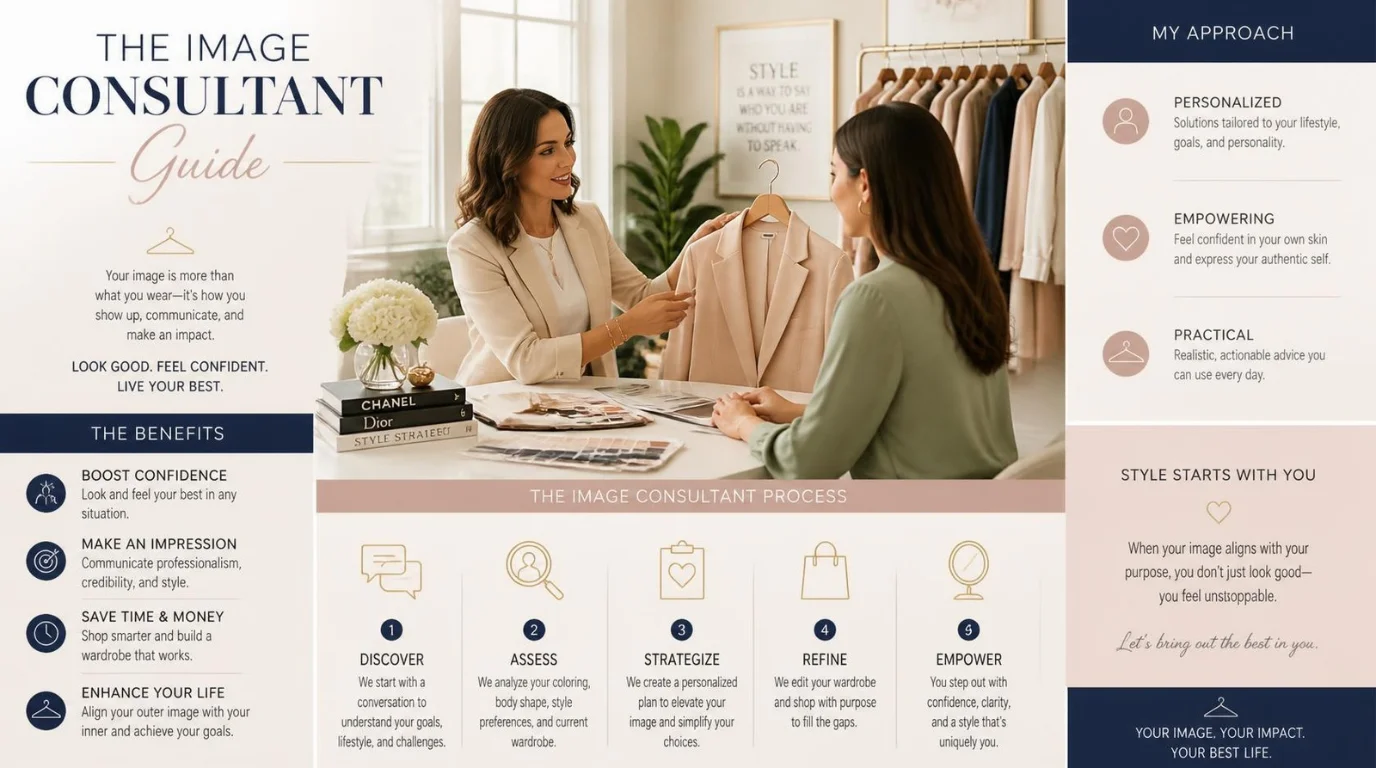
An image consultant helps you shape how your appearance supports your lifestyle, personality, career, and personal goals. Their work can include clothing, color, fit, grooming, wardrobe planning, shopping, and professional presentation. The goal is usually clearer choices, not changing you into somebody else.
Quick answer: Image consulting looks beyond choosing attractive clothes. A professional may assess your wardrobe, colors, proportions, grooming, lifestyle, and presentation goals. The process can help you create a consistent personal image, shop more deliberately, and understand which clothing choices support different parts of your life.
| Question | Quick answer |
|---|---|
| What do they help with? | Wardrobe, color, fit, grooming, shopping, and personal presentation |
| Who hires them? | Professionals, job seekers, entrepreneurs, public-facing workers, and people changing their style |
| Is this the same as personal styling? | No. Styling usually focuses more narrowly on clothing and outfits |
| Do you need a new wardrobe? | Usually not. Existing clothing is often reviewed first |
| Can sessions happen online? | Many services can work virtually, although color and fit assessments may differ |
| What should you prepare? | Your goals, lifestyle needs, wardrobe concerns, budget, and preferred level of change |
Key Takeaways
- Image advice should connect clothing choices with your actual routine and goals.
- A wardrobe review often comes before buying replacement pieces.
- Personal styling and broader image consulting overlap, but their scope differs.
- Color, fit, grooming, and clothing coordination may be covered together.
- The right professional should explain their process before you commit.
- Useful guidance should leave you better equipped to make future decisions yourself.
What Does an Image Consultant Do?

An image consultant evaluates how different parts of your presentation work together. Clothing is often important, but it may represent only one part of the process. Depending on your goals, sessions may also cover grooming, color choices, professional presence, or shopping habits.
The process normally starts with questions about your daily life and desired outcome. Someone preparing for leadership may need different guidance from someone rebuilding a casual wardrobe. A useful consultation should reflect those differences instead of applying one dress formula to every client.
Many consultants also teach clients why certain choices work. That education can be more useful than receiving a list of outfits alone. You can apply the same principles later when shopping, packing, dressing for events, or adapting to seasonal changes.
Seven Services You May Get From Professional Image Consulting
1. Personal Style Assessment
A consultation often begins by identifying what you already enjoy wearing. Your lifestyle, comfort preferences, work environment, and social activities help shape the recommendations. This prevents the process from becoming a makeover disconnected from everyday life.
You may discuss favorite outfits, difficult purchases, unused clothes, and recurring fit problems. Photos can also help reveal patterns in what you wear most often. The resulting direction should feel recognizable rather than costume-like.
2. Wardrobe Review
A wardrobe review examines what you own before suggesting more purchases. The consultant may identify useful basics, duplication, fit problems, missing combinations, and pieces needing alterations. This can make an overcrowded closet easier to use.
You should not automatically expect instructions to replace everything. Strong wardrobes usually develop through editing, coordination, and targeted additions. Styleblor’s guide to Acubi fashion uses a similar closet-first principle when building a specific look.
3. Color Guidance
Color analysis examines how different shades interact with your natural coloring. The goal is to identify colors that create useful harmony and support your preferred appearance. It can influence clothing, accessories, makeup, and sometimes hair-color decisions.
Seasonal color systems are one method used for this purpose. They can provide structure, but individual testing remains more useful than guessing from one feature. Styleblor’s Dark Autumn color palette guide shows how depth, warmth, and contrast can shape wardrobe choices.
4. Fit and Proportion Advice
Clothing can appear different because of proportion, even when the size is technically correct. Jacket length, trouser rise, sleeve placement, and hem position all affect the resulting silhouette. A consultant may help identify proportions that feel balanced for your preferences.
This guidance does not require following rigid body-shape rules. Modern styling can use fitted, straight, oversized, or layered silhouettes successfully. The important question is whether the proportions look deliberate and work comfortably for your routine.
5. Personal Shopping
Personal shopping turns the strategy into specific buying decisions. A professional may prepare a shopping list, recommend retailers, accompany you, or send selected options online. The service should stay connected to an agreed budget.
A shopping session works best after identifying actual wardrobe gaps. Buying first can create more duplication and unused clothing. Clear priorities make it easier to distinguish a useful purchase from an attractive impulse.
6. Professional and Interview Presentation
Career transitions are a common reason people reconsider their appearance. A new industry, promotion, speaking role, or interview can introduce unfamiliar expectations. Image advice may help translate those expectations into clothing that still feels natural.
Workplace clothing also depends heavily on environment and role. A law office, technology startup, school, and creative agency may require different levels of formality. Styleblor’s interview outfit guide explains how researching the workplace can guide those choices.
7. Outfit Planning for Everyday Life
The final stage often involves turning separate garments into repeatable outfits. This reduces morning decisions and helps reveal which pieces have genuine value. Outfit formulas can also simplify travel, workweeks, and changing weather.
The same approach can support more expressive personal styles. You might prefer minimal clothing, vintage references, dark fashion, or trend-driven outfits. Styleblor’s indie aesthetic guide demonstrates how personal style can develop from familiar pieces instead of prescribed shopping lists.
Image Consultant vs. Personal Stylist
These professions overlap, so titles alone do not always tell you what somebody offers. A personal stylist generally concentrates more on clothing, shopping, wardrobe coordination, and outfits. Broader image work can include those services alongside grooming, communication, professional presence, or personal-brand considerations.
| Area | Broader image consulting | Personal styling |
|---|---|---|
| Wardrobe review | Common | Common |
| Personal shopping | Common | Common |
| Outfit creation | Common | Common |
| Color analysis | Often offered | Sometimes offered |
| Grooming guidance | May be included | Less central |
| Professional presence | May be included | Usually limited |
| Personal brand alignment | Often relevant | Sometimes relevant |
| Event dressing | Possible | Very common |
Choose based on the service description instead of the job title. Two professionals using the same title may offer quite different packages. Ask exactly what is included before comparing prices or booking.
Who Can Benefit Most?
Professional advice can help when your wardrobe no longer matches your daily life. This often happens after career changes, relocation, lifestyle shifts, or major changes in routine. It can also help people who repeatedly buy clothes but struggle to create outfits.
You do not need a public-facing career to benefit. Someone returning to work may want a practical wardrobe plan, while another person may want easier casual dressing. The value comes from solving a specific problem rather than pursuing a dramatic transformation.
It may be less useful when you already understand your wardrobe and enjoy managing it independently. You might only need tailoring, a color consultation, or an event stylist instead. Defining the problem first can prevent paying for a larger service than you need.
What Happens During a Consultation?
Your first meeting should establish goals, boundaries, budget, and practical needs. The professional may ask about your routine, work, preferred clothing, shopping frustrations, and upcoming events. Some consultations also request wardrobe photographs or a questionnaire beforehand.
Next, the consultant may review clothing, colors, fit, and outfit combinations. Recommendations should connect directly with the goals discussed earlier. You should understand why suggested changes matter rather than receiving unexplained rules.
Later stages may include shopping, alterations, outfit photographs, or a written wardrobe plan. Remote services may replace physical closet work with photos and video calls. Ask what follow-up support is included because packages vary considerably.
How to Choose the Right Professional
Start by deciding what you want solved. A vague desire to “look better” makes comparing professionals difficult. A clearer goal might involve rebuilding workwear, understanding colors, reducing shopping mistakes, or creating outfits from existing clothes.
Then review the consultant’s training, portfolio, service descriptions, and approach. Look for examples involving clients with needs reasonably similar to yours. A polished social-media feed alone does not explain how well someone listens or teaches.
Discuss budget and deliverables before paying. Ask how many sessions are included, whether shopping is required, and whether product commissions influence recommendations. You should also know whether returns, alterations, travel, or follow-up sessions create additional charges.
Questions to Ask Before Booking
A short consultation call can reveal whether the working relationship feels appropriate. Prepare questions about both process and practical details. Clear answers make it easier to compare providers fairly.
- What problems does this package specifically address?
- What happens during the first session?
- Do we begin with my existing wardrobe?
- Is personal shopping required or optional?
- How do you handle my budget?
- Do you receive commissions from recommended purchases?
- Can you work with my size, lifestyle, and dress preferences?
- Are sessions available virtually?
- What deliverables will I receive afterward?
- Is follow-up support included?
Avoid professionals who pressure you toward a predetermined identity. Useful advice should account for your comfort, cultural needs, workplace, budget, and personal taste. You should remain the decision-maker throughout the process.
Is Hiring Professional Image Help Worth It?
The service can make sense when uncertainty is costing you time or money. Repeated shopping mistakes, an unusable wardrobe, or unfamiliar professional expectations can become expensive problems. Structured advice may help you make fewer and more purposeful decisions.
Value also depends on whether you want education or temporary convenience. Learning repeatable rules can continue helping after the sessions finish. Someone seeking only one special-event outfit may get better value from a narrower styling service.
Before booking, compare the expected outcome with the total cost. Write down what successful results would look like six months later. That makes it easier to judge whether the proposed service addresses something meaningful.
Build a Personal Style You Can Manage Yourself
Professional guidance works best when it makes future choices easier. You should leave with a clearer understanding of your wardrobe, priorities, and practical style preferences. The objective is not permanent dependence on somebody else’s opinion.
Start by identifying the one clothing problem creating the most friction. Review what you own before shopping, then decide whether outside expertise would meaningfully improve the process. For more practical wardrobe and fashion education, explore Styleblor’s fashion guides and adapt the ideas to your own life.
Frequently Asked Questions
What is an image consultant?
An image consultant is a professional who helps clients manage aspects of their personal or professional presentation. Services can include wardrobe planning, fit, color, grooming, shopping, and broader presentation goals. The exact scope depends on the provider’s training and specialization.
Do I need to replace my whole wardrobe?
Usually, no complete replacement is necessary. A good process often starts by examining clothing you already own and identifying useful pieces. New purchases should fill genuine gaps rather than recreate the closet from zero.
Can image consulting be done online?
Many parts can work remotely through video calls, photographs, questionnaires, and online shopping support. Some services, especially hands-on fit or color assessments, may work differently online. Ask how the consultant adapts those parts before booking.
Is image consulting only for executives?
No, the service can support many lifestyles and goals. Clients may include job seekers, entrepreneurs, parents, speakers, students, professionals, or people refining their everyday wardrobes. Your need matters more than your job title.
How is this different from following fashion trends?
Trend advice tells you what is currently popular. Personal image work starts with your goals, preferences, coloring, wardrobe, and daily needs. Trends may be included, but they should remain optional rather than controlling every recommendation.