
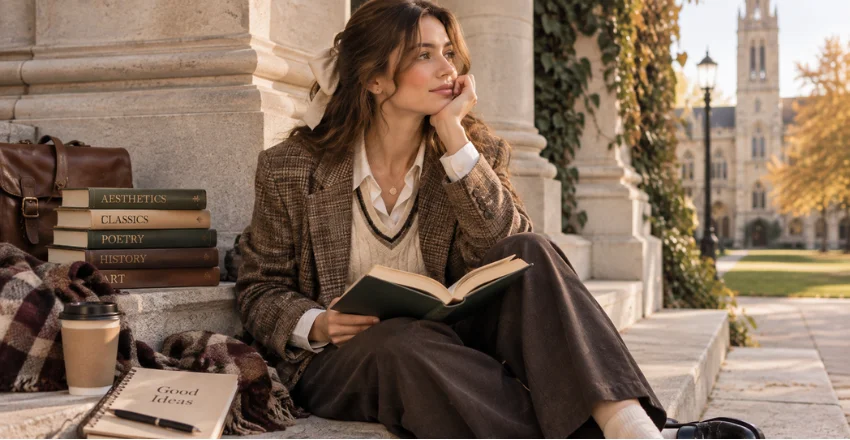
Light academia is a bright, scholarly aesthetic built around warm neutrals, classic tailoring, books, art, and optimistic study imagery. In clothing, that usually means cream knits, collared shirts, pleated trousers or skirts, loafers, and simple vintage-inspired accessories. The easiest approach pairs one academic piece with familiar basics, so the outfit feels wearable rather than theatrical.
The look works best when color, fabric, and proportion feel intentional without becoming overly themed. Start with cream, camel, beige, soft brown, or muted pastels. Then add one structured layer, one relaxed basic, and practical shoes you would wear outside a mood board.
| Style element | Easy starting point | What it adds |
|---|---|---|
| Color | Cream, camel, beige, ivory, soft brown | A bright, warm base |
| Tops | Oxford shirt, blouse, fine knit, sweater vest | A polished scholarly reference |
| Bottoms | Pleated trousers, midi skirt, straight jeans | Structure without stiffness |
| Layers | Cardigan, blazer, trench, linen jacket | Depth and seasonal flexibility |
| Shoes | Loafers, Mary Janes, Oxfords, simple boots | A grounded classic finish |
| Accessories | Leather tote, watch, small jewelry, scarf | Personality without clutter |
TL;DR
Build the style from normal wardrobe pieces instead of buying a themed closet. Keep most colors light and warm, then add tailored shapes and textured layers. One blazer, cardigan, pleated bottom, and classic shoe can create several convincing outfits.
What Defines the Aesthetic?
The term appeared on Tumblr in 2019 as a brighter counterpart to dark academia. Vogue later documented it within the wider internet culture of named aesthetics. The style centers learning, art, vintage references, and a softer emotional mood.
Fashion is only one part of that visual language. Books, museums, handwritten notes, classical art, sunlit rooms, and old campuses often appear beside the clothing. You do not need those settings to wear the style successfully.
Light Versus Dark: The Difference Is More Than Color
Both styles use academic references, tailoring, knitwear, plaid, leather shoes, and vintage-inspired details. The main difference comes from palette, mood, and fabric weight. A similar outfit can shift categories simply through those choices.
| Feature | Lighter version | Darker version |
|---|---|---|
| Palette | Cream, camel, ivory, tan, dusty pastels | Charcoal, burgundy, dark brown, black, forest green |
| Mood | Warm, optimistic, airy | Moody, dramatic, gothic-leaning |
| Fabrics | Linen, cotton, fine knits, light wool | Tweed, heavier wool, corduroy, dense knits |
| Lighting reference | Sunlit study, garden, bright library | Candlelight, shadowed halls, autumn evenings |
| Easy shoe | Tan loafer or brown Oxford | Black loafer or dark boot |
This distinction also makes the brighter version easier during spring and warmer fall days. Heavy tweed is optional, not required. Lighter cotton, linen, and fine-gauge knits keep the same visual idea with less heat.
How to Build a Light Academia Wardrobe
Start with what you already own before shopping for aesthetic-specific pieces. A white shirt, neutral trousers, cardigan, or simple blazer may already cover most of the formula. The goal is a repeatable wardrobe, not a one-photo costume.
- Choose a warm base palette. Pick two or three neutrals that already work with your closet.
- Add one tailored anchor. Try pleated trousers, a blazer, a midi skirt, or a structured coat.
- Layer with texture. Use cable knit, brushed wool, linen, corduroy, or a subtle plaid.
- Keep footwear practical. Loafers, Oxfords, Mary Janes, or clean ankle boots work across many outfits.
- Finish with one personal detail. A watch, scarf, vintage bag, or small pendant prevents the outfit from feeling generic.
Fit matters more than collecting every expected garment. Keep one part relaxed when another part feels tailored. That contrast makes classic pieces look current instead of uniform-like.
9 Everyday Outfit Formulas That Feel Wearable
The easiest outfits use pieces that can return to other parts of your wardrobe. These formulas work for campus, coffee runs, casual offices, museums, and weekends. Adjust hem length, fabric, and footwear for your own comfort.
| Formula | Why it works | Easy variation |
|---|---|---|
| Cream knit + pleated trousers + loafers | Clean, balanced, and simple | Swap loafers for flats. |
| Oxford shirt + sweater vest + straight jeans | Scholarly without feeling formal | Use light-wash denim. |
| Cardigan + midi skirt + Mary Janes | Soft texture meets a classic shape. | Add ankle socks. |
| Blazer + white tee + camel trousers | Tailoring stays casual. | Roll the sleeves. |
| Linen shirt + wide trousers + leather sandals | Works in warm weather | Add a woven tote. |
| Fine turtleneck + plaid skirt + ankle boots | Useful for cooler months | Add opaque tights. |
| Simple dress + cardigan + loafers | Minimal planning, strong silhouette | Belt the cardigan lightly. |
| Striped knit + neutral trousers + sneakers | Relaxed and easy to repeat | Use a canvas tote. |
| Trench + blouse + straight jeans + flats | Transitional and polished | Switch to loafers for work. |
Black shoes can still work, especially when you repeat black in a belt or small bag. Styleblor’s black boot guide shows how darker footwear can balance lighter clothing. Keep the rest of the outfit soft, so the shoe adds contrast without changing the whole mood.
Make It Work Across U.S. Seasons
Climate matters more than the aesthetic label. In humid summers, choose cotton poplin, linen, fine knits, and open footwear. In colder regions, use wool trousers, thicker cardigans, tights, and a practical coat. Transitional weather rewards removable layers.
Styleblor’s fall outfit guide recommends dressing by temperature bands rather than trends alone. A fine knit and light trench can cover a wide daytime swing.
Fabric and Fit: Keep the Look From Feeling Like a Costume
Natural-looking texture helps classic silhouettes feel lived-in instead of theatrical. Cotton, linen, wool blends, suede, and leather usually age more gracefully than shiny costume fabrics. You can still use synthetics when the fabric drapes well and feels comfortable.
Proportion should reflect your real life. Wide trousers can balance a fitted knit, while a roomy cardigan works with a straighter skirt. If everything is oversized or tightly fitted, the outfit can lose the quiet structure that defines this style.
Shop Your Closet First, Then Thrift Specific Gaps
A budget-friendly wardrobe begins with garment names, not aesthetic search terms. Look for a cream cardigan, pleated tan trousers, a wool blazer, a leather loafer, or a striped knit. Specific searches often cost less than shopping by a trend label.
Styleblor’s indie aesthetic guide uses the same closet-first principle for another internet style. Its approach works here because personal taste should remain visible. For a classroom-friendly version, the teacher outfits guide adds advice on layers, movement, and dress codes.
Use Books, Art, and Decor as Inspiration, Not Requirements
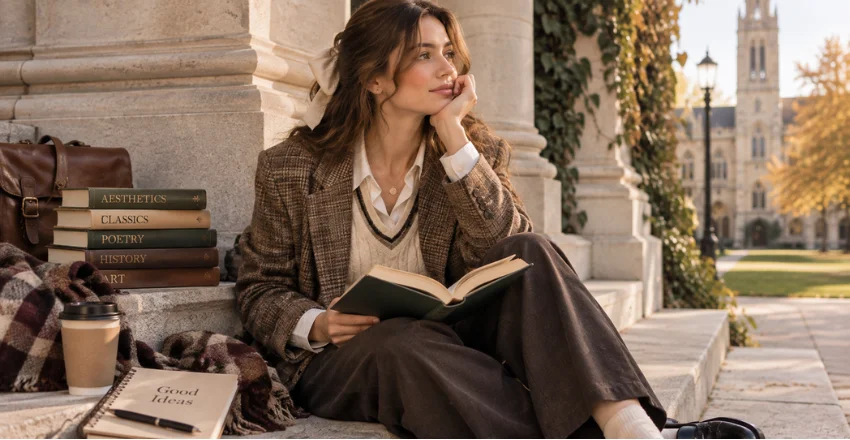
The broader aesthetic often includes reading, museums, journaling, classical art, flowers, and bright study spaces. Those details can inspire color and texture without becoming props. A personal reading habit matters more than carrying a book only for appearance.
You can also borrow interior cues for outfit planning. Warm wood suggests camel or brown, while parchment tones suggest ivory and cream. Brass details translate easily into small gold jewelry or a watch.
How to Keep the Style Personal
A recognizable aesthetic becomes more convincing when it includes something unexpected. Keep your usual jeans, favorite sneakers, or everyday tote if they suit your routine. Then add one stronger scholarly reference instead of replacing your entire wardrobe.
This approach also makes the style more inclusive across gender, age, and body shape. Tailoring, knitwear, neutral colors, and classic shoes are flexible building blocks. Choose cuts that fit your proportions instead of copying one narrow social media silhouette.
Build One Outfit Before You Buy Anything Else
Choose one formula from this guide and make it with pieces you already own. Notice which color, layer, or shoe feels missing after you wear it. Then fill that single gap instead of shopping for a completely new identity.
Frequently Asked Questions
What is light academia?
It is a bright, bookish aesthetic centered on learning, art, warm neutrals, and classic clothing. The fashion side favors tailoring, knits, collared shirts, pleats, and vintage-inspired accessories. Its mood is generally softer and more optimistic than its darker counterpart.
What colors work best?
Start with cream, beige, camel, ivory, tan, soft brown, and warm gray. Dusty rose, muted sage, pale blue, or faded yellow can add gentle color. Keep bright neon shades limited if you want the traditional look.
Can you wear the style in summer?
Yes, but fabric choice matters more. Use linen trousers, cotton shirts, light skirts, sleeveless knits, and leather sandals. Keep the palette and classic shapes, but reduce heavy layering.
Can you build the look on a budget?
Yes, especially if you shop your closet before buying anything new. Thrift stores often carry cardigans, wool trousers, blazers, leather bags, and classic shoes. Search by garment and fabric rather than by aesthetic label.
Do you need loafers or pleated skirts?
No single item is mandatory. Straight jeans, simple flats, cardigans, button-down shirts, or neutral dresses can create the same direction. Focus on palette, texture, and proportion before buying signature pieces.