


A short sleeve midi dress can cover workdays, weekends, dinners, and many weddings without complicated styling. The best versions balance sleeve comfort, a flattering hem, and weather-appropriate fabric. For U.S. shoppers, the smartest purchase starts with fit and fabric before color or trend details.
A good short-sleeve midi should let you move easily, sit without pulling, and work with at least two shoe types. Choose the fabric for your climate, then check waist placement and hem position. A versatile A-line, wrap, or shirtdress shape usually offers the widest range of outfits.
| Shopping question | Practical answer |
|---|---|
| Typical hem | Below the knee to above the ankle |
| Most versatile shapes | A-line, wrap, shirtdress, fit-and-flare |
| Warm-weather fabrics | Cotton voile, linen blends, rayon, viscose, light crepe |
| Work-friendly choices | Matte fabric, defined waist, moderate neckline |
| Event-friendly choices | Crepe, lace, satin, chiffon, refined prints |
| Easy shoes | Ballet flats, loafers, sneakers, block heels, boots |
| Common U.S. price bands | About $35–$60 budget, $65–$150 mid-range, $150+ premium |
Key Takeaways
- Start with fabric because it controls heat, drape, wrinkles, and formality.
- Check the waist seam before judging the hem.
- Pick a hem that avoids an awkward stop at your widest calf.
- Keep at least two shoe pairings in mind before buying.
- Choose matte fabrics for work and richer textures for events.
- Use layers to extend the dress through spring and fall.
- Check current measurements instead of relying only on your usual U.S. size.
How to Choose a Short Sleeve Midi Dress That Fits
A midi hem works well because it offers coverage without reaching the floor. The exact stopping point changes with your height and the garment length. A dress photographed on a tall model may land much lower on a shorter shopper.
Fit begins at the shoulders, bust, and waist rather than the skirt. Shoulder seams should sit near your shoulder edge without pulling across the upper back. The waist should land where the design intends, especially on wraps and fit-and-flare shapes.
Seven Rules Before You Buy
- Read the fabric label first. Fluid rayon, viscose, lyocell, and crepe usually drape softly.
- Check garment length in inches. Model photos alone cannot predict where the hem will land.
- Match the waist placement. A misplaced waist seam can distort the whole silhouette.
- Test sleeve movement. Raise your arms and reach forward before keeping the dress.
- Check sitting comfort. The skirt should not pull sharply across your hips or thighs.
- Plan two shoe options. This prevents buying a dress that works with only one outfit.
- Review care instructions. A dress you avoid washing will not become a wardrobe staple.
For more fabric detail, Styleblor’s flowy dress guide explains how fiber, weave, weight, and cut affect movement. That information helps when online product photos make two similar dresses look almost identical. It also explains why light fabric can still feel crisp instead of fluid.
Compare the Main Short-Sleeve Midi Styles
Retailers currently stock everything from T-shirt midis to structured cocktail versions. The right shape depends on your routine, climate, and preferred level of definition. Use the table to filter faster than browsing hundreds of nearly identical listings.
| Style | Good for | Strengths | Tradeoffs |
|---|---|---|---|
| T-shirt midi | Errands, travel, casual offices | Comfortable, washable, easy with sneakers | Can look too relaxed for events |
| Shirtdress | Work, lunches, smart casual | Structured, adjustable, easy to belt | Buttons may gap across the bust |
| Wrap or surplice | Dinners, work, weddings | Adjustable waist, flexible neckline | Neckline may need a camisole |
| Fit-and-flare | Events, office, daytime parties | Defined waist, easy movement | Waist placement must be accurate |
| Ruched or body-skimming | Dinner, parties, date nights | Sleek shape, easy layering | Fabric can cling or show lines |
If you want one option for several settings, start with a matte A-line, wrap, or shirtdress. These shapes work with flats, loafers, block heels, and boots with fewer compromises. A highly ruched or formal version makes more sense when evening wear is the main purpose.
Which Fabrics Work Well in U.S. Weather?
Hot and humid areas need airflow before extra structure. Cotton voile, linen blends, rayon, and light crepe can feel easier during warm months. Fully lined polyester may trap more heat, especially outdoors.
Cooler weather changes the equation because light cloth needs support from layers. A midweight knit, twill, or heavier crepe pairs better with tights and boots. Styleblor’s fall dresses guide shows how fabric weight, legwear, and outerwear can work together.
Climate also changes what “versatile” means. Someone in Florida may value breathable fabric almost year-round. A shopper in Chicago may get more use from a midi that fits under a trench and over tights.
What Should You Pay in the United States?
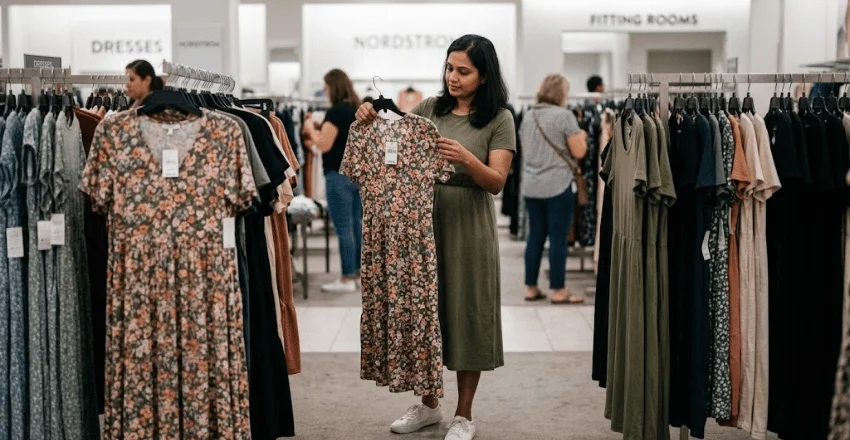
Current U.S. listings show a wide spread in September 2026. Target carries many short-sleeve midis around the mid-$30s to upper-$40s. ASOS, Nordstrom, and Bloomingdale’s extend the category from budget pieces into several-hundred-dollar options.
A practical budget is $35–$60 for simple casual styles and $65–$150 for broader fabric choices. Premium labels often start around $150 and climb quickly with specialized construction or designer branding. Sale pricing can move these ranges, so compare full price, fabric, lining, and return terms.
Price alone does not predict comfort or longevity. Check seams, lining, zipper quality, fabric content, and whether the dress needs expensive care. A lower-priced washable dress can offer more real wear than a delicate option you rarely reach for.
Shoes That Make the Length Easier to Style
Footwear changes how a midi length reads more than most accessories do. Ballet flats and loafers look polished without adding height. Clean sneakers make relaxed cotton or jersey versions feel casual and practical.
Block heels and slim sandals make the same hem feel event-ready. Ankle boots can work in fall, while knee-high boots reduce exposed leg in colder weather. Keep the shoe shape visually clean when the skirt already has volume or a busy print.
The simplest rule is to avoid accidental competition around the ankle. A fussy strap, busy hem, and heavy shoe can make the lower half feel crowded. Let one element carry the visual detail while the others stay simpler.
How to Wear One for Work or a Wedding
For work, choose opaque fabric, a stable neckline, and enough ease to sit comfortably. A shirtdress, A-line, or wrap style works with loafers, flats, or a low block heel. Add a blazer when the office leans formal, then remove it for the commute.
For weddings, fabric and dress code matter more than sleeve length. A refined crepe, lace, satin, or chiffon midi can suit many cocktail or semi-formal events. Styleblor’s cocktail attire guide explains when midi length fits the invitation.
Warm-weather ceremonies also require practical choices beyond appearance. Grass, heat, and long outdoor hours can change the right fabric and shoe. Styleblor’s summer wedding guest dress guide covers those venue and comfort decisions in more detail.
Petite, Tall, and Curvy Fit Checks
Petite shoppers should focus on garment length and waist placement together. A hem ending near the widest part of the calf can shorten the visual line. Petite-specific sizing can help when standard proportions place both the waist and hem too low.
Tall shoppers should confirm the dress still reads as midi rather than knee length. Look for listed garment measurements, tall ranges, or longer midi options. Sleeves also need enough length and room through the upper arm.
Curvy shoppers should check bust, waist, and hip measurements separately. Wraps and stretch fabrics add flexibility, but stretch doesn’t fix poor seam placement. Choose the size that fits the firmest area, then assess whether tailoring is worthwhile.
Frequently Asked Questions
Can a short sleeve midi dress work for a wedding?
Yes, it can work for many cocktail, semi-formal, daytime, and modern formal weddings. Choose refined fabric and styling that match the invitation and venue. Black-tie events may call for a longer or more formal gown.
What shoes look good with a midi hem?
Flats, loafers, clean sneakers, block heels, sandals, and boots can all work. Match the shoe to the dress fabric and event rather than following one fixed rule. Cleaner shoe shapes are easiest when the hem or print already makes a statement.
Can I wear this dress length to work?
Yes, many midi styles work well in offices because they provide coverage and easy movement. Choose opaque fabric, a controlled neckline, and a fit that stays comfortable while seated. A blazer, cardigan, or structured shoe can increase polish.
How should a short-sleeve midi fit on a petite frame?
Start with the waist position, because it controls the dress’s visual balance. Then check where the hem lands against your calf and ankle. Petite ranges can reduce the need for alterations when standard proportions sit too low.
Before You Shop
Decide where you will wear the dress most often before opening another product page. Then filter by fabric, waist placement, garment length, and two realistic shoe pairings. That process narrows hundreds of listings into options that fit your actual wardrobe.
For a first purchase, choose a shape that works across several settings rather than one narrow occasion. A matte A-line, wrap, or shirtdress is usually the easiest starting point. Shop current U.S. inventory after checking measurements, care instructions, availability, and return terms.