
The question “What does Y2K mean?” has two connected answers. Literally, the abbreviation means “Year 2000,” the date once associated with a global computer scare. In fashion and internet slang, it now points to a nostalgic late-1990s and early-2000s aesthetic shaped by technology, pop culture, and an optimistic idea of the future.
Quick answer: Y2K means “Year 2000.” The label first became widely known through the millennium bug, a computer date problem tied to the switch from 1999 to 2000. Today, people also use it for a late-1990s and early-2000s aesthetic built around futuristic technology, glossy surfaces, pop culture, and playful fashion.
| Quick fact | Answer |
| Literal meaning | Year 2000 |
| Original context | The millennium bug and computer date concerns |
| Style period | Late 1990s through the early 2000s |
| Visual cues | Silver, chrome, mesh, tinted glasses, low-rise denim, fitted tops |
| Broader modern use | A catchall label for early-2000s fashion and nostalgia |
| Closely related style | McBling, which became flashier and more celebrity-driven |
What Does Y2K Mean? Start With the Original Definition
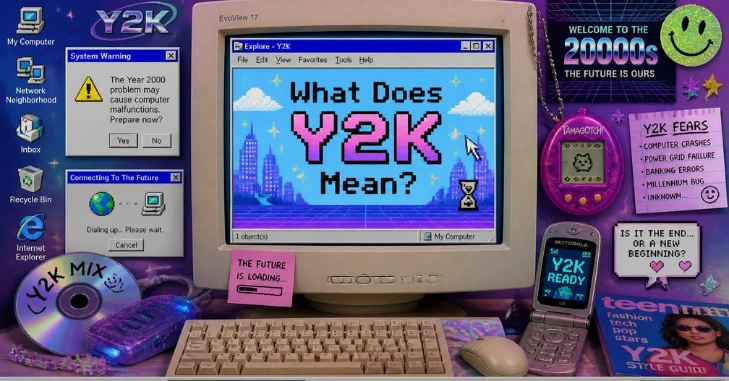
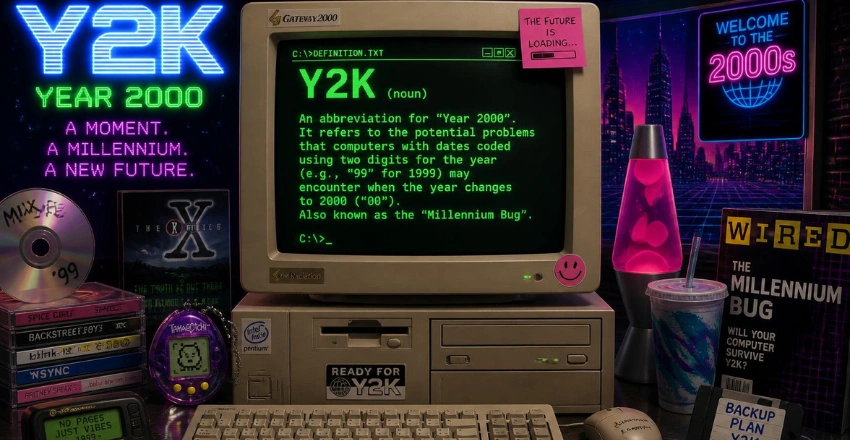
The abbreviation is shorthand for “Year 2000.” Before it became a style label, it described fears about older computer systems that stored years with only two digits. NIST explained that a system could read “00” as 1900 when the calendar changed from 1999 to 2000.
The feared worldwide breakdown did not arrive on the scale many people expected. Governments and businesses had spent years checking and updating vulnerable systems before January 1, 2000. This history helps explain what Y2K meant in its original context, while the phrase later became a cultural shorthand for the nervous, futuristic mood surrounding the new millennium.
How a Computer Term Became a Fashion Aesthetic
As the original technology scare faded, Y2K became a retrospective label for the look and mood around the millennium. Fashion reflected growing interest in digital life, new gadgets, synthetic materials, and visions of a high-tech future. Vogue identifies metallic finishes, low-rise silhouettes, cropped tops, logos, and distinctive accessories among the era’s recognizable fashion signals.
The modern label has become broader than the strict design-history definition. Online, people may apply it to almost anything that feels recognizably early 2000s, even when the original aesthetic leaned much harder into futurism. For practical styling, Styleblor’s modern millennium-inspired outfit guide covers how those references can work in a current wardrobe.
What the Millennium-Era Look Includes
You can often recognize the aesthetic by pairing a period silhouette with a glossy, technological, or playful detail. The earliest version leaned more futuristic than many current social media mood boards suggest. Think silver finishes, translucent materials, mesh, wraparound shades, synthetic shine, small gadgets, and clean graphic shapes.
Common fashion cues include the following.
- Low-rise or bootcut jeans, cargo pants, and fitted denim
- Baby tees, halter tops, lace-trim camisoles, and cropped knits
- Metallic silver, icy blue, bubblegum pink, and glossy black
- Small shoulder bags, tinted sunglasses, platform shoes, and kitten heels
- Rhinestones, logos, charm details, and shiny hair accessories
- Flip phones, digital cameras, and early-internet graphics as visual references
Not every element needs to appear in one outfit. A bootcut jean with a metallic cami may communicate the period more clearly than piling on several novelty accessories. If your version includes a mini, Styleblor’s pleated skirt guide can help you understand the garment itself before choosing how to style it.
The Part People Get Wrong: Not Every 2000s Trend Is the Same
Social media often uses Y2K as a broad synonym for “2000s,” but fashion history is more specific. The stricter version has a futuristic and technology-focused character, while later McBling styling favors rhinestones, celebrity glamour, pink velour, and conspicuous logos. Fashion coverage of the periods often treats the two looks as related rather than identical.
| Style | Rough period | Main mood | Easy visual clues |
| 90s grunge and mall style | 1990s | Casual, rebellious, pre-millennium | Flannel, slip dresses, chunky shoes, casual basics |
| Y2K / futurist | Late 1990s to early 2000s | Digital, optimistic, space-age | Silver, mesh, wrap shades, slick synthetics |
| McBling | Early to mid-2000s | Flashy, celebrity-driven, maximal | Rhinestones, velour, pink, visible logos |
Those boundaries are not fixed calendar walls, because real wardrobes mixed influences at the time. The table works better as a recognition tool than as a rule for labeling every vintage item. Styleblor’s guide to 90s outfits by subculture provides useful context for the styles that came immediately before the millennium shift.
Why the Early-2000s Aesthetic Came Back
The Y2K revival grew as younger shoppers rediscovered early-2000s clothing through social media, resale platforms, celebrity styling, and designer collections. Vogue has documented renewed interest in low-rise denim, ballet flats, logos, and other recognizable aughts references. The comeback also reflects fashion’s long habit of revisiting recent decades and interpreting them for a new audience.
That helps explain why a current outfit may look cleaner than an original photograph from 2001. People can borrow the proportions, colors, or accessories they like while leaving out elements that feel uncomfortable or too costume-like. The result is usually a selective remix rather than a perfect historical recreation.
Nostalgia also matters because the original period represented an unusual meeting point between analog childhood and expanding digital life. Internet culture, compact electronics, celebrity magazines, music television, and futuristic advertising all shaped the visual memory of the era. Revisiting those references allows today’s fashion to turn familiar technology and pop imagery into something novel again.
How the Term Is Used in Slang and Online
If someone describes a bag, bedroom, photo filter, or outfit as “so Y2K,” the label usually signals a visual mood rather than an exact production date. In online slang, Y2K can suggest something glossy, nostalgic, playful, futuristic, or strongly connected with turn-of-the-millennium pop culture. The same idea can apply to clothing, graphic design, electronics, interiors, photography, or an entire social media feed.
Context tells you which meaning a writer intends. A computer-history article will usually be talking about the date problem, while a fashion caption is more likely describing an aesthetic. Knowing those two histories makes the apparently unrelated uses much easier to understand.
Why the Strict Definition Still Matters
Separating the original aesthetic from every other 2000s trend gives you a clearer way to understand old fashion images. A silver top, wraparound sunglasses, and sleek synthetic pants reflect a different cultural idea from rhinestone sweatsuits and logo-heavy celebrity looks. Both belong to the wider early-2000s story, but they communicate different parts of it.
The distinction also makes shopping and styling easier. Instead of searching for anything labeled “2000s,” you can decide whether you want space-age futurism, pop-star glamour, preppy mall fashion, or another subculture. That approach produces a more intentional wardrobe and reduces the chance of treating an entire decade as one trend.
Where to Go Next
If you came here wondering what Y2K means, start with these distinctions before labeling every early-2000s item the same way. Understanding what Y2K means in both its original technology context and its modern fashion context makes it easier to recognize the differences between Y2K, McBling, and other 2000s trends.
Next, move from fashion history to practical outfit ideas through the styling guide linked earlier, or browse Styleblor’s Fashion section for related denim, skirts, shoes, and trend explainers. That gives you the historical context first and the styling ideas second.
Frequently Asked Questions
It means fashion inspired by the late 1990s and early 2000s, especially styles connected with futurism, technology, and pop culture. Typical cues include low-rise denim, fitted tops, metallics, small bags, tinted sunglasses, and playful accessories. Current fashion often combines those references with newer proportions rather than copying one period outfit from head to toe.
No, because the 2000s included several distinct fashion movements. Futurist millennium style, McBling, boho, scene fashion, and other trends overlapped during the decade without being identical. Online usage is looser, so the label often becomes shorthand for a much wider group of early-2000s looks.
It sits across both sides of the millennium. Many of its defining ideas appeared during the late 1990s and continued through the first years of the 2000s. That overlap explains why a metallic outfit from 1999 may fit the aesthetic better than an unrelated trend from 2006.
The first look leans futuristic, digital, metallic, and sleek. McBling became flashier and more celebrity-focused, favoring rhinestones, visible logos, bright pink, and velour. Modern social media often mixes the two, but separating them makes period photographs and fashion references easier to identify.
Nostalgia, social media, resale culture, celebrities, and designer collections have all helped bring early-2000s references back into circulation. Younger wearers can also experience those styles without having worn them during their first cycle. That distance makes old silhouettes and accessories feel fresh enough to reinterpret rather than merely