
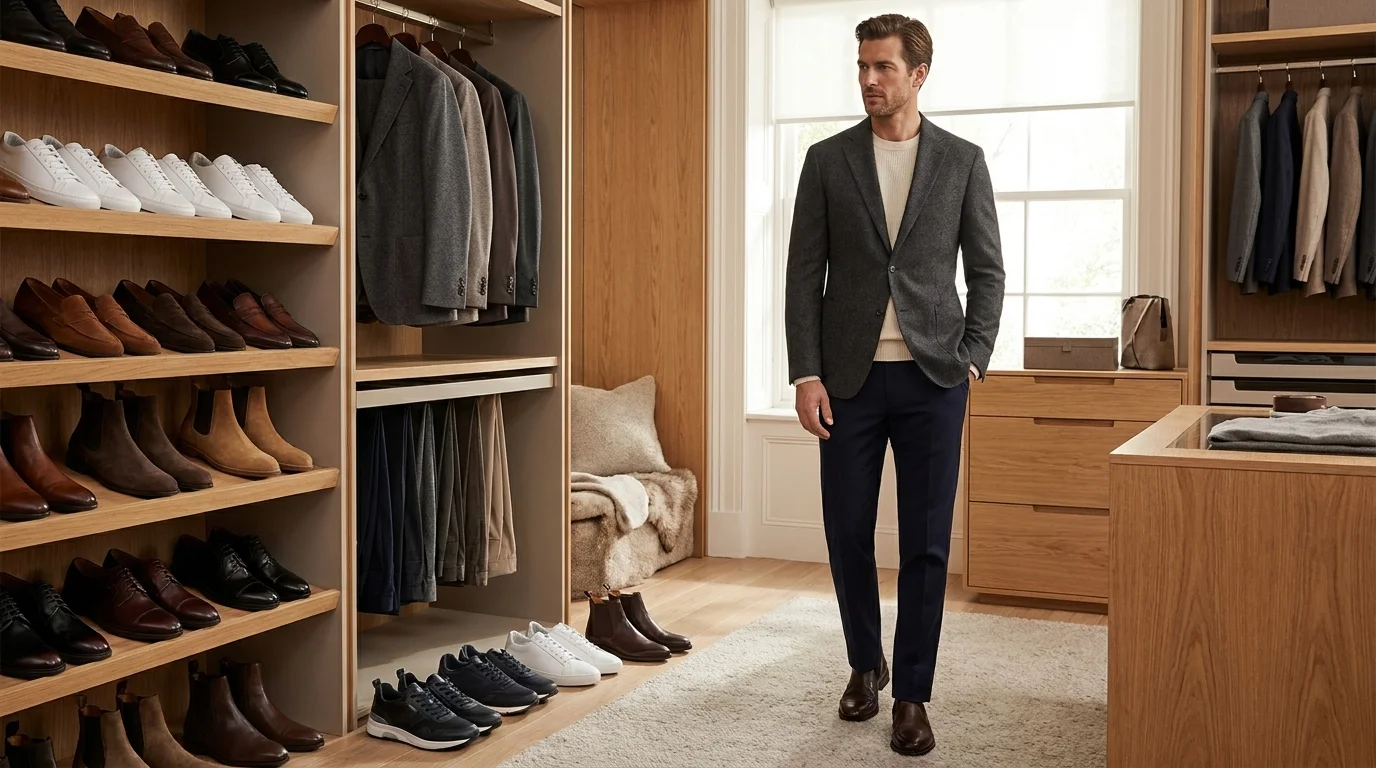
Finding the right shoes men can wear across work, weekends, and special events shouldn’t require a packed closet. A practical rotation covers casual, smart, formal, and weather-ready situations. The key is choosing versatile shapes before adding trend-driven pairs.
A strong starting rotation includes clean sneakers, loafers, boots, dress shoes, and athletic footwear. Your lifestyle determines which styles deserve the most wear. Fit, materials, and outfit proportions matter as much as the label.
Quick answer: Most men can build a useful shoe rotation around five to seven styles. Start with clean sneakers, loafers, versatile boots, dress shoes, and activity-specific athletic shoes. Add casual alternatives based on your climate, workplace, and wardrobe. Neutral colors usually offer the easiest starting point.
Men’s Shoe Rotation at a Glance
| Shoe style | Best use | Easy first color | Works well with |
|---|---|---|---|
| Clean sneakers | Everyday casual wear | White, cream, gray | Jeans, chinos, casual trousers |
| Retro sneakers | Relaxed outfits | Brown, navy, burgundy | Denim, cargos, shorts |
| Loafers | Smart casual wear | Dark brown | Chinos, trousers, suits |
| Chelsea or chukka boots | Fall and winter | Brown or black | Jeans, cords, trousers |
| Oxford or Derby shoes | Formal occasions | Black or dark brown | Suits, tailored trousers |
| Athletic shoes | Running and training | Activity dependent | Performance clothing |
| Casual warm-weather shoes | Summer | Tan, navy, cream | Shorts, linen, light trousers |
Key Takeaways
- Start with shoes that cover situations you face every week.
- Neutral colors create more outfit combinations with fewer pairs.
- Choose footwear according to activity, rather than appearance alone.
- Slim shoes usually complement cleaner or wider trousers.
- Formality depends on shape, material, color, and sole construction.
- A comfortable fit matters more than following a footwear trend.
1. Clean Sneakers Are the Everyday Foundation
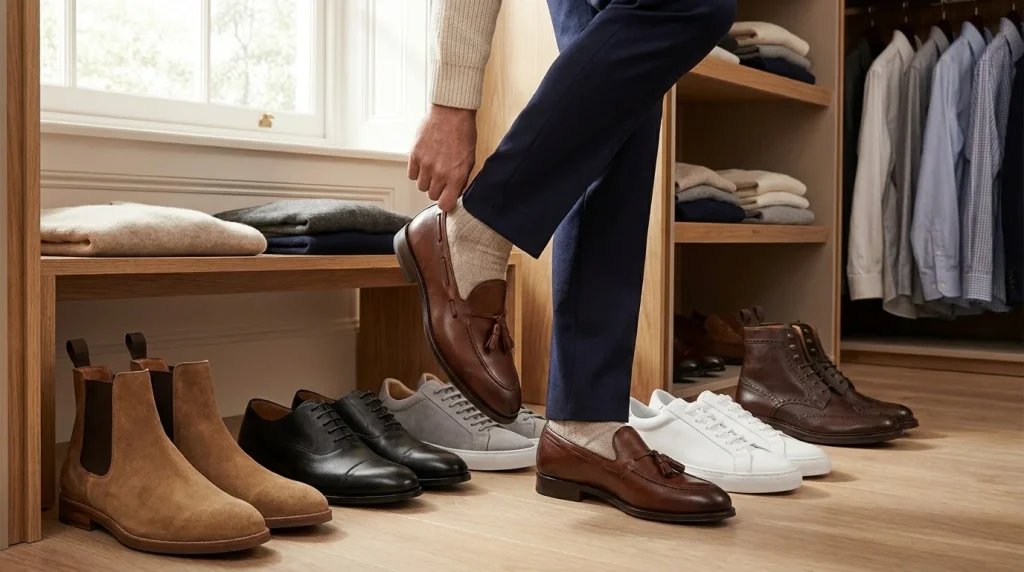
Clean sneakers handle more daily situations than almost any other footwear category. A simple low-profile pair works with jeans, chinos, shorts, and relaxed trousers. Leather often looks smarter, while canvas creates a more casual finish.
White remains an easy starting color, but it isn’t your only option. Cream, gray, navy, and muted brown can be easier to maintain. Choose a shade that already appears throughout your wardrobe.
Current menswear coverage also shows continuing interest in slimmer sneaker shapes. Classic canvas models and athletic-inspired pairs remain useful choices. You don’t need every sneaker trend to build a modern rotation.
Color can make this basic category more interesting later. Styleblor’s red sneakers guide explains how stronger colors work with neutral clothing. Treat colorful footwear as an addition after covering your basic needs.
2. Retro Sneakers Add Character Without Becoming Difficult
Retro runners and court-inspired sneakers offer more personality than plain leather pairs. Their suede panels, gum soles, and contrasting colors add texture. They still work with familiar American casual clothing.
Straight jeans create one of the easiest combinations. Relaxed chinos and casual trousers also work with streamlined retro silhouettes. Keep the trouser hem controlled so it doesn’t bury the shoe.
Choose color carefully if this will be your second sneaker. Burgundy, brown, navy, or dark green can remain flexible. Brighter shades work better when your clothing stays restrained.
For another color-focused approach, see Styleblor’s yellow sneakers styling guide. It explains how different yellow tones interact with denim and neutrals. That approach can help you judge other statement colors too.
3. Loafers Bridge Casual and Dressy Outfits
Loafers fill the space between sneakers and formal lace-ups. They can sharpen jeans without making an outfit feel ceremonial. They also work naturally with chinos, tailored trousers, and relaxed suits.
Penny loafers are an accessible place to start. Dark brown leather works across more casual colors than glossy black. Suede offers a softer appearance for spring and early fall.
Fit deserves extra attention because loafers lack laces. Your heel should feel secure without painful pressure across the forefoot. A loose pair may become harder to wear as the leather softens.
Avoid treating every loafer as a walking shoe. Some flexible designs provide little structure for long distances. Match the pair to the amount of walking your normal day requires.
4. Boots Cover Weather and Add Visual Weight
Boots become useful when sneakers feel too light for weather or heavier clothing. Chelsea and chukka styles offer particularly broad outfit flexibility. Rugged lace-up boots suit casual wardrobes and harsher conditions.
Brown leather is usually an easy first choice for casual use. Black creates a sharper effect and pairs naturally with darker outfits. Suede works well in dry conditions but needs more care.
Proportion becomes important with heavier footwear. A substantial boot generally looks better with straight or relaxed pants. Narrow trousers can make a thick sole appear oversized.
For more outfit ideas, Styleblor’s black boots guide covers ways to style dark boots. Use those formulas as a starting point for denim and trousers. Adjust the combination around your own dress code.
5. Dress Shoes Still Matter for Formal Situations
Sneakers have entered many workplaces, but formal shoes still have a clear purpose. Weddings, conservative offices, interviews, and formal events may require traditional leather footwear. Owning one dependable pair prevents rushed purchases before an important occasion.
Oxfords usually create a cleaner and more formal appearance. Derbies have open lacing and often feel slightly less formal. Either can work well when its color matches your normal tailoring.
Black remains the safest choice for stricter formal dress. Dark brown offers greater flexibility with navy, gray, and earth-toned clothing. Avoid decorative details if you want one pair covering several occasions.
Take time to break in new leather shoes before an event. Wear them for short periods around home first. This also gives you time to spot heel movement or pressure areas.
6. Athletic Shoes Should Match the Activity
Running shoes and training shoes solve different problems from lifestyle sneakers. Choose them around movement, fit, and intended activity. A fashionable appearance shouldn’t replace those practical requirements.
Running footwear should suit your preferred distance and typical surface. Gym shoes often need stability for lifting and multidirectional movement. Court sports can require different traction and lateral support.
Try performance footwear with the socks you normally use. Check for secure heel hold and enough room around your toes. Immediate rubbing or pressure rarely improves enough to justify a poor fit.
Replacing worn athletic footwear also matters. Compressed cushioning and damaged outsoles can change how a pair feels. Inspect your shoes instead of relying only on their age.
7. Add Seasonal Shoes Only When They Solve a Real Need
A complete wardrobe doesn’t require every footwear category. Your climate and routine should determine the final slots. Someone in Miami needs different seasonal options than someone in Chicago.
Warm climates may justify sandals, canvas slip-ons, or lightweight casual footwear. Cold and wet regions make weather-resistant boots more useful. Frequent business travelers may prioritize packable loafers and comfortable walking shoes.
Think in situations rather than shoe counts. Write down the places you regularly go during an average month. Your collection should cover those situations before adding specialist pairs.
This approach also limits duplicate purchases. Three nearly identical sneakers don’t create three new outfit possibilities. A loafer or boot may add far more useful range.
How to Choose Shoes Men Can Wear More Often
The easiest shoes men can buy aren’t always the loudest pair in the store. Versatility usually comes from simple colors, familiar materials, and balanced proportions. Think about your existing pants before choosing another shoe.
Start by checking your three most-worn trouser styles. Consider their color, width, length, and usual level of formality. Then choose footwear that works with at least two of them.
Material changes how formal a shoe appears. Smooth leather usually looks sharper than mesh or canvas. Suede sits comfortably between polished leather and highly casual materials.
Color matters too, but neutral doesn’t always mean black. Brown, cream, navy, gray, and burgundy can behave like practical neutrals. The right choice depends on colors already dominating your closet.
Getting Men’s Shoe Fit Right
Start with length, but don’t stop there. Width, instep volume, heel shape, and toe-box design affect comfort. Two shoes marked with the same size can fit differently.
Try footwear later in the day when possible. Feet can feel fuller after hours of standing or walking. Wear the same sock thickness you expect to use regularly.
Your toes need enough space to sit naturally. The heel should remain reasonably secure during normal walking. Sharp pressure, numbness, or immediate rubbing are signs to reconsider the fit.
Online shoppers should read each brand’s size chart and return policy. Model-specific fit guidance can also help. Don’t assume your usual size transfers perfectly between brands.
Building a Shoe Rotation on a Budget
You don’t need seven pairs immediately. Start with the footwear required by your daily routine. Add another category when you can identify a clear gap.
For many men, sneakers come first because they receive the most wear. A dressier pair comes next if work or social events require one. Boots become a higher priority in regions with cold or wet seasons.
Spend based on expected use rather than category prestige. A frequently worn everyday pair deserves more budget than occasional event footwear. Cost per wear often gives a clearer picture than purchase price alone.
Care can also extend the useful life of footwear. Rotate pairs when possible and let damp shoes dry naturally. Clean materials using methods suitable for leather, suede, canvas, or mesh.
Frequently Asked Questions About Shoes Men Wear
How many pairs of shoes should a man own?
There isn’t one correct number for everyone. Five to seven carefully chosen styles can cover many American wardrobes. Climate, work, exercise, and formal events may change that number.
What color shoes are most versatile for men?
White or cream works well for casual sneakers. Dark brown is highly flexible for loafers and many boots. Black remains useful for formal shoes and darker wardrobes.
Which men’s shoes should I buy first?
Start with the pair that fits your most common activity. For many people, that’s a comfortable everyday sneaker. Add loafers, boots, or dress shoes according to your next most frequent need.
Can men wear sneakers with trousers?
Yes, when the formality and proportions make sense together. Clean, streamlined sneakers usually pair more easily with tailored trousers. Keep both the footwear and trousers neat for a deliberate result.
Are loafers more versatile than dress shoes?
Loafers generally cover more smart-casual situations. Traditional dress shoes remain stronger for conservative or formal events. Your workplace and social calendar should decide which comes first.
Build Around Your Real Life
A useful footwear collection isn’t measured by how many boxes sit in your closet. It works because each pair has a clear job. Start with daily needs, then fill genuine wardrobe gaps.
Choose comfortable fits and colors that connect with clothing you already own. Add more distinctive styles after your core rotation works. You’ll get more outfits while buying fewer unnecessary pairs.
For more footwear inspiration and practical styling advice, browse the latest Styleblor fashion guides. Use them to refine color and outfit choices as your rotation grows. Your next pair should expand what you can wear, rather than duplicate it.