
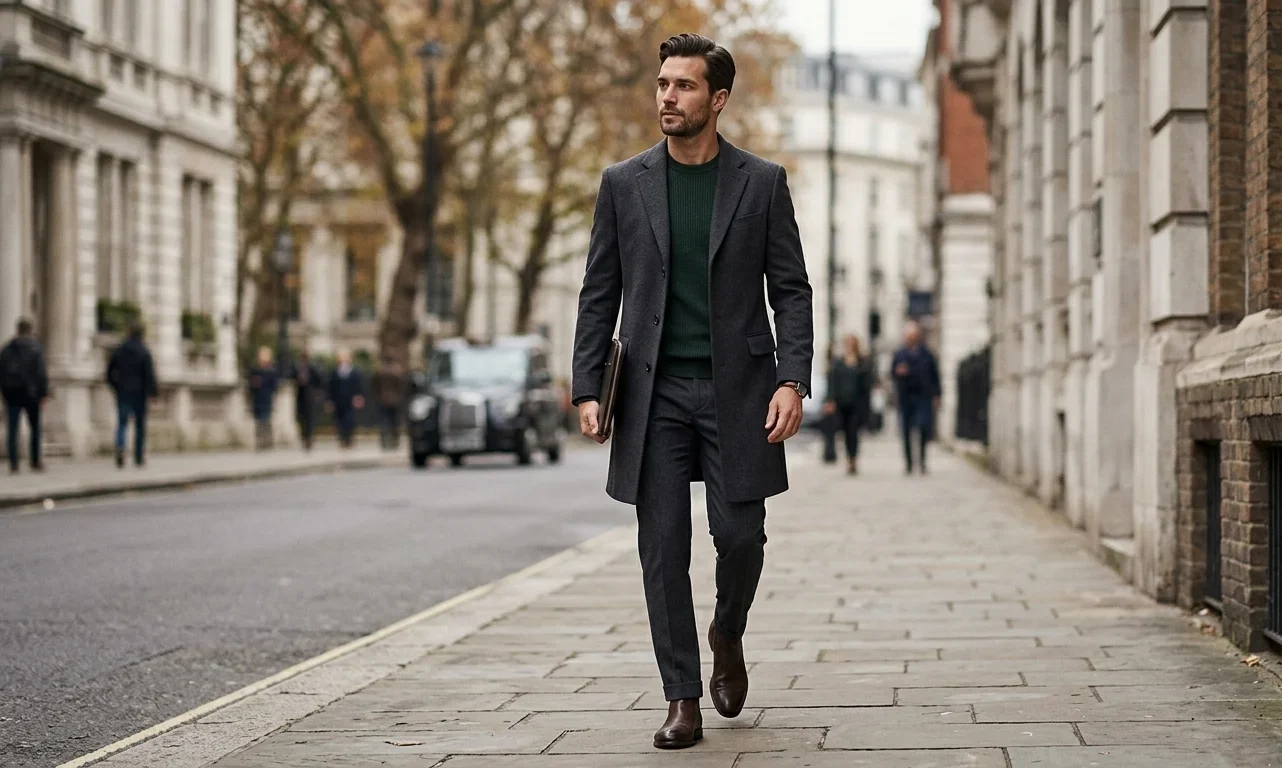
A Chesterfield coat is a tailored overcoat known for its clean shape, formal roots, and understated details. Traditional versions reach around the knee and often feature a concealed front and contrasting velvet collar. Modern versions keep that polished character while working with suits, dresses, denim, and knitwear.
The style makes sense for U.S. wardrobes that need one refined cold-weather layer. It looks sharper than a puffer but feels less specialized than formal evening outerwear. The key is choosing its fabric, length, and fit for your actual climate.
Chesterfield Coat at a Glance
| Feature | Traditional approach | Modern option |
|---|---|---|
| Length | Around the knee | Knee-length or slightly shorter |
| Fabric | Heavy wool | Wool, wool blends, cashmere blends |
| Collar | Often contrasting velvet | Velvet or matching fabric |
| Front | Single-breasted fly front | Single or double-breasted |
| Shape | Straight or gently tailored | Straight, relaxed, or softly fitted |
| Best colors | Black, charcoal, navy | Camel, brown, gray, navy, black |
| Best use | Formal and business dress | Work, events, smart casual outfits |
| Best climate | Cool to cold weather | Depends on weight, lining, and layering |
Quick answer: This coat works best when you want warmth without losing a clean, tailored silhouette. Choose wool with enough room for your normal winter layers. Aim for knee length when you want the traditional look, then use color and styling to adjust its formality.
Key Takeaways
- Look for a clean, elongated silhouette rather than excessive decoration.
- Choose wool weight and lining according to your local winter.
- Leave enough shoulder and chest room for a sweater or tailored jacket.
- Charcoal and navy offer the easiest bridge between formal and casual outfits.
- A velvet collar is traditional, but it isn’t required for a modern interpretation.
- Knee-length creates the most recognizable classic proportion.
- Try the coat with your real winter layers before judging its fit.
What Makes a Chesterfield Different?
The traditional design belongs to the overcoat family, but several details give it a distinct identity. Museum terminology describes Chesterfields as fly-front coats made from plain, often dark wool. Single-breasted and double-breasted examples both exist.
A contrasting velvet collar is another familiar feature, although historical examples show variation. The overall design stays restrained instead of relying on belts, military hardware, or large decorative pockets. That restraint explains why the silhouette pairs naturally with tailored clothing.
Length also separates it from many modern topcoats. The traditional hem sits around the knee, giving the body a long vertical line. Shortening that length makes the coat easier for casual use but reduces some traditional character.
A Short History of the Style

The design became established in Britain during the nineteenth century and developed into an important formal overcoat. Its exact origin is less certain than simplified fashion histories sometimes suggest. The name became connected with the Earls of Chesterfield, but historical attribution remains debated.
What is clearer is the coat’s lasting influence on tailored outerwear. The Metropolitan Museum of Art holds an American example dated 1929–30, made from wool and silk. That surviving piece also shows how the style had crossed into American fashion by the early twentieth century.
The design later moved beyond strictly formal menswear. Women’s versions and more relaxed interpretations adopted the same long, clean proportions. Today’s options range from traditional dark wool coats to softer camel and oversized versions.
How a Chesterfield Coat Should Fit
Start with the shoulders because alterations there are difficult and often expensive. The shoulder line should look clean without pulling when you reach forward. You should also have enough room to wear your normal cold-weather layer underneath.
Check the chest with the coat fully fastened. The front should close without creating horizontal pulling lines across your torso. Extra room is useful, but too much volume can weaken the tailored silhouette.
Sleeves should cover your wrists when your arms hang naturally. They should also remain comfortable when you bend your elbows or drive. Try reaching forward before deciding the sleeves and upper back fit correctly.
Finally, consider length in relation to your height and wardrobe. Knee length gives the coat its classic, formal proportion. A slightly shorter hem can feel easier with jeans, sneakers, and everyday commuting.
Choose Fabric for Your U.S. Climate
Wool is the natural starting point because it combines insulation, structure, and a refined surface. Heavier wool works well where winters stay cold for long periods. Lighter wool blends make more sense where winter temperatures are moderate.
A cashmere blend can create a softer hand and smoother drape. Still, fiber content alone does not tell you how warm a finished garment feels. Fabric weight, lining, length, wind, and your layers all affect comfort.
Wet climates create another consideration because a dress coat is not automatically rainwear. Frequent rain, sleet, or wet snow may require a weather-resistant outer layer on harsher days. Styleblor’s winter coat guide explains how insulation and weather exposure should shape that decision.
Climate also changes how much layering room you need. Someone in Atlanta may wear the coat over a shirt and fine knit. A Chicago commuter may need space for heavier layers and separate technical outerwear during severe weather.
The Best Colors for an Everyday Coat
Charcoal is one of the easiest choices because it works with black, brown, navy, and burgundy accessories. It also moves comfortably between office clothing and weekend outfits. Choose a medium or dark charcoal when versatility matters most.
Navy gives a similarly flexible result with slightly more color. It pairs well with gray tailoring, blue denim, camel knitwear, and brown leather. Dark navy can also look polished enough for evening events.
Black pushes the design toward its formal roots. It looks strongest with evening clothing, monochrome outfits, and sharper business wardrobes. The trade-off is that it may feel severe with relaxed daytime pieces.
Camel and brown create a softer modern direction. Both work especially well with cream, denim, navy, olive, and chocolate tones. They are useful when your wardrobe already leans toward warm neutrals.
How to Style a Chesterfield Coat Today
For work, keep the combination simple and let the outer layer finish the outfit. Wear it over a suit, tailored trousers, or a fine knit with straight pants. Leather loafers, derbies, ankle boots, or simple pumps keep the visual language consistent.
For a smart-casual outfit, replace formal trousers with straight or relaxed denim. Add a crewneck sweater or turtleneck and clean leather footwear. The contrast between denim and tailored outerwear makes the classic silhouette feel less ceremonial.
Women can also use the long line over midi dresses, wide-leg trousers, or fitted knitwear. Keep the layer underneath cleaner when the coat has a generous cut. Styleblor’s fall dress guide offers useful temperature-based ideas for combining dresses, tights, boots, and outerwear.
Casual styling works best when one polished element remains visible. Dark jeans, a simple sweater, and low-profile sneakers can sit comfortably beneath a relaxed version. Avoid adding several competing formal accessories unless the occasion calls for them.
Chesterfield vs. Other Popular Coats
| Coat type | Typical character | Length | Best use | Main difference |
|---|---|---|---|---|
| Chesterfield | Tailored and polished | Around knee | Work, events, smart casual | Clean formal structure |
| Peacoat | Nautical and compact | Hip to upper thigh | Everyday casual wear | Shorter and usually double-breasted |
| Trench | Lightweight and weather-focused | Varies | Transitional weather | Belted and designed around rain protection |
| Puffer | Sporty and insulated | Varies | Cold casual wear | Insulation is the main priority |
| Wrap coat | Soft and fluid | Varies | Dressy casual wear | Belt creates the shape |
| Parka | Practical and protective | Hip to knee | Harsh winter weather | Weather protection comes first |
No single coat replaces every option in this table. A tailored wool design excels when appearance and versatility matter, while a parka handles harsher exposure. Your commute and climate should decide which job needs filling first.
Styleblor’s broader winter coat guide compares these categories by warmth, coverage, and everyday use. Its weather-first approach is useful before buying another wool coat. A beautiful outer layer cannot compensate for the wrong protection level.
What to Check Before Buying
Try the coat over clothing you would realistically wear from November through February. A fitting-room T-shirt cannot tell you whether the shoulders accommodate winter layers. Bring or wear a sweater if possible.
Then inspect how the garment behaves while moving. Button it, sit down, reach forward, and place both hands in the pockets. The coat should remain comfortable without large folds or strong pulling lines.
Check the fabric label rather than relying on product photography. Compare wool content, lining, care instructions, and overall construction between similar options. A higher price does not automatically guarantee the right fabric for your climate.
Finally, picture three existing outfits underneath it. If you cannot build three combinations without buying more clothes, reconsider the color or cut. Useful outerwear should connect pieces you already own.
Common Styling Mistakes
Buying too tight is the first mistake because an overcoat needs space to perform its actual job. A trim silhouette can still allow a sweater or tailored jacket underneath. Tight shoulders usually become more annoying after several hours of wear.
The second mistake is choosing length from trend photos alone. Cropped proportions can look appealing online but change the traditional character significantly. Choose the hem according to your wardrobe, height, and desired level of formality.
Another mistake is treating a tailored wool coat like technical winter gear. Wool can provide substantial warmth, but construction varies between garments. Severe wind, heavy snow, and long outdoor exposure may require different protection.
The final mistake is buying a formal color that clashes with your everyday shoes and bags. Look at your repeated accessories before choosing black, navy, charcoal, or camel. Compatibility creates more outfits than novelty does.
How to Build an Outfit Around the Coat
Start with the weather rather than the occasion. Styleblor’s fall outfit guide recommends using temperature bands to decide when stronger outer layers become useful. The same principle prevents you from overdressing for mild weather or underdressing during cold commutes.
Next, choose one clear silhouette underneath. Straight trousers and a fine knit create a narrow vertical line, while wide trousers create more volume below. Both can work when the outer layer has enough room to fall cleanly.
Finish with footwear that matches the outfit’s level of formality. Leather boots or loafers reinforce tailored clothing, while minimal sneakers relax the combination. Keep the shoe shape relatively clean so it does not compete with the long coat.
Is It Worth Adding One to Your Wardrobe?
This style makes the most sense for someone who regularly wears polished clothing during colder months. It can cover office outfits, dinners, events, and many smart-casual combinations. That range can make one well-chosen coat more useful than several narrowly styled alternatives.
It may be less practical as your only winter coat in areas with severe weather. Heavy snow, freezing wind, or long outdoor commutes can make insulated outerwear more useful. Consider the tailored option part of a small coat rotation when your climate demands stronger protection.
A good purchase should also survive changing trend cycles. Simple lapels, restrained pockets, dark neutrals, and balanced proportions usually age more gracefully. Trend-led details can still work, but they should support rather than dominate the silhouette.
Chesterfield Coat FAQ
What is a Chesterfield coat?
A Chesterfield coat is a tailored overcoat associated with a clean front, long silhouette, and formal styling. Traditional examples are commonly made from dark wool and may include a contrasting velvet collar. Modern designs vary in closure, color, fabric, and degree of tailoring.
Does it have to have a velvet collar?
No, modern interpretations do not always use velvet. Historical and museum definitions describe the velvet collar as common rather than universal. A matching wool collar creates a quieter and more contemporary appearance.
Can you wear one with jeans?
Yes, especially when the coat has a simple cut and slightly relaxed fit. Dark or straight-leg denim works particularly well because it preserves the long visual line. Add knitwear and clean shoes to bridge the formal and casual pieces.
Can women wear this style?
Yes, women’s interpretations have existed for decades and now cover many silhouettes. Modern versions can be straight, oversized, fitted, or softly tailored. They work well over trousers, dresses, skirts, and denim.
Is it warm enough for a U.S. winter?
That depends on your location, fabric weight, lining, layers, and outdoor exposure. A substantial wool version can suit many city winters and shorter outdoor periods. Severe cold or wet conditions may call for insulated or weather-resistant outerwear instead.
The Bottom Line
Choose this coat for its clean proportions, not because you need another seasonal trend. Prioritize shoulder fit, useful layering room, appropriate fabric weight, and a color that connects your existing wardrobe. Those decisions determine how often the coat leaves your closet.
For a first version, charcoal or navy wool around knee length offers an adaptable starting point. Try it over your real winter layers before buying. Then use Styleblor’s winter coat and fall layering guides to decide how it fits into your broader cold-weather wardrobe.