

A summer dress works when its fabric moves air and dries fast: linen, cotton voile, and lyocell do, while polyester and heavy jersey trap heat. Everything past that is styling. This guide scores what you’ll find on a real rack. Then it handles the three things page one skips: sweat marks, thigh chafing, and why humid heat needs different answers than dry heat. Nap Dress vs Dupes is a useful companion read here.
Quick-facts fabric reference
These scores describe how each cloth behaves above 85°F on a body that sweats, not how it photographs. Breathability is airflow plus drying speed. Sweat visibility is how obvious a damp patch gets. Wrinkle recovery is whether it still looks pressed at 4 pm.
| Fabric | Breathability | Sweat visibility | Wrinkle recovery | Summer dress best for |
| Handkerchief linen | Excellent | Low, texture hides marks | Poor, creases by design | Dry heat, long days outside |
| Cotton voile/lawn | Excellent | Medium, worse in pastels | Fair | Everyday heat, sensitive skin |
| Seersucker | Excellent, puckers lift it off skin | Low | Excellent, creases read as texture | Humidity, travel |
| Lyocell (TENCEL) | Very good, dries fast | Medium | Very good | Humid heat, city commuting |
| Cotton poplin | Good | Medium | Good | Structured shapes, office |
| Chambray | Good | High in mid tones | Fair | Casual weekends |
| Rayon/viscose crepe | Fair, clings once damp | High, darkens sharply | Fair | Drapey shapes, dry evenings |
| Silk | Good | High, can watermark for good | Good | Evenings, low-sweat occasions |
| Polyester | Poor, traps heat and odor | High | Excellent | Prints and price, not heat |
Key takeaways
- Weave beats fiber. A 110 GSM cotton voile breathes better than a 240 GSM cotton jersey, and both are cotton.
- Mid gray, dusty blue, and pale pastels show sweat marks the worst. Black, white, and busy prints show them the least.
- Chub rubs are friction problems, not fabric problems. Fix it under the hem.
- In humidity, absorbency stops helping. Drape and drying speed take over.
- Expect $40 to $90 for decent mass-market cotton or rayon, and $120 to $220 where real mid-weight linen starts.
What Actually Keeps a Summer Dress Cool?
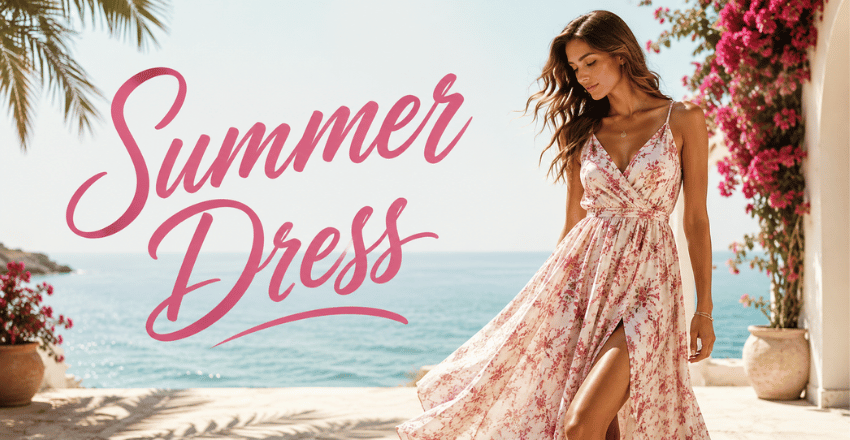
A summer dress keeps you coolest when it combines a lightweight, breathable weave with fast-drying fabric that allows air to circulate rather than trap heat.
Is linen the coolest fabric, or just the most talked about?
It earns a reputation, but only in dry air. Flax fibers are stiff and slightly hollow, so the cloth holds itself off your skin and lets air move through the gaps. It also soaks up a lot of moisture before it feels wet, which is where cotton loses out: cotton saturates, then stays saturated, getting heavy and clinging to your back.
The cost is rising. Linen wrinkles the moment you sit down, and no finish removes that without also removing the breathability you bought it for.
Why weave and GSM matter more than the fiber name
“100% cotton” tells you almost nothing. A cotton voile at roughly 110 GSM is open, light, and cool on skin. A cotton jersey at 240 GSM is a t-shirt cloth that sticks to you on a hot bus. The same fiber, opposite outcome, and the hangtag treat them as the same thing.
So read for the weave, not just the fiber:
- Open and cool: voile, lawn, gauze, seersucker, handkerchief linen.
- Fine but denser: poplin, chambray, crepe, and broadcloth.
- Skip in real heat: jersey, ponte, sateen, and anything with a knit backing.
Seersucker deserves a note of its own. Its puckered stripes keep about half the cloth off your skin, which is the cheapest cooling trick in clothing. Volume does the same job with folds instead of puckers, and the physics of pleated skirt volume and care is worth reading if you want airflow without sheerness.
Does the lining cancel all of it out?
Usually, yes. A breathable outer over a polyester lining performs like a polyester, because the lining is the layer touching you. That underlayer is what decides whether a garment clings to damp skin, and top results rarely mention it.
Check the second line on the composition tag before you pay. Cotton, cupro, or Bemberg linings are worth the extra money. Unlined is better still, as long as the cloth is opaque in daylight.
Sweat marks: color and fabric decide what shows
Nobody on page one will say this plainly, so here it is.
Which colors show sweat the worst?
Mid-tones. Gray is the worst offender by a wide margin, and dusty blue, blush, sage, and butter pastels sit close behind. Each of them has a big gap between its dry shade and its wet shade, so a damp patch reads a different color entirely.
Black and white both hide sweat, for opposite reasons. Black has nowhere darker to go. White has no dye to deepen. Dense prints work as well as either, because a stripe or a scattered floral break the eye up before it finds the patch.
Does the fabric itself change visibility?
More than most people expect. Textured surfaces such as linen, seersucker, cotton gauze, and slub weaves scatter light, so wet cloth reads as a shadow. Flat, smooth surfaces do the reverse and turn it into a stain. Rayon and silk are the two to think twice about: rayon darkens dramatically once damp, and silk can watermark permanently even after it dries.
Chub rub: the summer dress problem nobody writes about

Thighs rub in a dress because there’s no cloth between them. Add heat, sweat, dried salt, and friction, and skin abrades after roughly twenty minutes of walking. Thigh chafing has nothing to do with body size and everything to do with friction plus moisture, which is why it’s a common summer complaint and a rare summer heading.
What stops thighs rubbing, ranked by how long it lasts
- Slip shorts or bike shorts. The only all-day fix. Look for a flat hem that won’t roll, and a length that clears your hem by two inches.
- Anti-chafe balm or stick. Four to six hours, less if you swim. Reapply before you feel you need to.
- Thigh bands. Comfortable at first, but they migrate on damp skin.
- Powder or cornstarch. An hour or two at best. A top-up, not a plan.
One detail about the shorts: smooth microfiber beats cotton here. Cotton holds sweat exactly where the friction is happening.
Humid heat and dry heat are not the same problem
This split changes every recommendation above, and almost nobody separates the two.
What changes when the air is already wet
Sweat cools you by evaporating. At 80% humidity, it barely evaporates, so a fabric that absorbs moisture just gets wet and stays wet. Absorbency stops helping you. What matters instead is drying speed and a cut that doesn’t touch you: lyocell, seersucker, light rayon crepe, and a skirt with real sweep rather than a body-skimming column.
Coastal air adds wind and salt on top, which shifts the trade-offs again. Our notes on choosing a beach wedding gown for heat and wind cover how much sweep you can carry before the fabric starts fighting you.
Dry heat rewards covering up
In Phoenix or Palm Springs, bare skin loses water fast and burns faster. A loose long-sleeve linen midi beats a strappy mini, which feels backwards until you’ve tried both in 105°F. Evaporation works properly in dry air, so linen finally gets to do what it’s good at, and the wrinkles are the accepted price.
Wrinkles, washing, and what you’ll pay
Which fabrics recover, and which crease by design
Best recovery: polyester, then lyocell, then crepe weaves. Worst: 100% linen and ramie. If you need to look pressed by noon and still wear lightweight cloth, pick a linen blend carrying 30% or more lyocell or viscose. Seersucker is the other answer, since its texture makes wrinkling invisible rather than fighting it.
Washing warm-weather clothes without shrinking them
- Cold wash on a gentle cycle and take the garment out damp.
- Line dry in shade. Dryer heat is what shrinks cotton and yellows white linen.
- Skip fabric softener on anything breathable. It coats the fibers and cuts absorbency.
- Steam linen rather than pressing it, and press cotton while it’s still damp.
How much should you expect to pay?
Prices cluster into three bands. Mass-market cotton and rayon run about $40 to $90 at Old Navy, Target, and Abercrombie. Contemporary labels including Madewell, Anthropologie, and Quince sit around $120 to $220, which is where genuine mid-weight linen begins. Above $300, you’re paying for cut and finish, not extra cooling. More garment breakdowns sit in our fashion archive.
Summer dress FAQ
Linen in dry heat, lyocell or seersucker in humidity. Weave settles it more than fiber content does, so an open weave at or under about 130 GSM will beat a heavier version of the same fiber every time.
Fine for drape, poor for sweat. Rayon breathes reasonably while it’s dry, then darkens and clings to the moment it isn’t. Keep it for evenings and choose Lyocell, its stronger cousin, for a hot afternoon.
Slip shorts for friction, plus a thin slip in your own skin tone if the cloth goes sheer. Test that outdoors rather than in a fitting room. Voile and gauze both turn translucent in direct sun.
In still air, slightly. In moving air, the difference disappears, and loose dark cloth can beat tight light cloth because airflow does the work. Fit matters more than shade.
Buy it lined or double-layered, or wear a slip in your skin tone instead of a white one. White under white is what makes the outline obvious in sunlight.