
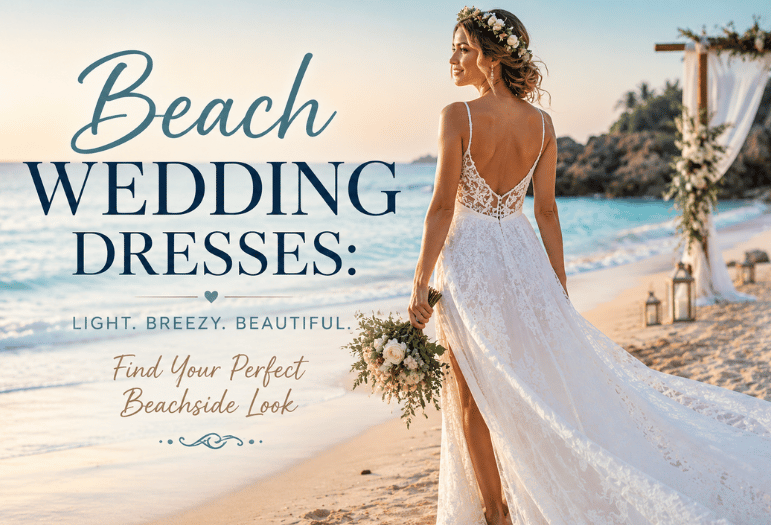
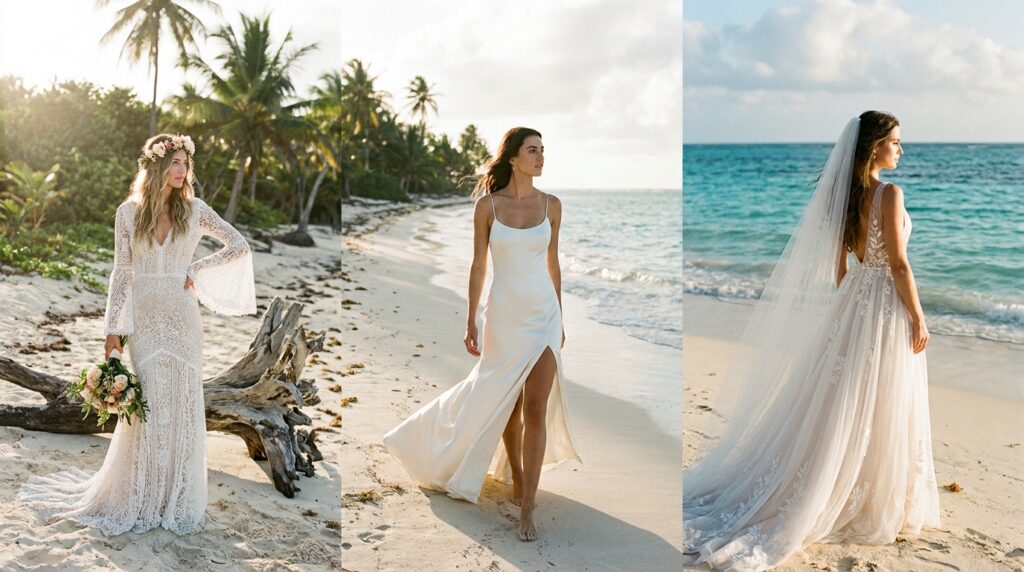
Beach wedding dresses should look bridal without fighting the setting. The best options use lightweight fabrics, manageable hems, secure bodices, and silhouettes that allow comfortable movement in heat and wind. Start with an A-line, sheath, soft fit-and-flare, or tea-length style, then choose the fabric and train length based on your venue.
| Decision | Look for | Be cautious with |
| Fabric | Chiffon, georgette, light crepe, organza, light lace | Thick layers, heavy embellishment, stiff construction |
| Silhouette | A-line, sheath, soft fit-and-flare, midi | Very wide skirts on soft sand |
| Hem | Floor-length with little or no train, tea-length, high-low | Long trains that drag through sand |
| Bodice | Secure straps, fitted bodice, supportive neckline | Loose details that shift in strong wind |
| Shoes | Flats, sandals, stable wedges | Narrow heels on soft sand |
| Travel | Fabrics that pack and recover well | Styles that require complex pressing or reshaping |
For most seaside ceremonies, start with a lightweight A-line, sheath, or soft fit-and-flare gown in chiffon, georgette, crepe, organza, or light lace. Keep the train short, test how the fabric moves in the wind, and choose footwear that stays stable on sand. The right dress should move easily, travel well, and feel comfortable in warm weather.
How to Choose Beach Wedding Dresses That Work on Sand
A coastal ceremony changes what a dress needs to do. You may walk across loose sand, stand in direct sunlight, face strong wind, and move between the shore and a reception venue.
That doesn’t mean your gown has to look casual. Current bridal collections include minimalist sheaths, lace gowns, strapless dresses, minis, halters, and flowing A-lines. The setting should guide the construction of the dress, not limit your personal style.
Start with four practical questions:
- Can you walk comfortably across the ceremony surface?
- Will the dress feel comfortable in the expected temperature?
- Can the hem and train remain manageable outdoors?
- Will the bodice and accessories stay secure if the wind picks up?
A dress that passes those tests gives you more freedom to focus on the details you love.
7 Shore-Friendly Bridal Styles Compared
There isn’t one silhouette that suits every coastal ceremony. Venue formality, weather, ease of movement, and your preferred look all matter.
| Style | Works well for | Main advantages | Trade-offs |
| Lightweight A-line | Most seaside ceremonies | Easy movement, bridal shape, works with many fabrics | Fuller skirts can catch the wind |
| Sheath or slip gown | Modern and intimate weddings | Low bulk, easy walking, simple to pack | Closer cuts may feel warm if the fabric is heavy |
| Soft fit-and-flare | Brides who want more shape | Defined silhouette with less volume than a ball gown | Check that the lower skirt allows easy movement |
| Tea-length dress | Casual ceremonies and soft sand | Hem stays clear of the sand, easy movement | Less traditional if you want a full-length look |
| High-low gown | Brides who want length plus mobility | Bridal drama in the back with a practical front | Hem proportions may require careful alterations |
| Light lace gown | Romantic or bohemian settings | Texture photographs well and feels distinctly bridal | Dense lace or multiple layers can add weight |
| Minimalist crepe gown | Modern resorts and formal coastal venues | Clean lines, smooth drape, easy styling | Fit and undergarments may be more noticeable |
The Practical Verdict
For most brides, a lightweight A-line is a strong starting point because it balances movement, comfort, and a traditional bridal shape.
Choose a sheath if you prefer a cleaner look with less bulk. Tea-length and high-low designs make sense when walking on loose sand matters more than having a sweeping hem.
A soft fit-and-flare works well when you want definition without a large skirt. Lace can also suit the coast, provided the gown doesn’t rely on heavy layers.
Pick Fabric for the Weather, Not Only the Photos
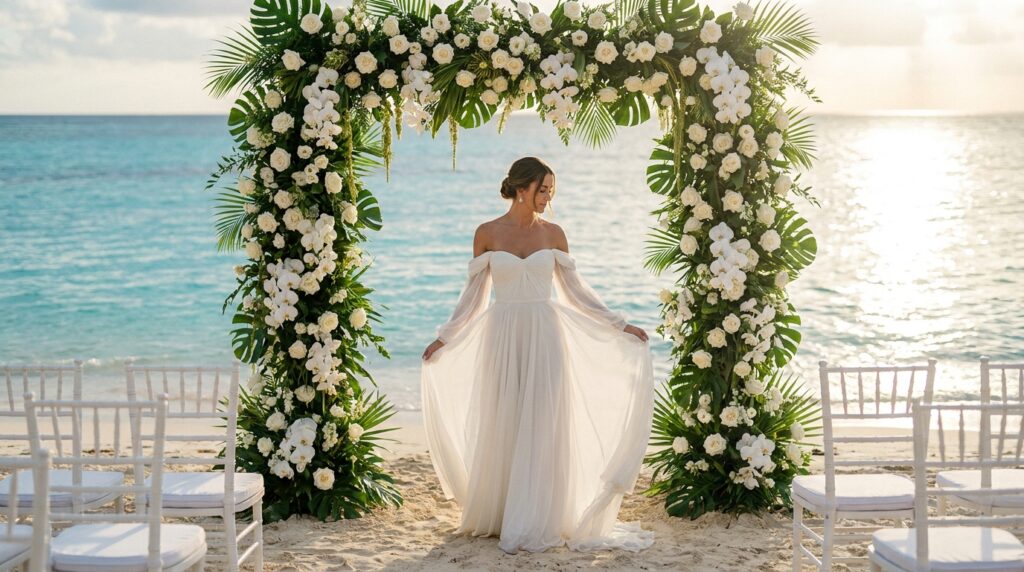
Fabric affects how a gown moves, packs, and feels throughout the ceremony. Chiffon is lightweight and creates visible movement in a breeze. Georgette offers similar flow with a little more structure. Organza gives you volume while remaining lighter than many traditional structured fabrics.
Crepe suits brides who prefer cleaner lines. Light lace adds texture without requiring heavy beading. Current beach bridal guidance from major retailers frequently highlights chiffon, organza, georgette, crepe, and other lightweight fabrics for coastal settings. Long gowns can also work when the fabric and train remain manageable.
Be more cautious with multiple layers of dense fabric. Thick construction can add warmth and make walking more difficult. Your venue matters too. A shaded ceremony on firm sand gives you different options from a midday ceremony on a humid tropical beach.
Decide How Much Train You Want to Manage
A long dress can work beautifully by the water. The main challenge is usually the train rather than the floor-length hem.
A sweep train adds some bridal movement without leaving several feet of fabric behind you. A detachable train is another practical option. You can wear it for the ceremony and portraits, then remove it before walking or dancing.
If you want a longer train, plan how it will be managed. Ask whether the gown can be bustled and whether the bustle is easy for someone in your wedding party to secure. For a ceremony directly on loose sand, a shorter train usually creates fewer practical problems.
Think About Wind Before Choosing the Neckline and Veil
Wind can make a coastal ceremony look beautiful in photographs, but it can also move fabric in unexpected ways. Try the gown while walking, turning, raising your arms, and sitting. A secure bodice matters more outdoors than it might during an indoor ceremony.
If you choose a veil, consider both its weight and how it attaches. A long, lightweight veil can move dramatically in a breeze, while a shorter veil may be easier to control.
The same rule applies to loose sleeves, bows, and detachable panels. Decide whether you like the way they move before the wedding day.
Choose Shoes for the Surface You’ll Actually Walk On
Traditional narrow heels can sink into soft sand. Flats, bridal sandals, barefoot styling, and broad wedges are more practical choices for many beach ceremonies.
Don’t choose shoes separately from the dress. Your final footwear affects the hem length, your posture, and how the gown falls.
Take your ceremony shoes to your alteration appointments. If you plan to go barefoot on the sand and wear shoes indoors, tell your tailor. The gown needs to work at both heights.
Also check the entire walking route. The ceremony may take place on sand, while the aisle, boardwalk, terrace, or reception takes place on a hard surface.
Complete your look with our expert guides to the best shoes for every occasion, style, and budget.
Plan for Packing, Wrinkles, and Final Alterations
Destination weddings add another question: how will the gown reach the venue?
Before buying, ask how the fabric should be packed and restored after travel. Some gowns recover well with light steaming. Others require more careful pressing or professional handling.
Destination bridal guidance also recommends considering how easily a gown travels, along with its fabric weight and suitability for the expected temperature.
Finish major alterations early enough to test the complete look. Wear your planned shoes and undergarments during the final fitting.
Move around in the gown instead of standing still in front of a mirror. Walk quickly, sit, turn, and lift the skirt. That small rehearsal can reveal more than another twenty minutes spent looking at the dress on a hanger.
Stay ahead of the trends with our latest fashion guides, styling tips, and wardrobe inspiration.
Use the Beach-Fit Scorecard Before You Buy
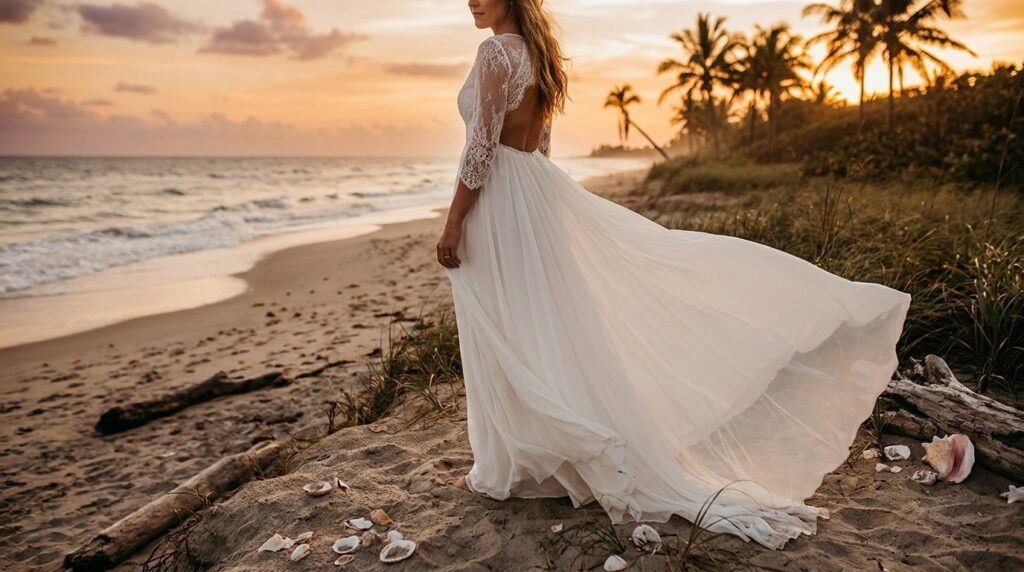
Give each dress a score from one to five for these five factors:
Movement: Can you walk naturally without carrying the skirt?
Heat: Do the fabric and lining feel appropriate for the expected weather?
Wind: Does the neckline stay secure, and do loose details behave well?
Sand: Can you manage the hem and train without constant help?
Travel: Can the gown reach the destination without requiring difficult restoration?
A dress that photographs beautifully but performs poorly in three of these categories may become frustrating on the wedding day.
This scorecard can also help when two gowns look equally good in the fitting room. Instead of choosing based only on appearance, you can compare how each one fits the practical demands of your ceremony.
Choose the Dress for the Whole Day
Your gown needs to do more than look good during a few minutes of ceremony photos. It should carry you comfortably from the aisle to portraits, dinner, and dancing.
Use the setting as a filter rather than a rulebook. Start with weight, movement, hem length, weather, and footwear. Then choose the neckline, lace, sleeves, and details that feel right for you.
A coastal wedding gives you room to wear something romantic, modern, minimal, dramatic, or relaxed. The right choice is the gown that still feels right once sand, sun, wind, travel, and movement become part of the decision.
For more fashion inspiration as Styleblor grows, return to Styleblor and build your bridal look around the way you want the day to feel.
Explore more wedding dress styles, trends, and buying tips to find the perfect gown for your big day.
FAQ: Beach Wedding Dresses
A lightweight A-line is a useful starting point for many brides. Sheaths, soft fit-and-flare gowns, tea-length dresses, and minimalist styles also work well. Choose based on the surface, weather, formality, and how freely you want to move.
Yes. Floor-length gowns can work well when they use manageable fabrics and have little or no train. A bustle or detachable train can make movement easier later in the day.
Start with lightweight options such as chiffon, georgette, organza, light crepe, or breathable lace. Pay attention to the lining too, because several inner layers can make a lightweight-looking gown feel much warmer.
Not necessarily. Soft tulle can create a beautiful floating effect, but multiple layers can add volume. Fine netting may also collect small pieces of debris when dragged across natural ground, so test how the skirt behaves before making a final decision.
Flat sandals, bridal flats, stable wedges, or barefoot styling are practical options. Avoid narrow heels on soft sand. Choose your ceremony footwear before the final hem fitting.