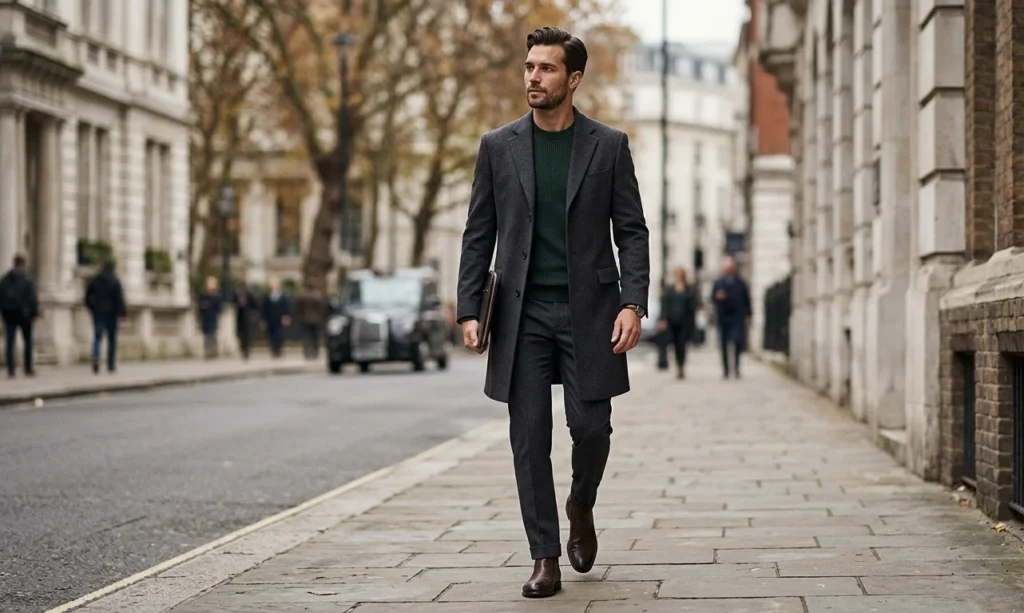

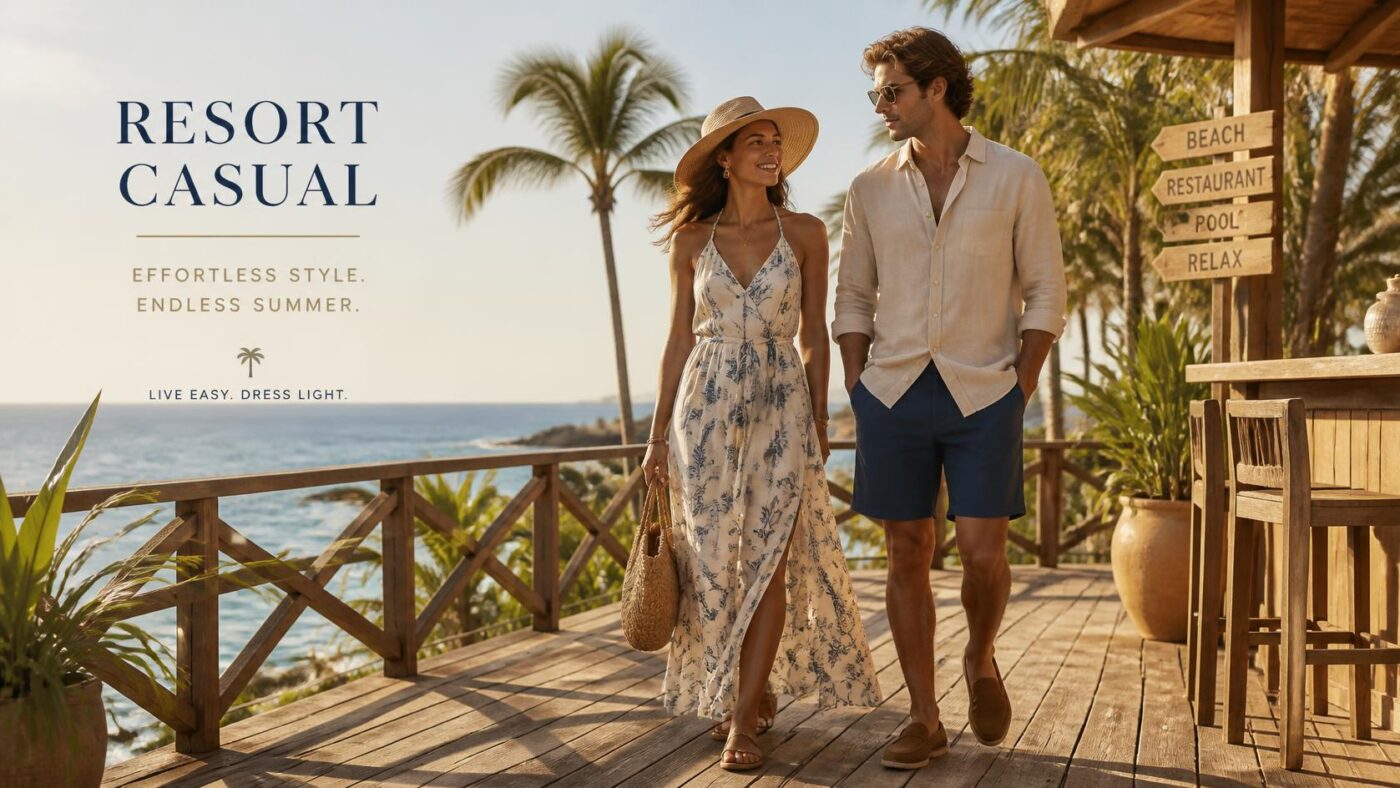
Resort casual attire combines vacation comfort with enough polish for restaurants, lounges, cruises, and upscale hotels. Think breathable fabrics, neat silhouettes, intentional shoes, and clothing that looks finished rather than beach-ready. You can stay comfortable without dressing as though you are headed straight from the pool.
Quick answer: Resort casual clothing sits between beachwear and cocktail clothing. Women can wear sundresses, linen separates, jumpsuits, skirts, or tailored shorts with polished sandals. Men can choose polos, linen shirts, tailored shorts, chinos, and loafers or clean casual shoes.
| Style question | Practical answer |
| Formality level | Relaxed but polished |
| Women’s staples | Sundresses, midi dresses, jumpsuits, linen separates |
| Men’s staples | Polos, linen shirts, chinos, tailored shorts |
| Useful fabrics | Linen, cotton, seersucker, lightweight blends |
| Good footwear | Leather sandals, flats, loafers, espadrilles |
| Usually avoid | Swimwear, gym clothes, rubber flip-flops, sloppy T-shirts |
| Dinner adjustment | Add trousers, a refined dress, or smarter shoes |
| Best rule | Dress one step above ordinary beach clothing |
What Does Resort Casual Attire Mean?
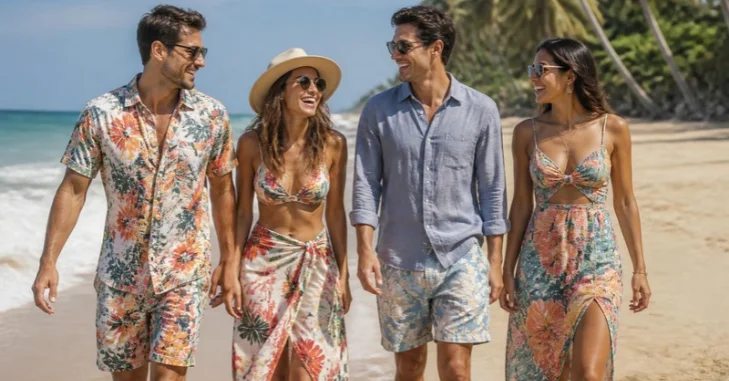
The easiest way to understand the Resort Casual Attire dress code is to picture a nice lunch at an upscale coastal hotel. You should look relaxed, but your clothing should still appear chosen for the setting. That distinction separates vacation dressing from ordinary beachwear.
The term appears at hotels, cruises, clubs, restaurants, and warm-weather events. Exact standards can change between properties, especially after sunset. Checking your hotel or restaurant guidance before packing can prevent an awkward dinner-door surprise.
This style is less formal than the looks covered in Styleblor’s cocktail dress code guide. Cocktail clothing normally calls for a noticeably dressier finish. Vacation casualwear gives you more freedom with fabrics, colors, prints, and relaxed silhouettes.
9 Easy Rules for Getting the Dress Code Right
The simplest rule is to start with comfort and add one polished detail. That might mean swapping pool slides for leather sandals or choosing tailored shorts instead of athletic ones. Small changes often make the biggest difference.
- Choose breathable fabrics such as linen, cotton, or lightweight blends.
- Favor clean, intentional fits instead of gym or beach silhouettes.
- Keep swimwear covered outside pool and beach areas.
- Choose polished sandals, loafers, flats, or espadrilles.
- Save athletic shorts and workout clothing for fitness activities.
- Use brighter colors and prints freely during daytime hours.
- Add slightly smarter pieces for restaurants after sunset.
- Keep accessories simple and practical for the climate.
- Check the property’s own dress policy before an important dinner.
These rules also make packing easier because many pieces can work more than once. A linen shirt can pair with shorts at lunch and trousers at dinner. A midi dress can move from sightseeing to drinks with a simple shoe change.
Resort Casual Outfits for Women
Women have plenty of flexibility because dresses and coordinated separates naturally fit this dress code. A cotton sundress with leather sandals works for lunch, while a linen midi dress can handle a nicer dinner. A jumpsuit or wide-leg trousers with a fitted top offers another practical option.
For daytime, prioritize movement and heat management. Cotton poplin, linen blends, voile, and other lightweight materials are useful in warm destinations. Styleblor’s beach dresses guide explains how fabric behavior matters around heat, water, sand, and sunscreen.
A useful outfit formula is a midi dress, flat leather sandals, a small crossbody bag, and simple jewelry. Another is tailored shorts with a sleeveless blouse and espadrilles. Both combinations feel vacation-ready without looking like pool attire.
For dinner, keep the relaxed foundation but sharpen one or two details. Try a flowing maxi dress with refined sandals or wide-leg trousers with a polished blouse. A lightweight wrap can help inside heavily air-conditioned restaurants.
Resort Casual Outfits for Men
Men can build most vacation outfits around a few reliable pieces. A linen button-down, polo, tailored shorts, chinos, and lightweight trousers cover many resort situations. Neutral bases also make repeat outfits less noticeable during longer trips.
For lunch or daytime activities, try chino shorts with a polo or short-sleeve button-down. Finish with loafers, boat shoes, espadrilles, or clean minimalist footwear where the property permits it. Avoid gym shorts, worn graphic tees, and pool slides in dining areas.
Dinner usually calls for a small step upward. Lightweight trousers with a linen shirt create an easy warm-weather combination without requiring a jacket. Leather loafers or another neat closed shoe can make the outfit feel more intentional.
Fit matters as much as price or brand. Shirts should sit neatly at the shoulders, while shorts should look tailored rather than oversized. Clothing can remain relaxed without looking careless.
What Should You Wear to a Resort Dinner?
Dinner is where travelers most often misjudge vacation dress codes. Daytime shorts and sandals may be accepted around the property but not inside certain restaurants. Upscale resorts can set individual requirements for specialty dining rooms.
Women can usually rely on a midi dress, maxi dress, jumpsuit, or polished separates. Men can switch tailored shorts for lightweight trousers and choose a collared shirt. Refined footwear helps both outfits feel appropriate after sunset.
If the restaurant specifies cocktail clothing instead, treat that as a separate dress code. The standards become more formal, particularly for evening events. Styleblor’s black tie attire guide also shows how much further formal eveningwear sits from relaxed vacation clothing.
Best Fabrics for Warm-Weather Resort Clothing
Fabric choice can determine whether an attractive outfit remains comfortable after an hour outside. Linen and lightweight cotton are popular because they suit hot-weather wardrobes and relaxed silhouettes. Seersucker and airy blends can also work well.
Linen wrinkles, but moderate creasing often fits its relaxed character. Cotton poplin offers a crisper appearance when you want more structure. Lightweight blends may resist wrinkles better, making them useful for suitcase-heavy trips.
Avoid relying on thick, clingy materials for hot outdoor plans. A polished outfit loses much of its appeal when you are uncomfortable throughout the day. Choose fabric for the climate first, then refine the silhouette and accessories.
Which Shoes Work Best?
Shoes can quickly move an outfit toward beachwear or toward polished vacation style. Women can use leather sandals, espadrilles, flats, wedges, or low block heels. Men can consider loafers, boat shoes, espadrilles, or neat leather sandals where permitted.
Rubber flip-flops belong mainly around pools and beaches. Athletic running shoes can also look out of place at an upscale dinner. A clean casual sneaker may work at relaxed properties, but checking the restaurant policy remains sensible.
Terrain matters too. Narrow heels are inconvenient on sand, boardwalks, uneven paths, and waterfront lawns. Styleblor’s beach wedding guest dress guide offers more ideas for combining polished clothing with sand-friendly footwear.
What Not to Wear
The easiest mistakes come from treating “casual” as permission to wear anything comfortable. Resort settings still expect a degree of presentation outside recreational areas. Clothing designed for swimming, sleeping, or exercising usually belongs elsewhere.
Common pieces to reconsider include the following.
- Wet swimsuits without a cover-up.
- Bathrobes outside appropriate hotel areas.
- Athletic shorts at dinner.
- Worn or oversized graphic T-shirts.
- Rubber pool flip-flops in upscale restaurants.
- Dirty or heavily worn sneakers.
- Clothing with obvious stains or damage.
- Extremely formal eveningwear when the code is casual.
Jeans depend on the venue and time of day. Some relaxed properties allow clean denim, while stricter dining rooms may prefer trousers or dresses. Checking the establishment’s written policy is more reliable than assuming one universal rule.
A Simple Resort Packing Formula
A small capsule wardrobe can cover most vacation situations without filling your suitcase. Choose pieces that share a color palette and can move between daytime and evening. Shoes should also work with several outfits rather than one specific look.
For women, consider two dresses, tailored shorts, lightweight trousers, three tops, a swimsuit cover-up, and two versatile shoe options. For men, try two collared shirts, two polos, tailored shorts, two lightweight trousers, and two pairs of shoes. Add swimwear separately because pool clothing serves a different purpose.
Bring one slightly dressier outfit even if your itinerary looks relaxed. Dinner reservations, hotel events, or unexpected plans can change what you need. That backup outfit can prevent an unnecessary shopping trip during your vacation.
Resort Casual vs. Other Vacation Dress Codes
Vacation dress-code labels overlap, so the wording can feel confusing. The key difference usually comes down to how polished the venue expects guests to look. Time of day can also shift the standard.
| Dress code | General level | Typical approach |
| Beachwear | Most relaxed | Swimwear, cover-ups, pool footwear |
| Resort casual | Relaxed and polished | Sundresses, polos, tailored shorts, linen |
| Resort evening | More refined | Dresses, trousers, collared shirts, smarter shoes |
| Cocktail | Dressy | Cocktail dresses, jumpsuits, suits, tailored separates |
| Black tie | Formal | Evening gowns and tuxedos |
These categories are useful guidelines rather than universal hotel rules. Individual resorts and cruise lines may define their policies differently. Always give the venue’s stated requirements priority over a general style guide.
Frequently Asked Questions
Can you wear jeans with resort casual attire?
Clean jeans may work at some relaxed resorts, especially during daytime or cooler weather. Dark, neat denim is safer than distressed or oversized styles. For an upscale dinner, lightweight trousers are usually the more adaptable choice.
Can you wear shorts to a resort restaurant?
Tailored shorts often work for daytime restaurants and casual outdoor dining. Some dinner venues require long trousers for men or otherwise restrict shorts after certain hours. Check the restaurant policy before arriving.
Are sneakers acceptable?
Clean, simple sneakers can work at casual properties and during daytime activities. Athletic running shoes may feel too sporty for refined restaurants. Loafers, flats, sandals, or espadrilles create a safer polished finish.
Do women need heels?
Heels are not required for this dress code. Flat leather sandals, espadrilles, and refined flats can look polished while remaining practical. Choose footwear that suits both the venue and walking conditions.
Is resort wear the same as beachwear?
No, because beachwear centers on swimming, sun, and sand. Clothing for restaurants and shared hotel spaces generally requires more coverage and polish. Think of beach clothing as recreational wear and vacation casualwear as social clothing.