
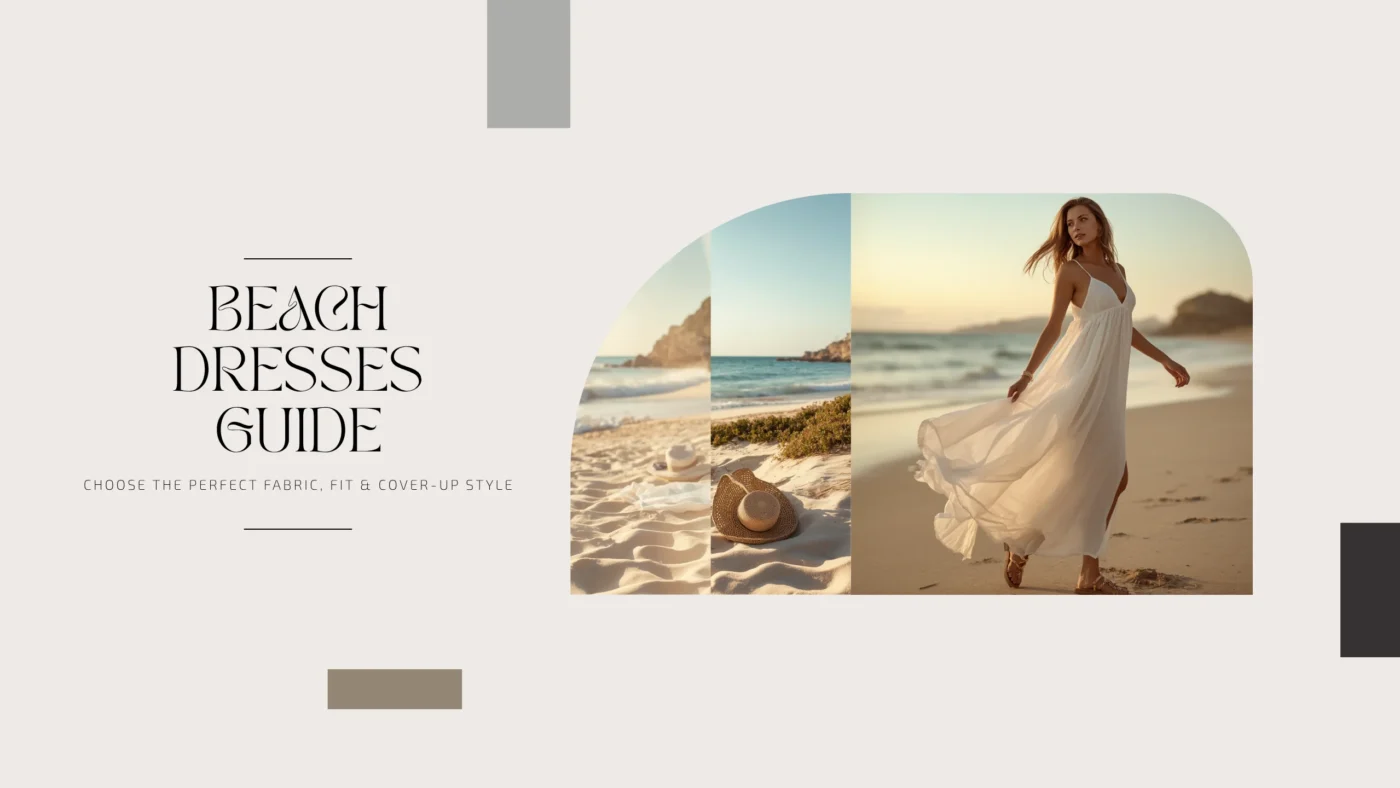
A gauze cover-up at Target sits between $21 and $30. The same rough shape in cotton voile at J.Crew runs $98 to $150, with crochet and eyelet versions landing around $35 to $70 in the middle. That is a six-fold spread for garments that look nearly identical on a hanger.
What separates them is behavior, not print. Saltwater, loose sand, sunscreen, and a soaking swimsuit all act on the fabric. Yet beach dresses are rarely sold on the specs that matter: dry time, wet strength, wrinkle recovery, packed size. So here are the four questions worth answering before you spend anything.
The short version: buy for fabric, not for pattern. Cotton gauze and light linen dry quickly and shrug off creases. Rayon droops the moment it gets wet. Polyester mesh dries fastest but holds heat. Budget $21 to $35 at mass retailers, $40 to $70 mid-market, and $90 to $150 at contemporary brands.
Fabric Spec Sheet: Dry Time, Wrinkles, Stains, and Price
No one on page one compares fabrics on dry time, wrinkle recovery, and stain risk in one spec table, so here it is. Dry times are ballpark figures for a warm, breezy afternoon on an unlined garment, not lab numbers.
| Fabric | Dry time after a dunk | Wrinkle recovery | Sunscreen stain risk | Typical US price |
| Cotton gauze/crinkle | 20 to 40 min | Excellent, creases are the point | Medium, shows on pale colors | $21 to $45 |
| Polyester chiffon / mesh | 10 to 20 min | Excellent | Low, oils release in a warm wash | $25 to $60 |
| Linen and linen blends | 30 to 50 min | Poor on paper, acceptable in real life | High on white and cream | $50 to $120 |
| Cotton voile / eyelet | 40 to 70 min | Fair, wants a steam | High on white | $60 to $150 |
| Crochet knit, cotton | 45 to 75 min | Good, but it can stretch out | Medium | $35 to $70 |
| Rayon / viscose | 60 to 90 min | Good drape, weak when wet | Medium | $30 to $80 |
| Cotton terry / towel knit | 90 min or more | Good | Low | $40 to $90 |
TL;DR:
- Gauze and crinkle cotton win on dry time plus wrinkle recovery, which is why they dominate the $25 rack.
- Polyester mesh dries fastest and stains least, at the cost of airflow.
- Rayon and viscose look best in the fitting room and worst on the sand.
- White anything plus chemical sunscreen is a stain waiting to happen.
- Price buys you finishing, lining and better cotton, not better performance.
1. Where Are You Actually Wearing It?

Three settings, three different garments. Open shore means grit and wind, plus a hem that will drag. Pool decks bring chlorine splash and dye transfer from painted loungers. At a waterfront restaurant, you need to look deliberate at a table.
- Sand: short or mid length, nothing that sweeps the ground, no trailing ties.
- Pool deck and boat: darker shades or prints, since chlorine fades pale dyes and lounger paint transfers.
- Town and lunch: opaque fabric, a neckline that stays put, a hem you can sit in.
Weddings sit outside all three. Shopping for a coastal ceremony instead of an ordinary Tuesday by the water? Our guide to choosing a gown for a coastal ceremony handles train length, wind,d and bodice security. Those are bridal problems, and a cover-up has none of them.
2. What Goes Underneath, And How Much Coverage Do You Need?
This is the question retailers dodge hardest. Photographed on a dry model over a nude bodysuit, any dress tells you nothing about how it reads over a wet navy bikini.
Hold the fabric up to a window in the store. If you can read your hand through it dry, it will be sheer wet, and wet cotton goes closer to transparent than almost anything else.
Then check the hardware against your swimsuit. Halter ties and racerback straps show through and under most necklines, and a knotted bikini tie under a smocked bodice creates a visible lump that no amount of adjusting fixes. Wide armholes are a bigger deal than they look, because a side-cut armhole over a triangle top exposes more than most people want on a public beach.
Sun coverage is a garment spec too. A UPF 50 rating means the fabric passes about 2 percent of ultraviolet light, and UPF 30 passes roughly 3 percent. Tight weaves and saturated colors block more than loose, pale ones. Two things quietly cancel it out: the fabric getting wet, and the fabric getting stretched. An eyelet or crochet dress has actual holes in it, so treat it as decoration rather than shade.
3. How Wet Is It Going to Get?
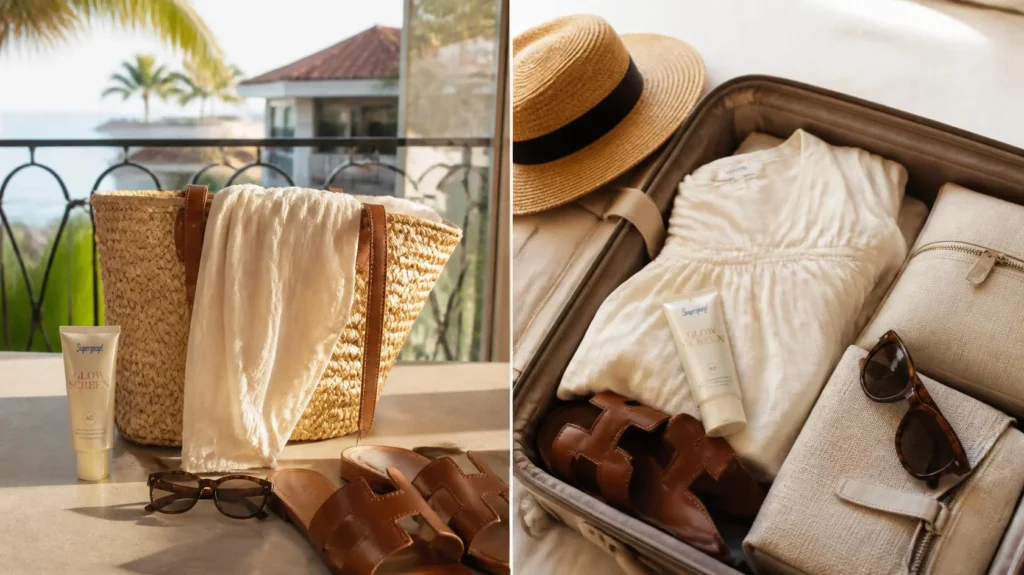
Be honest about this one for beach dresses. Wearing something to and from the water is a different job from sitting down in it damp, which is different again from swimming in it.
Rayon and viscose are where most people get caught. Both lose tensile strength when wet. So a rayon maxi that hangs beautifully in the store will sag, stretch at the shoulder, nd cling once it soaks through from a damp swimsuit. Add an hour of drying time, and you have a garment that is uncomfortable for the whole walk back.
Salt and chlorine cause different damage, and sunscreen causes the damage nobody warns you about.
| Culprit | What it does | What to do |
| Salt water | Dries into crystals that abrade fibers and stiffen the hand | Rinse in fresh water the same day, before the salt dries in |
| Chlorine | Fades dye and weakens elastane in stretch blends | Choose darker colors, rinse immediately, skip stretch fabrics for pool days |
| Sunscreen | Leaves oil marks, then rust-orange stains that appear after washing | Treat the oil first, use mineral sunscreen with light fabrics |
The orange stain deserves an explanation, because it surprises people. Avobenzone, the ultraviolet A filter in hundreds of American chemical sunscreens, reacts with iron in tap water and oxidizes into rust-colored marks. The dress goes into the wash looking fine and comes out spotted.
Mineral sunscreens contain no avobenzone at all, which is the simplest fix if your favorite cover-up is white. If a stain already exists, work liquid dish soap into the oil for five minutes, rinse, then use a non-bleach color remover before a warm wash. Air dry it. Heat sets what is left.
4. Does It Have to Pack?
If the dress lives in a beach bag or a carry-on, packed volume matters as much as fit. A crinkle gauze dress compresses to roughly the size of a rolled bath towel and comes out of a suitcase looking exactly as it went in. Structured cotton voile takes up more room and arrives creased.
Weight is worth a thought too in choosing beach dresses. Most gauze cover-ups run 5 to 8 ounces, while a terry or towel-knit style can hit a pound wet enough to matter in a tote.
Pleats are the trap. Pressed folds need heat to reset, and a suitcase plus humidity plus salt spray undoes them fast, which is worth understanding before you pack one. Our explainer on how pleats hold their shape covers why some folds survive a wash, and others never come back.
One trick that works: hang the dress in the bathroom while you shower. Ten minutes of steam pulls most suitcase creases out of cotton and linen without an iron. Milkmaid Dress is a useful companion read here.
Beach Dresses By Price: What Each Tier Buys

Nobody publishes real US price bands by retailer tier for this category, so here is what your money actually gets across the three tiers.
$21 to $35, mass retail (Target, Old Navy, Amazon labels).
- Pros: gauze and mesh fabrics that genuinely perform, low enough cost that salt damage does not sting, wide size range.
- Cons: thin, unfinished seams, unlined bodices; printed dyes that fade in one season.
$40 to $70, mid-market (Cupshe, Old Navy premium lines, Quince, Abercrombie).
- Pros: real linen blends, lined panels where you need them, better button and tie hardware.
- Cons: crochet knits in this band stretch out, and sizing runs inconsistent between styles.
$90 to $150, contemporary (J.Crew, Free People, Reformation, Anthropologie).
- Pros: heavier cotton voile and embroidery, French seams, cuts that read as clothing rather than swimwear.
- Cons: you are paying for finishing and fit, not for performance, and dry times get longer as fabric gets denser.
End-of-season markdowns collapse these bands completely. Contemporary voile styles hit $42 to $60 by late August, which is the single best time to buy for next year.
What To Skip?
Some of this category is not worth your money. Blunt list:
- Rayon maxi styles. Slow to dry, weak when wet, and the hem picks up wet sand like a mop.
- White unlined cotton. Sheer when damp, and the first target for sunscreen stains.
- Anything dry-clean only. A garment you cannot rinse in a hotel sink does not belong near salt.
- Terry and towel-knit dresses. Cute in photos, an hour and a half of clammy afterward.
- Heavily pleated skirts. The folds do not survive humidity and a suitcase.
- Metal trim and unsealed hardware. Salt corrodes zippers and eyelets in a season.
- Suede or leather sandals to match. Salt leaves permanent tide lines, and while getting salt and sand out of suede is possible, it is not a beach-day job. Wear rubber or woven.
The Swim-To-Street Test

Here is the standard: nothing on page one applies: can you walk from the water to a restaurant table without changing?
Three things decide it for beach dresses. The fabric has to be opaque when damp. The shape has to read as a dress rather than as swimwear, which usually means a defined shoulder or a real neckline instead of a tube. And the hem has to sit somewhere you can sit down in without arranging it.
Crinkle-cotton shirtdresses pass. Mesh tunics do not, and neither does anything with a side slit above the hip.
The Verdict
For most people, one crinkle or gauze cotton shirtdress in a mid-tone print at $25 to $45 does more work than three prettier options among beach dresses. It dries in half an hour, packs to nothing, hides sunscreen marks, and passes the restaurant test with sandals. Buy the second one only when you know what the first failed at.
If you swim in your cover-up rather than over it, take polyester mesh instead and accept that it runs warm.
Start With One Good Fabric
Pick the setting first, check the fabric against the spec table above, and ignore the print until both are settled. If you only take one thing from this page, make it the fabric column. Browse our fashion guides when you are ready to build the rest of the vacation wardrobe around it.
FAQ
Cotton gauze for most people, polyester mesh if speed matters most. Both dry fast and resist creasing. Linen looks better and costs more.
Usually, yes. Beach dresses are cut loose and slightly sheer on purpose so they sit over a swimsuit without clinging. Some heavier styles work as standalone vacation dresses over underwear instead.
Switch to a mineral formula built on zinc oxide or titanium dioxide. Let it absorb for a few minutes before dressing. Treat any oil mark with dish soap before the garment goes through a wash.
Rinse the salt out first in cold fresh water, then machine wash cold on a gentle cycle. Skip the dryer. Heat sets both sunscreen residue and shrinkage in cotton.
Mini and midi. Floor-length hems pick up wet sand within a few steps and stay heavy for the rest of the day.
Two. One fast-drying piece for water days and one that reads as regular clothing for dinners, which covers seven days without laundry.