
The invitation lands, you read two small words, and your closet suddenly looks wrong. Black tie attire is the second strictest dress code in American social life, and it is far less flexible than most guests assume. It has real rules about length, fabric, and time of day. Here is the ruling first, then the distinctions, then the errors that give people away.
The short answer: a floor-length evening gown for women and a tuxedo for men. Dark colors, luxe fabrics, and polished formal shoes. No cocktail dresses, no business suits, no long neckties. The code applies to evening events, generally anything starting after 6 p.m. Everything else is negotiation, and the sections below settle it.
| Topic | Summary |
|---|---|
| What Is Black Tie Attire? | A formal evening dress code requiring elegant, polished outfits for events starting after 6 p.m. |
| Women’s Dress Code | Wear a floor-length evening gown or a formal jumpsuit in luxurious fabrics with dressy shoes and a clutch. |
| Men’s Dress Code | A black or midnight-blue tuxedo, a black bow tie, a formal shirt, and patent leather shoes are the standard. |
| Dress Code Variations | Black Tie Optional allows a dark suit; Creative Black Tie permits bold colors; White Tie is the most formal. |
| Colors & Fabrics | Choose dark or jewel tones in silk, satin, velvet, lace, or jacquard. Avoid casual fabrics like cotton or linen. |
| Estimated Costs | Tuxedo rentals cost about $100–$250, while evening gown rentals start around $61. |
| Common Mistakes | Wearing a dark suit instead of a tuxedo, choosing a cocktail dress, casual shoes, or over-accessorizing. |
| Styling Tips | Keep accessories elegant, ensure a tailored fit, and complete the outfit with formal shoes and a polished hairstyle. |
| Preparation | Reserve formalwear 4–6 weeks before the event and schedule a fitting at least 10 days in advance. |
| Key Takeaway | Following the correct black tie attire rules ensures you look elegant, respectful of the dress code, and perfectly dressed for formal occasions. |
Key Takeaways
- Floor length is a rule for women, not a suggestion.
- Men need a tuxedo. A dark suit belongs to a different code.
- Black-tie optional: lets men swap the tuxedo for a dark suit. Women still go long.
- Creative black-tie opens the door to color, metallics, and separates.
- White tie sits one tier above, with a tailcoat, a white waistcoat, and gloves.
- Renting a tuxedo runs about $100 to $250. Buying one starts near $300.
The Ruling: What Black Tie Attire Demands

Black Tie Attire Hosts pick this code because they want the room to look uniform and expensive. Your job is to disappear into that picture, elegantly.
For women
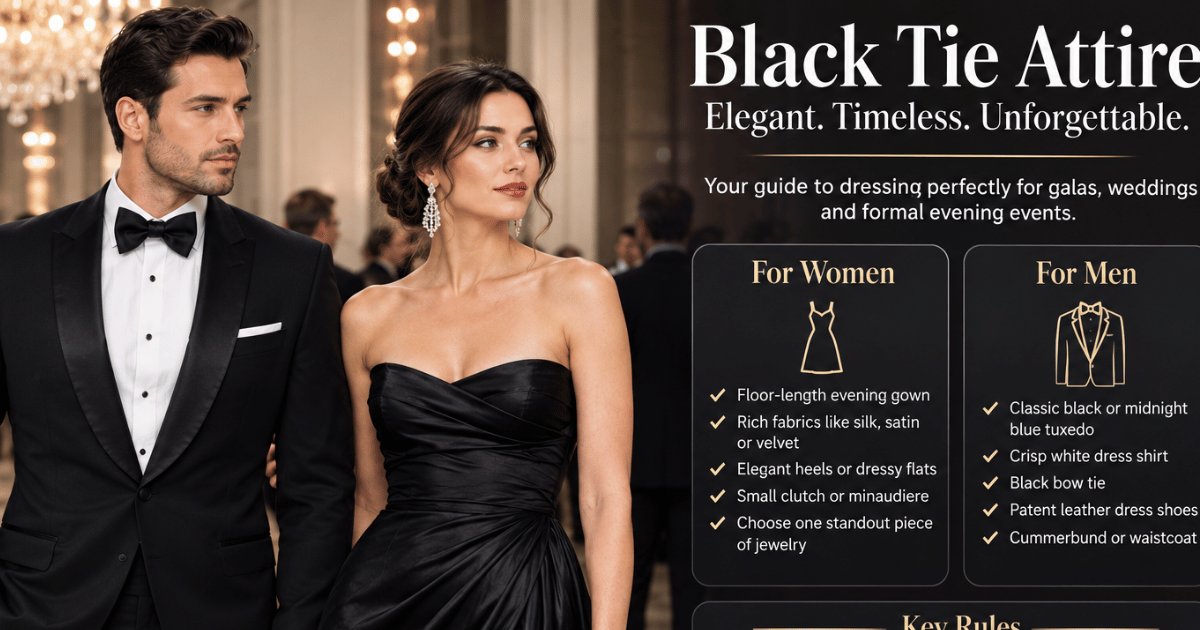
Floor length. That single rule is the one guests break most often. A gown should skim the floor or brush the top of your shoe. Dark and rich colors are read correctly here: black, navy, emerald, burgundy, and aubergine. Fabric carries as much weight as color, so reach for silk, velvet, satin, jacquard, brocade, or heavy lace. A tailored jumpsuit in a formal fabric passes at most modern weddings, though a traditional host may still raise an eyebrow.
Shoes should be a heel or a genuinely dressy flat. Skip the platform sole. Choose one strong piece of jewelry for evening events and let it carry the whole look.
Bags matter more than people expect. Swap the daytime tote for a small clutch or a minaudiere you can hold in one hand all night. Hair reads formal when it is deliberate, whether that means a smooth low bun or a real blowout.
For Men
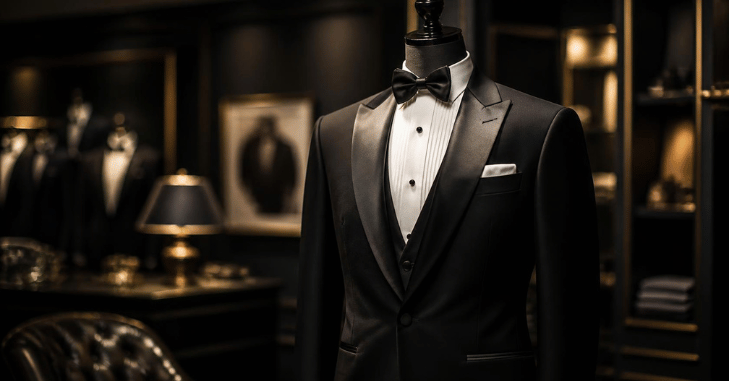
A tuxedo. Not a dark suit, and not a very good dark suit either. The standard build is a black or midnight blue dinner jacket with satin-peak lapels or a shawl collar. Trousers match the jacket and carry a satin stripe down the leg.
Then a crisp white formal shirt with studs, cufflinks, and a bow tie—you knot yourself. A cummerbund or a low-cut waistcoat hides the waistband. Footwear is black patent leather, either an Oxford or a formal pump. One exception survives: at summer events in hot climates, a white dinner jacket replaces the black one. Hosts usually flag this on the invitation.
Black Tie vs. The Codes It Gets Confused With
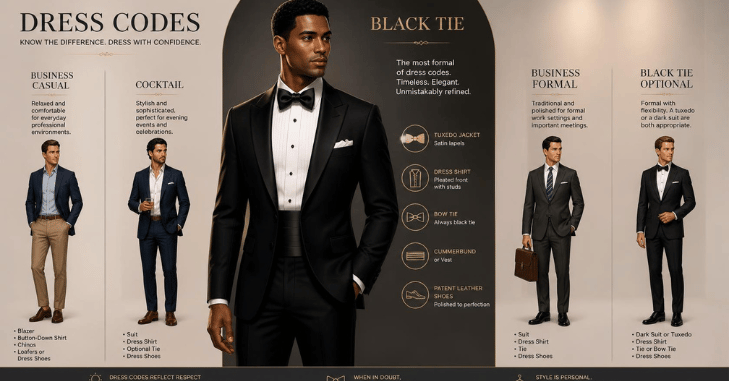
Black- and white-tie attire: Four codes share a family resemblance and almost nothing else. Read the invitation wording exactly as written, because a single extra word changes what you owe. Our wedding fashion guides cover the softer codes below this tier.
| Dress code | Women | Men | Typical event |
| Black tie | Floor-length gown or formal jumpsuit, dark or jewel tones | Tuxedo, black bow tie, patent shoes | Evening wedding, gala, opera |
| Black tie optional | Floor-length gown, or a very formal midi | A tuxedo or a dark charcoal or navy suit with a tie | Wedding where the host wants range |
| Creative black tie | Metallics, bold color, jumpsuits, formal separates | Colored or velvet tuxedo, statement accessories | Fashion crowd, art benefit, milestone party |
| White tie | Full-length ball gown, gloves, fine jewelry | Tailcoat, white waistcoat, white bow tie | State dinner, royal or diplomatic event |
Note the pattern. Every step up narrows what men may wear, while women stay long the entire way. Two softer phrases turn up on invitations and confuse people. “Black-tie preferred” means the host would love tuxedos but will forgive a dark suit. Plain “formal” sits a step lower again, where a sharp dark suit is the expectation and a long gown is generous rather than required. Neither phrase permits you to arrive in knee-length under an evening chandelier.
Length, color, and fabric: Where the line actually falls
Guests get stuck on the same three variables, so here are plain rulings on each.
Rulings That Hold
- Floor length for a strict black-tie invitation. A midi is a downgrade; the room will notice.
- Dark, saturated, or deep metallic color. Neon and pastel read daytime.
- Fabric with weight and shine. Cotton, jersey, and linen sink the outfit instantly.
- No white, ivory, or champagne at a wedding. That color belongs to one person.
Rulings That Bend
- A high-quality jumpsuit or a gown-length skirt with a structured top usually passes.
- Black is welcome at a modern evening wedding, whatever your grandmother said.
If you want a broader survey of shapes before you commit, browse floor-length dresses and formal silhouettes and compare necklines side by side.
What the Outfit Costs in 2026
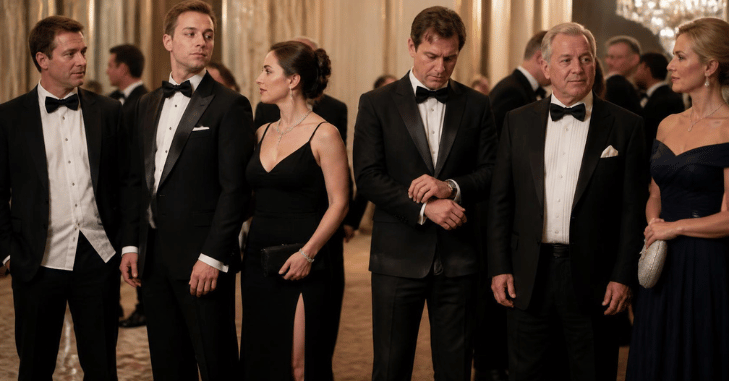
Formal dressing looks expensive because it usually is. It does not have to be.
| Item | Rent | Buy |
| Tuxedo, full look | $100 to $250, with flat-rate services around $149 to $179 | $300 entry level, $800 to $1,200 for tailored labels |
| Evening gown | From about $61 for a short rental window | Under $100 at fast fashion, $200 to $400 mid-range |
| Designer gown | $100 to $200 for a four-day rental | $600 to $900 and up |
| Shoes and small accessories | Rarely rented | $60 to $250 |
Do the arithmetic before you swipe. Three rentals at roughly $150 each cost about $450, which is already most of an entry-level tuxedo. Attend two formal events a year and buying wins by the third. Attend one every five years and renting wins forever.
Six Mistakes That Read As Underdressed
- A dark suit instead of a tuxedo. It is the single most common error, and everyone in the room clocks it. Rent instead.
- A long necktie. The code is named after the bow tie. A four-in-hand knot cancels the whole effect.
- A cocktail dress. Knee length is a different dress code with a different name.
- Chunky or casual footwear. Suede, thick rubber soles, and lace-up gladiators all fight the outfit. Save them for a daytime event and pick proper formal shoes for evening wear instead.
- Too many statement pieces. Big earrings, a heavy necklace, and a crystal clutch cancel each other out. Pick one.
- Ignoring the tailor. A rented jacket with sleeves an inch too long looks careless from across the room.
Fit fixes more problems than budget does. A $150 rental hemmed properly outranks a $900 gown that hangs wrong.
Your Next Step
Black tie attire: work backward from the date. Book a tuxedo or reserve a gown four to six weeks out, because sizes vanish during peak wedding season. Then schedule a fitting at least ten days before the event so a hem or a sleeve still has time to be corrected. Pull your shoes and accessories the night before and try the entire look on once, standing and sitting.
FAQ
Not to a strict one. Floor length is the standard, and a midi reads as a cocktail. If the invitation says “optional” or “creative,” a formal midi in a rich fabric becomes defensible.
Yes, at most modern events. It needs formal fabric, sharp tailoring, and a full-length leg. Treat it exactly as you would a gown, then finish with fine jewelry and a heel.
Only under black-tie optional. Under the strict code, a suit is underdressed, no matter how good the cloth is.
Evening. Most etiquette guidance ties it to events beginning after 6 p.m., which is why the fabrics lean toward velvet, satin, and silk.
A complete rented look for men sits near $150 to $250. Women can rent a gown from about $61 or buy a strong one for $200 to $400.
Treat it as a strong hint. Men can arrive in a dark suit without offending anyone, though a tuxedo is what the host pictured. Women should still plan on floor-length.
Under the strict code, stay with black or midnight blue. Burgundy and deep green velvet belong to the creative version of the dress code.