
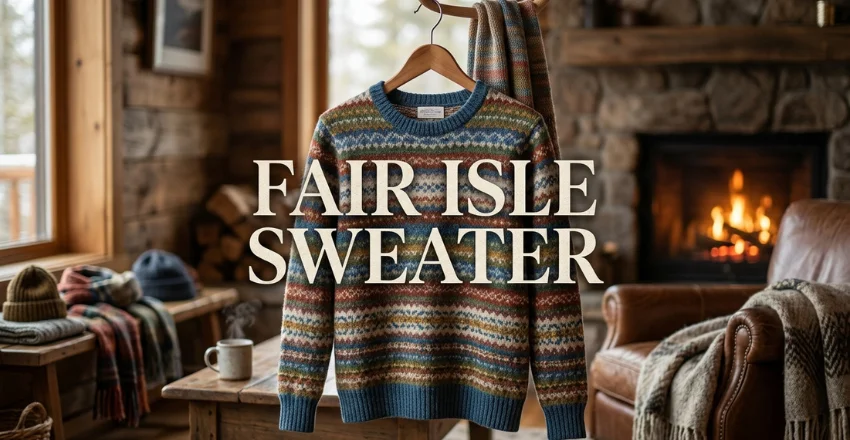
A Fair Isle sweater adds pattern and warmth without making winter dressing complicated. The best versions balance colorwork, comfortable fibers, and a shape that works with your usual layers. For most U.S. wardrobes, a midweight wool or merino blend offers the strongest mix of warmth, breathability, and repeat wear.
Fair Isle is a stranded colorwork style linked to Fair Isle in Scotland’s Shetland archipelago. Traditional patterns use small geometric motifs arranged in horizontal bands, usually with only two colors worked in one row. Modern sweaters often borrow that look in crewnecks, cardigans, vests, and yoke-knit pullovers.
| Quick fact | What to know |
|---|---|
| Best all-around fiber | Merino or a soft wool blend |
| Easiest fit | Relaxed crewneck with room for a thin base layer |
| Most versatile colors | Cream, navy, gray, brown, burgundy, forest green |
| Best season | Fall through winter, plus cold spring days |
| Best styling rule | Let the patterned knit lead and keep nearby pieces simple |
| Main buying mistake | Choosing by pattern before checking fiber, fit, and care |
Key takeaways
- Choose fiber before color if warmth and comfort matter most.
- Merino and wool blends suit most cold-weather wardrobes.
- Cotton blends work better for mild winters and heated indoor settings.
- Compare garment measurements with a sweater you already like.
- Pair busy colorwork with solid denim, trousers, skirts, or outerwear.
- Fold knits for storage and follow the care label before washing.
What makes Fair Isle different from other patterned knits?
The name comes from Fair Isle, a small island between Orkney and Shetland. The Victoria and Albert Museum describes the style as horizontal bands of motifs made with two colored strands. Its research also notes that the sweater form became fashionable during the 1920s, helped by the Prince of Wales.
That history matters because modern retailers use the label broadly. Some pieces follow traditional stranded colorwork, while others use printed, jacquard, or machine-knit interpretations. You can enjoy the look without an island-made garment. Still, construction changes how the fabric feels and wears.
Traditional stranded knitting creates small floats of unused yarn across the back. Those floats can add warmth without requiring a thick cable-knit texture. A printed imitation may look similar from a distance, but it will not have the same layered construction.
How to choose a Fair Isle sweater that you will actually wear
Start with the fabric label, then check the cut and pattern scale. A beautiful motif will not rescue itchy yarn, awkward proportions, or difficult care. Your best choice should fit your climate, layering habits, and tolerance for maintenance.
Wool remains the classic cold-weather option because it insulates while handling moisture better than many synthetics. Merino usually feels smoother than coarser wool, which helps if you wear knits near your skin. Cashmere feels softer and lighter, but it usually costs more and needs gentler care.
Cotton and cotton blends suit milder climates or people who run warm indoors. Acrylic and nylon blends can lower cost and make washing easier, though they may feel less breathable. For a deeper fiber comparison, use Styleblor’s sweater fabric guide before choosing a knit.
| Material | Warmth | Feel | Pros | Cons | Best for |
|---|---|---|---|---|---|
| Merino wool | High | Soft, smooth | Warm, breathable, lighter than bulky wool | Can pill and needs careful washing | Most U.S. winter wardrobes |
| Lambswool or wool blend | High | Soft to textured | Warm, durable, classic look | Some versions feel scratchy | Cold climates and outdoor wear |
| Cashmere | Medium to high | Very soft | Light, refined, comfortable | Higher price and delicate care | Dressier outfits and light layering |
| Cotton blend | Medium | Smooth, familiar | Easy to wear indoors and in mild weather | Less insulating in deep cold | Southern winters and shoulder seasons |
| Acrylic or nylon blend | Medium | Varies | Affordable, often easy-care | Can trap heat or develop static | Budget shopping and casual use |
For most shoppers, the practical winner is a merino or soft wool-blend crewneck. It gives you useful warmth without forcing a bulky silhouette. Choose a cotton blend if your winter is mild or you spend most of your day indoors.
Get the fit right before you fall for the pattern
Pattern placement changes how a sweater reads on the body. A wide yoke pulls attention toward the shoulders, while an all-over motif spreads visual weight more evenly. A narrow patterned band can feel quieter if you prefer a cleaner look.
Fit descriptions like “relaxed” or “oversized” are not standardized. Compare the listed chest, length, and sleeve measurements with a knit you already own. This is more reliable than automatically sizing down, since one review says a sweater runs large.
A crewneck is the easiest shape to layer under coats and over thin base layers. Mock necks add warmth without requiring a scarf, while cardigans give you more temperature control. Cropped shapes work well with high-rise bottoms, but check the actual garment length before buying.
How to style the pattern without looking overly festive
The easiest formula is patterned knit, solid bottom, and simple shoes. Straight jeans with loafers or ankle boots work because the sweater carries the visual interest. Dark denim also keeps brighter red, blue, or green motifs from feeling too holiday-specific.
For work, pair a finer-gauge knit with tailored trousers and a structured coat. Keep the shirt, belt, and shoes within one quiet color family. This makes heritage colorwork look polished, not themed.
For a softer outfit, wear the knit with a midi skirt and knee-high boots. A satin or wool skirt adds contrast without competing with the pattern. Choose one color from the sweater and repeat it once in the skirt, bag, or shoe.
For casual weekends, relaxed denim, corduroy, or leggings work well. The key is balancing volume, not matching the pattern. If the sweater is roomy, keep at least one lower-half piece straighter or more fitted.
For changing temperatures, Styleblor’s fall outfit layering guide can help you decide how much outerwear to add. Once cold weather settles in, the winter coat guide helps match coat warmth and shape with knit layers. Both approaches make the sweater part of a flexible layering system.
Is Fair Isle only for Christmas?
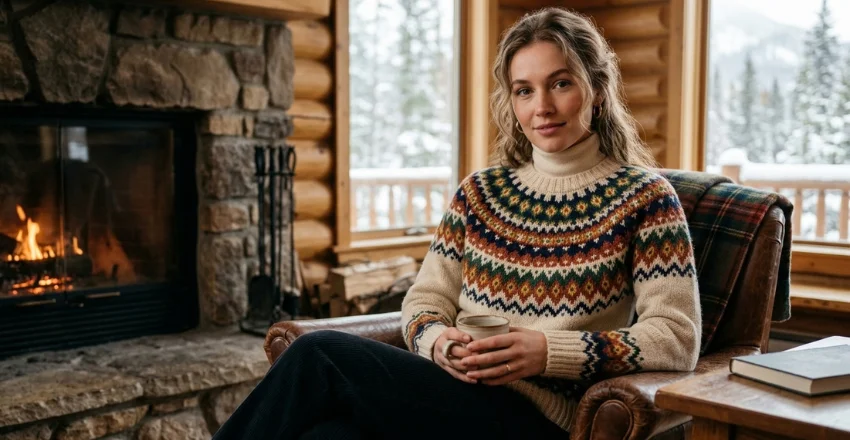
No. Red, green, and snowflake-like motifs can read festive, but the technique is not limited to holiday clothing. Navy, oatmeal, charcoal, brown, rust, and muted blue feel seasonal without looking tied to December.
Color contrast also changes the mood. Low-contrast motifs feel quieter and easier to repeat, while bright high-contrast designs become the main feature. For more year-round wear, choose colors already present in your coat, denim, or footwear.
The same logic applies after winter. Fine-gauge cotton versions can work during cool spring days, especially with lighter trousers or skirts. Save chunky wool versions for colder weather where their insulation makes more sense.
How to wash, dry, and store patterned knitwear
Read the care label before the first wash because fiber blends behave differently. If hand washing is recommended, use cool water and a mild wool-safe cleanser. Avoid aggressive rubbing, twisting, or wringing, as these actions can distort the knit.
After washing, press out water gently and reshape the garment on a flat surface. Do not hang a wet sweater because the weight can stretch the shoulders and body. Let it dry fully before folding it for storage.
Pilling can happen on wool, cashmere, and many blends where friction occurs. Gently remove pills with a sweater comb or fabric shaver designed for knits. Store the garment folded, clean, and dry to keep the shape stable between seasons.
What to check before buying
Use a short checklist instead of judging from the front photo alone. The product page should tell you enough to predict warmth, fit, and maintenance. If those details are missing, treat that as a reason to keep comparing.
- Check the fiber percentages, not only the marketing name.
- Compare chest, body length, and sleeve measurements.
- Look at where the colorwork sits on the shoulders and torso.
- Read the care instructions before deciding the price feels reasonable.
- Inspect close-up photos for knit texture and pattern construction.
- Check return rules if the fit description is vague.
A lower-priced blend can be the smarter choice if it matches your actual routine. A premium fiber is only valuable when you enjoy wearing and caring for it. The best purchase is the one that survives your weather, schedule, and laundry habits.
FAQ
What is a Fair Isle sweater?
A patterned knit inspired by stranded colorwork associated with Scotland’s Fair Isle. Traditional motifs appear in horizontal bands and use a limited number of colors in each row. Modern retail versions may copy the look with different knitting or manufacturing methods.
Are Fair Isle sweaters still in style?
Yes, the pattern returns regularly because it works with denim, tailoring, and winter outerwear. Current U.S. retailers still offer both heritage-looking and modern versions. Treat it as a cold-weather classic, not a one-season trend.
What pants look best with this kind of sweater?
Straight jeans, dark denim, corduroy, and tailored trousers are the easiest choices. Solid colors let the pattern stay readable without creating visual competition. Wide-leg pants can also work when the sweater is shorter or more fitted.
What is the best material for cold weather?
Merino wool and soft wool blends offer the strongest balance for most people. They provide warmth without requiring an especially heavy knit. Choose thicker lambswool or layered outerwear if you spend long periods outside.
Can you wear one to work?
Yes, especially in a fine or medium gauge with controlled colors. Pair it with tailored trousers, a midi skirt, loafers, or simple boots. Add structured outerwear if your workplace leans business casual.
Build the outfit around the knit
A Fair Isle sweater works best when it solves more than one winter dressing problem. Choose a fiber you can tolerate, a fit you can layer, and colors you already own. Then pair it with simple bottoms and outerwear so the pattern stays the focus.
Before buying, compare measurements and care instructions across at least two options. Use your existing winter wardrobe as the test, not a styled product photo. That small check makes it easier to choose a knit you will wear for more than one season.