
A cocktail attire wedding asks for polished, celebratory clothing without full black-tie formality. Women usually have several dressy outfit options, while men can rely on tailored suiting. The invitation, venue, season, and start time should shape the final look.
Quick answer: Wedding cocktail dress codes call for refined partywear that sits between everyday dress and black tie. Choose polished fabrics, intentional accessories, and dress shoes. Women can wear knee-length or midi dresses, jumpsuits, or dressy separates. Men can wear a well-fitted suit, dress shirt, tie, and dress shoes.
| Question | Safest answer |
|---|---|
| Women | Knee-length or midi dress, polished jumpsuit, or dressy separates |
| Men | Well-fitted suit, dress shirt, tie, and leather dress shoes |
| Recommended fabrics | Crepe, satin, chiffon, jacquard, silk, or velvet in cool weather |
| Usually too casual | Jeans, shorts, athletic sneakers, flip-flops, T-shirts, casual sundresses |
| Usually too formal | Tuxedos and dramatic floor-length evening gowns |
| Main styling clue | Follow the invitation first, then check venue, season, and time |
Key Takeaways
- A midi dress or tailored suit is the safest starting point for most American weddings.
- Daytime and warm-weather events support lighter colors, fabrics, and less dramatic accessories.
- Evening events support darker shades, richer textures, and slightly sharper styling.
- A tie is the safest choice for men unless the couple clearly signals a relaxed interpretation.
- White, ivory, and bridal-looking outfits are better left to the wedding party.
What Does Cocktail Attire Wedding Mean for Guests?
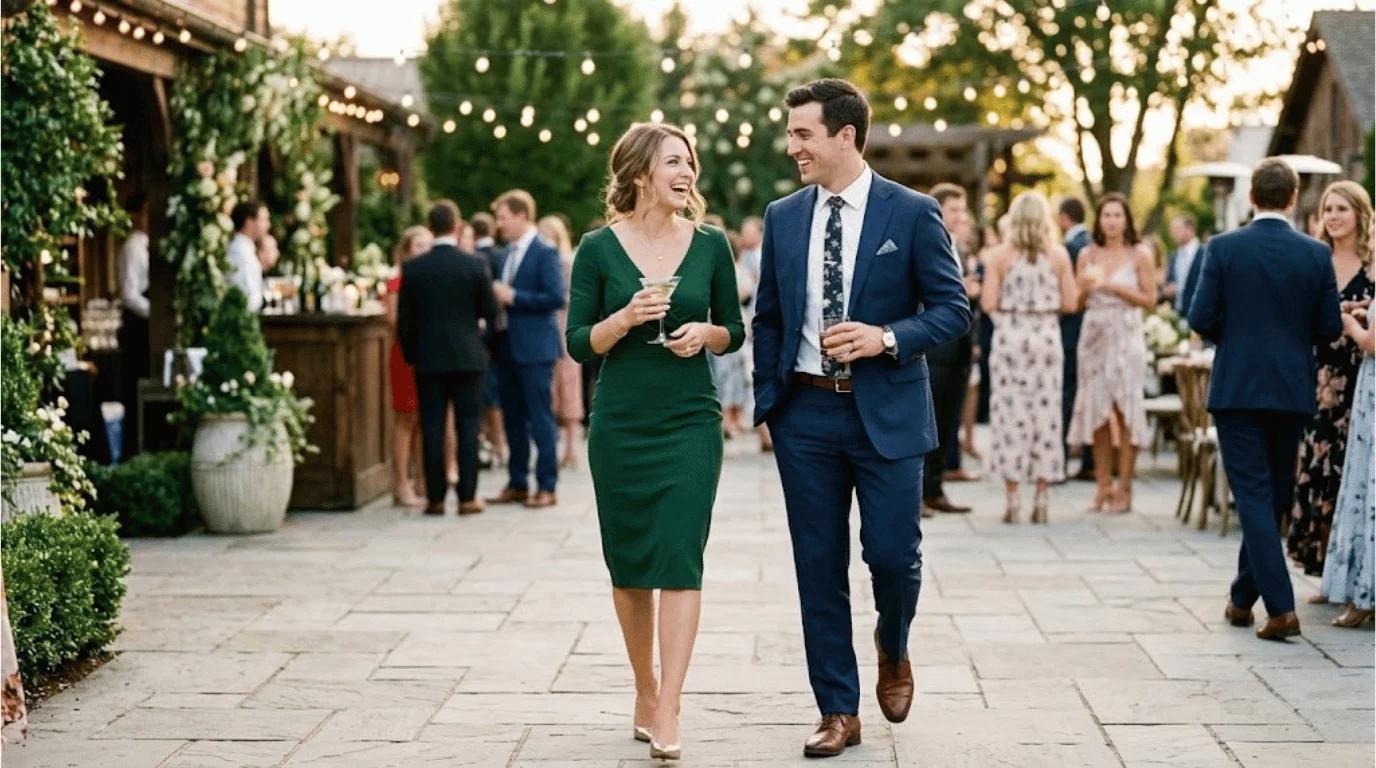
This dress code sits between casual party clothing and formal eveningwear. It asks you to look dressed for a celebration, not an ordinary dinner. In the United States, a refined midi dress or suit usually lands in the right range.
Brides describes appropriate options as knee-length, tea-length, or midi dresses, plus tailored jumpsuits for women. Its guidance also recommends suits and ties for men at weddings. Emily Post similarly treats cocktail dresses and dark suits as appropriate choices for dressier events.
The couple’s instructions still outrank any general rule. Emily Post advises using the invitation and wedding time as key formality clues. Cultural, religious, and family expectations can also change what feels respectful.
What Women Can Wear
A knee-length or midi dress is the easiest choice because it reads polished without looking gala-ready. Tea-length styles can also work, especially at traditional venues. Choose a silhouette that lets you sit, walk, and dance comfortably.
Fabric often matters more than a specific silhouette. Crepe, satin, chiffon, jacquard, and silk can make simple shapes feel occasion-ready. Velvet works especially well for cool-weather evening weddings.
A dress is not required. A tailored jumpsuit, pantsuit, or dressy separates can meet the same level of formality. Keep the fabric, fit, shoes, and bag refined so the outfit still feels special.
If black is your easiest option, it works for many modern American weddings. Styleblor’s guide to wearing black at a wedding explains when context matters most. Add texture, metallic accessories, or color if a daytime look feels too severe.
Can You Wear a Long Dress?
A long dress can work when its fabric and construction stay simpler than a formal gown. An ankle-skimming column or relaxed maxi may fit an evening reception. Avoid heavy trains, elaborate beading, or ballroom shapes unless the invitation permits formalwear.
When you are uncertain, a midi length removes most of the guesswork. It works across restaurants, hotels, country clubs, gardens, and many religious venues. It also avoids looking either underdressed or ready for black tie.
What Men Can Wear
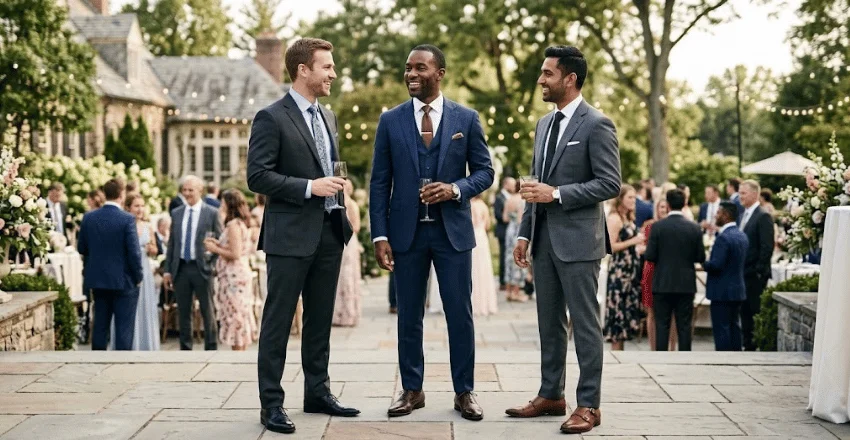
A well-fitted suit is the safest foundation for men. Navy, charcoal, medium gray, and darker blue shades work well at many American venues. Lighter blues and grays can work for daytime or warm-weather celebrations.
A dress shirt and polished leather shoes complete the base outfit. A tie remains the safest wedding choice, especially for evening or traditional settings. You can choose a textured or subtly patterned tie for a less corporate effect.
A blazer with separate dress trousers may work when the invitation or venue feels relaxed. Still, matching suiting removes uncertainty when the event runs later or looks upscale. Skip denim, chinos, athletic sneakers, and casual polos unless the hosts specifically allow them.
Adjust the Outfit for Time, Season, and Venue
The same dress code can look different at 2 p.m. and 7 p.m. Daylight supports lighter colors, softer prints, and lower-shine fabrics. Evening events support darker shades, satin, velvet, metallic accents, and sharper tailoring.
Summer weddings reward breathable construction and practical shoes. Styleblor’s summer wedding guest dress guide covers heat, grass, sand, and outdoor comfort. Block heels, wedges, or dressy flats usually handle lawns better than thin stilettos.
Winter lets you choose denser fabrics and deeper colors without changing the basic formality. Velvet, heavier crepe, wool suiting, and dressier layers can feel natural. Keep outerwear polished if photos or arrivals happen outside.
Venue details can settle close calls. A hotel ballroom usually supports a dressier interpretation than a backyard or beach. For broader rules beyond weddings, see Styleblor’s general cocktail attire guide.
Cocktail vs. Semi-Formal vs. Black-Tie Optional
| Dress code | Women | Men | General feel |
|---|---|---|---|
| Semi-formal | Dressy dress, jumpsuit, or separates | Suit or polished blazer and trousers | Refined and understated |
| Cocktail | Knee, tea, or midi dress; dressy alternatives | Suit, dress shirt, tie, dress shoes | Polished and festive |
| Black-tie optional | Formal gown or dressy cocktail option | Tuxedo or dark formal suit | Closer to evening formalwear |
These categories overlap, so hosts may use them differently. The safest response is to combine the stated code with the venue and start time. When the invitation gives examples, follow those examples over internet shorthand.
Black-tie optional sits noticeably higher on the formality scale. Styleblor’s black-tie attire guide explains the tuxedo and evening-gown end of the spectrum. That comparison helps prevent accidental overdressing at a standard cocktail reception.
What Not to Wear
The most common mistakes come from treating the code as either casual or fully formal. Jeans, shorts, flip-flops, athletic shoes, and everyday T-shirts usually look too relaxed. Tuxedos and elaborate ball gowns can look too formal unless the invitation says otherwise.
Color etiquette deserves similar care. Avoid white, ivory, and outfits that could look bridal in photographs. Follow any requested palette, religious expectation, or cultural guidance from the couple.
Fit and comfort matter because weddings last for hours. Test your outfit while sitting, walking, and raising your arms. Shoes should survive the ceremony, dinner, and dancing without forcing an early change.
Use a Simple Three-Check Outfit Test
- Check the invitation. Follow the stated code, colors, theme, and any ceremony-specific guidance.
- Check the setting. Match your fabric, shoe, and layering choices to the venue and weather.
- Check the finish. Make sure the full outfit looks deliberate, comfortable, and celebration-ready.
This test works because it separates etiquette from personal style. You can choose colors, silhouettes, and accessories that still feel like you. The boundaries only keep the outfit aligned with the event.
Frequently Asked Questions
What should I wear to a cocktail attire wedding?
Choose refined occasionwear that falls below black-tie formality. A midi dress, dressy jumpsuit, tailored suit, or polished separates can work. Finish the outfit with dress shoes and intentional accessories.
Can I wear black to a cocktail wedding?
Yes, black works for many American weddings, especially evening events. Make the outfit feel celebratory through texture, jewelry, a polished bag, or color. Always follow the couple’s stated palette and cultural guidance.
Does a man need a tie?
A tie is the safest option for a wedding unless the hosts suggest otherwise. It is especially useful for evening, hotel, club, or religious settings. A relaxed daytime venue may allow an open collar with sharp tailoring.
Can women wear pants or a jumpsuit?
Yes, a tailored jumpsuit or dressy pantsuit can fit the dress code well. Choose refined fabric, clean lines, and polished shoes. Avoid casual utility details, jersey knits, or anything that resembles work-from-home clothing.
Is cocktail the same as semi-formal?
The two categories overlap, but cocktail usually reads slightly more festive. Semi-formal can look simpler and more understated. Use the venue, time, and invitation details to decide between close options.
Choose the Outfit, Then Stop Second-Guessing It
Start with one reliable base: a midi dress, tailored jumpsuit, or well-fitted suit. Adjust color, fabric, shoes, and accessories for the setting. Then check the invitation once more before committing.
The goal is respectful, polished, and comfortable clothing that lets you enjoy the celebration. You do not need black-tie drama or casual weekend pieces. Once the formality matches the wedding, personal style can handle the rest.