
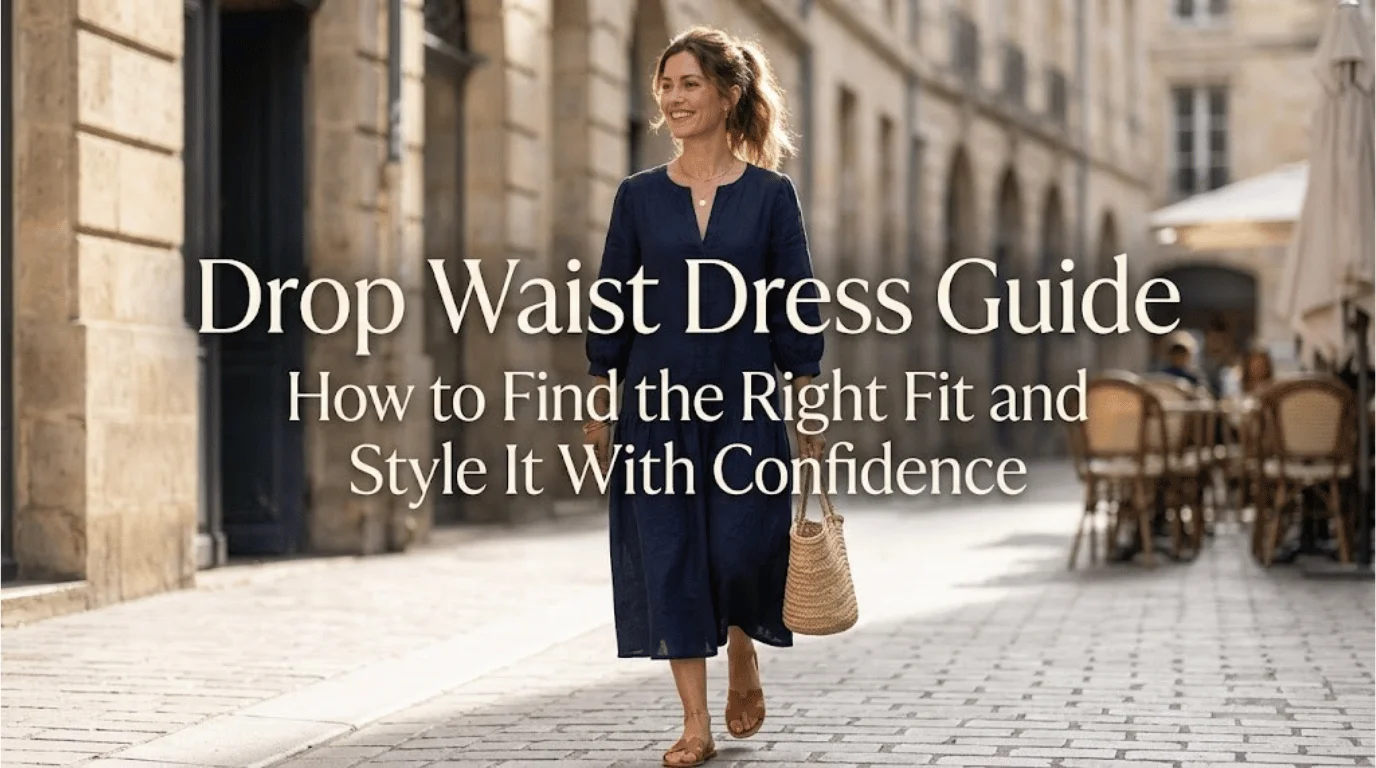
A drop waist dress places its waist seam below the natural waist, usually near the upper hip. That choice lengthens the visual torso and starts the skirt lower on the body. The result can feel sleek, relaxed, romantic, or vintage, depending on the fabric, skirt volume, and seam placement.
| Quick fact | What to know |
| Waist placement | Below the natural waist, often toward the upper hip |
| Visual effect | Extends the torso and shifts the skirt lower |
| Common lengths | Mini, midi, and maxi |
| Modern details | Full skirts, bubble hems, fitted bodices, and simple columns |
| Historical link | Strongly associated with 1920s fashion |
| Fit priority | Where the low seam lands on your body |
What Makes the Dropped Waist Different?
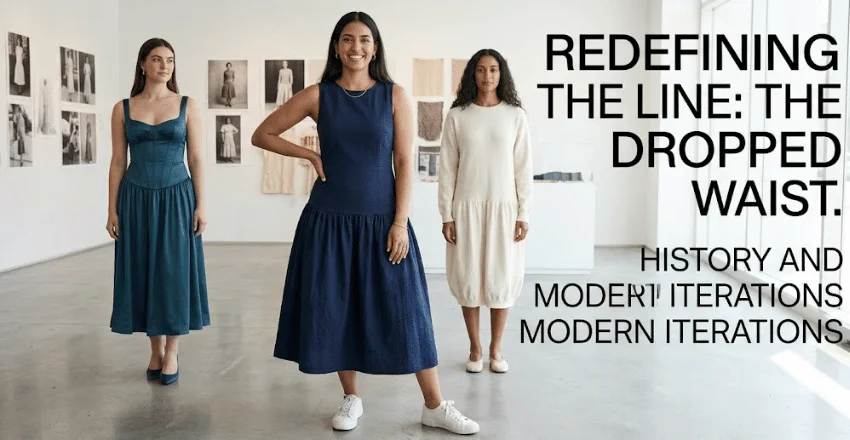
Most dresses use the natural waist as a visual dividing point. A dropped-waist design moves that division lower.
That change affects the proportions of the entire outfit. A fitted bodice may continue through the natural waist before meeting a fuller skirt near the hips. Looser versions can create a straighter line from the shoulders to the hips.
The style has a clear historical precedent. The Museum at FIT identifies dropped waistlines as a defining feature of the tubular 1920s silhouette. The Metropolitan Museum of Art also documents dropped-waist evening dresses from 1924 and 1925.
Modern versions don’t need beads, fringe, or a flapper theme. Designers now use crisp cotton, satin, knit fabrics, corset-inspired bodices, bubble skirts, and restrained midi shapes.
Why the Low-Waist Silhouette Is Current Again
The shape remains visible across 2026 fashion coverage. Böhme published an updated styling guide in June 2026, while John Lewis featured it as a spring and summer silhouette in May. Adrianna Papell also published a dedicated fit and style guide in February. For the full picture, read Sheer Dress.
Today’s versions also vary more widely than the classic 1920s column. Current styles include fitted tops with full skirts, casual cotton options, minis, midis, and occasion pieces.
That variety is useful. You can focus on the proportions you like rather than trying to recreate one fixed historical shape.
How to Choose a Drop Waist Dress That Fits
Start with seam placement, not a body-shape label.
Try the garment on and find the point where the bodice ends. A seam near the upper hip creates a subtler change in proportion. A much lower seam makes the elongated-torso effect stronger.
Next, look at the amount of fabric below that point. A gathered or bubble skirt adds volume where the skirt begins. A softer A-line or fluid skirt creates a quieter transition.
Length matters too. If a low seam makes the leg line feel shorter than you prefer, compare it with a shorter hem at the same waist placement. You can also try a version with a slightly higher dropped seam.
Fabric changes the effect as much as the cut does. Structured cotton or taffeta makes the outline clearer. Fluid fabrics create softer movement. Stretch knits can follow the body more closely through the extended bodice.
The useful question isn’t whether your body is “right” for the style. Ask whether the seam, volume, and hem create proportions that you enjoy wearing.
Styling the Silhouette for Real Life
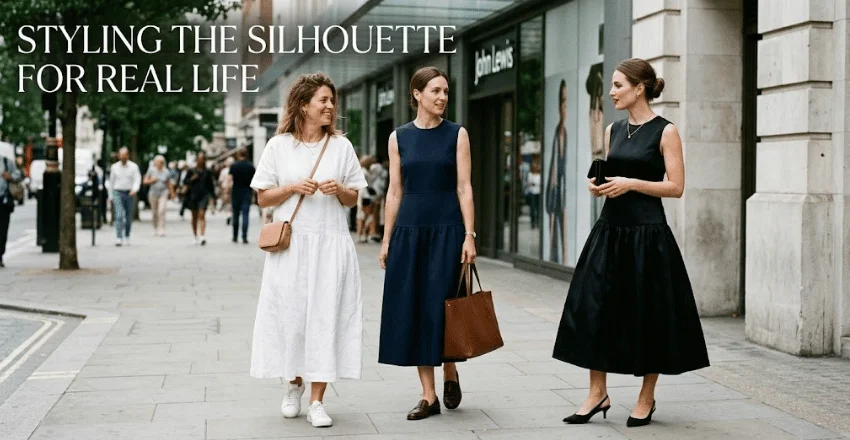
A low waist already gives an outfit a strong proportion. That means the rest of the styling can stay simple.
John Lewis currently shows the shape across wedding, work, weekend, and holiday outfits. Glamour has likewise styled modern versions with sneakers, kitten heels, sandals, boots, and restrained accessories.
| Occasion | Shoes | Accessories | Styling direction |
| Casual day | Sneakers or flat sandals | Small shoulder bag | Keep the look easy and unfussy |
| Work | Loafers, flats, or low heels | Structured tote | Choose a cleaner bodice and midi hem |
| Wedding guest | Kitten heels or dress sandals | Small bag and simple jewelry | Let the silhouette carry the outfit |
| Evening | Heels or pointed flats | Compact bag | Try satin, darker colors, or stronger textures |
If the skirt is full, a neat shoe shape can balance its volume. With a slim column version, a chunkier shoe can add contrast.
Outerwear deserves attention as well. A cropped jacket keeps the lower waist visible. A longer blazer creates a straighter vertical line and can make the outfit feel less overtly feminine.
Drop Waist vs. Basque Waist vs. Natural Waist
These terms can look similar in product photos, but they describe different construction styles.
| Waist type | Placement | Typical shape | Visual emphasis |
| Dropped waist | Below the natural waist | Often straight or gently curved | Longer torso |
| Basque waist | Dips below the natural waist | Pointed or V-shaped | Defined center front |
| Natural waist | Near the body’s natural waist | Horizontal | Traditional torso-to-skirt division |
A basque waist usually forms a distinct V or pointed dip. A dropped waist tends to sit lower across more of the body rather than relying on one central point. Current bridal guidance uses the same distinction.
The two can overlap in modern designs, especially when a fitted bodice extends toward the hips. Look at the actual seam shape rather than relying only on the retailer’s product name.
Use This Three-View Fit Test
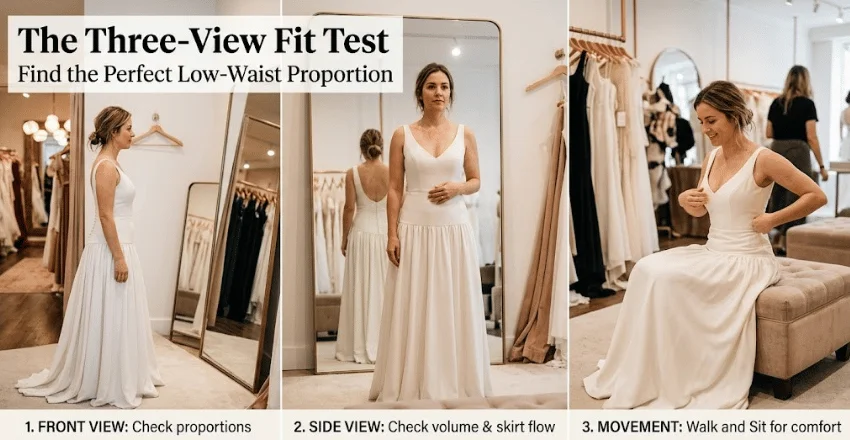
Before deciding whether a low-waist style works for you, test the garment from more than one angle.
- Check the front view. Look at where the bodice ends and whether that position creates the proportion you want.
- Check the side view. See how the skirt begins around the hips and whether gathers or structure add the amount of volume you like.
- Walk and sit in it. A good proportion still needs to feel comfortable when you move. Watch whether the bodice rides up or the low seam shifts.
This test is more useful than a rule based only on height, curves, or body type. Two garments with the same label can fit quite differently because their seam heights and construction differ.
Make the Proportion Work for You
The strongest reason to try this silhouette is that it changes the familiar proportions of a one-piece outfit. You can keep the effect subtle with a soft midi or make the low seam the main feature.
Pay attention to where the bodice ends, how much volume begins below it, and where the hem falls. If those three choices feel balanced on you, the styling becomes simple. If you enjoy feminine silhouettes, a Ruffle Dress can offer similar movement and visual interest while creating a different overall proportion.
Use the three-view fit test the next time you try one on, then build the rest of the outfit around the shape you’ve already chosen.
If you want to know about Butter Yellow Dress then visit our Dresses category.
Frequently Asked Questions
It is a garment with its waistline positioned below the wearer’s natural waist, often closer to the hips. The lower waistline visually extends the torso before the skirt begins. Modern versions range from loose, 1920s-inspired columns to fitted bodices with full skirts.
Yes. Height alone doesn’t determine whether a proportion works. If an extremely low seam feels overwhelming, compare styles in which the bodice ends closer to the upper hip. Hem length and skirt volume can also change the result.
No. A basque waist normally dips into a V or pointed shape below the natural waist. A dropped waist generally moves the garment’s broader waist division lower toward the hips.
Sneakers and flat sandals suit casual versions. Loafers or neat flats work with polished midis. Kitten heels and dress sandals pair well with occasion pieces. Boots can carry shorter versions into cooler weather.
Yes. Retailers and fashion publishers were still publishing dedicated styling coverage and featuring new low-waist looks during spring and summer 2026. That doesn’t mean every version will suit every wardrobe, so fit and wearability should come before trend status.