
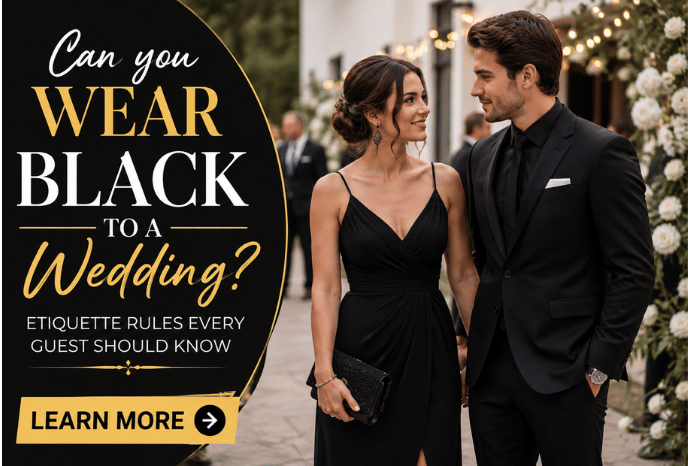
Can you wear black to a wedding? Yes, in most cases. Modern etiquette considers black a polished choice for wedding guests, especially for evening, cocktail, formal, and black-tie events. The main exceptions are weddings with a stated color palette, cultural or religious customs that discourage black, or settings where lighter colors may be more appropriate.
The safest approach is simple: read the invitation, consider the venue and time of day, and respect any family or cultural traditions. Modern etiquette sources broadly accept black for wedding guests while emphasizing that the couple’s dress code should come first.
| Wedding Setting | Can You Wear Black to a Wedding? | How to Make It Work |
| Formal evening wedding | Yes | Choose an elegant dress, jumpsuit, suit, or tuxedo with polished accessories |
| Cocktail or city wedding | Yes | Wear a refined silhouette with dressy shoes, jewelry, or tailored details |
| Daytime or garden wedding | Often | Choose lighter fabrics and add softer or colorful accessories |
| Summer or beach wedding | Often | Favor breathable fabrics and avoid heavy layers |
| Wedding with a color theme | Check first | Follow the colors or instructions provided by the couple |
| Traditional cultural or religious ceremony | It depends | Follow the invitation, host guidance, and relevant customs |
When Can You Wear Black to a Wedding?
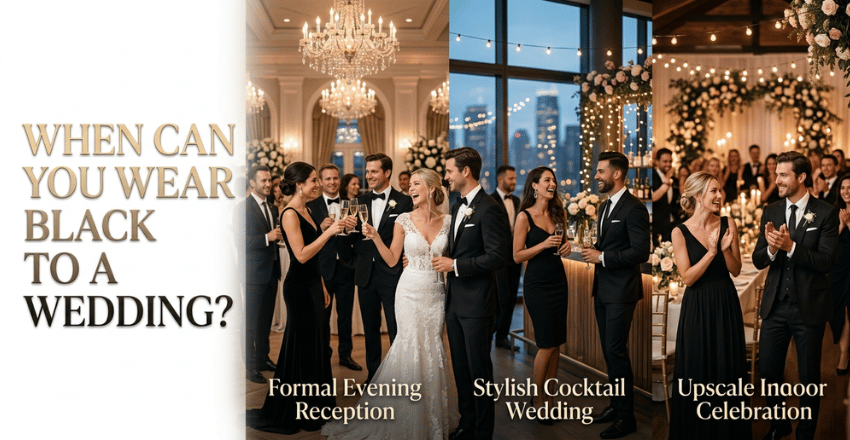
Black is easiest to wear at cocktail, formal, evening, and city weddings. It naturally suits settings where guests are expected to look polished. For a black-tie event, remember that “black tie” describes the level of formality. It does not mean every guest must dress entirely in black. Traditional black-tie guidance centers on formal evening attire, including tuxedos for men.
A black dress, tailored jumpsuit, dark suit, or tuxedo can all fit that mood. Can you wear black to a wedding? Yes, as long as the cut, fabric, shoes, and accessories match the event’s dress code and level of formality. Black can also work at less formal weddings, but the key is choosing an outfit that feels appropriate for the venue, season, and time of day rather than relying on the color alone.
Why Black Is No Longer Automatically Rude
Black once had a much stronger association with mourning, which helped create the old rule against wearing it to weddings. Those expectations have changed across much of modern Western wedding etiquette. Current etiquette guidance generally treats black as an acceptable guest color. Fashion and wedding experts now describe it as suitable for many ceremonies and receptions, especially formal events.
That change doesn’t make the invitation irrelevant. A wedding is still a hosted event, so the couple’s requested dress code takes priority over general fashion rules. Emily Post’s guidance recommends using the invitation and event time to judge formality. Religion, culture, and local customs can also influence what guests should wear.
When You Should Choose Another Color
There are situations where another shade may be the safer choice.
- The invitation asks guests to wear a specific color palette or avoid certain colors.
- The couple follows cultural, religious, or family customs in which black carries an unwelcome meaning.
- The wedding has a strong theme that makes an all-black outfit feel out of place.
- A casual daytime, garden, or beach setting makes your black outfit look too heavy or formal.
Traditional customs deserve special attention. The Knot notes that black may be discouraged at some traditional Indian and Chinese weddings because of its association with mourning. Customs differ between families and communities, so avoid treating one rule as universal.
If you’re uncertain, check the invitation and wedding website first. They may contain dress-code details that weren’t obvious on the invitation itself.
How to Make a Black Outfit Feel Festive
A wedding outfit should look celebratory, even if its base color is dark. Small styling choices can change the mood of the entire look.
Use Texture and Movement
Fabric matters. Satin, chiffon, lace, pleating, and other textured finishes can give black more depth than plain, everyday fabrics. The silhouette matters too. A flowing midi dress creates a different impression from office wear, even though both pieces may be the same color.
Current styling guidance also recommends lighter, breathable fabrics for warm-weather events instead of treating black as a winter-only option.
Add Color or Shine
Metallic jewelry, a bright bag, colorful shoes, or a patterned wrap can soften an all-black base. Pastels and jewel tones also pair easily with black. These accents can help a dark outfit feel more suitable for a wedding without forcing you to replace the main piece.
Match the Formality
A color cannot rescue an outfit that doesn’t match the dress code. For a formal event, choose refined fabrics, polished tailoring, and appropriate footwear. At a relaxed ceremony, a lighter silhouette can keep the look from feeling overdressed. This distinction matters most for daytime and warm-weather weddings.
If you want a broader survey of shapes before you commit, browse floor-length dresses and formal silhouettes and compare necklines side by side.
What About Summer and Daytime Weddings?
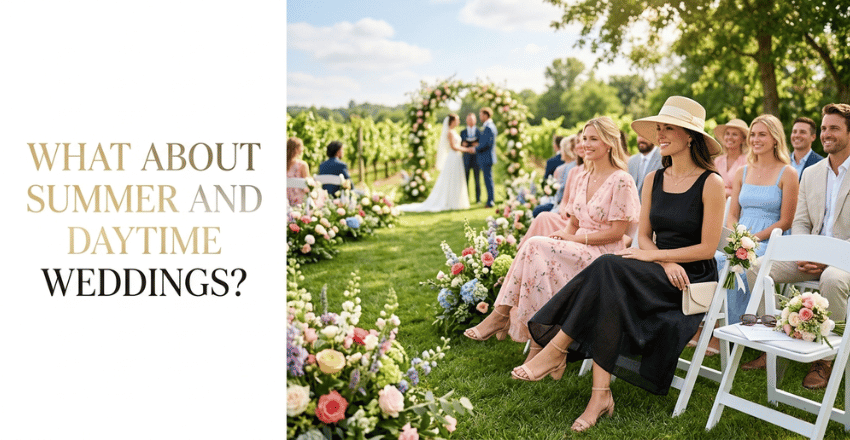
Yes, black can work for a summer wedding. Comfort is the main practical issue. Dark clothing can feel warmer in sunny outdoor settings, so fabric and construction deserve extra attention. Lightweight materials, softer shapes, shorter sleeves, or an airy skirt can make the outfit more comfortable.
Vogue’s wedding guidance gives the example of a black linen dress with colorful accents for a summer afternoon. French Connection also recommends breathable fabrics and softer silhouettes for warmer weddings.
Daytime weddings call for a similar adjustment. Black itself isn’t automatically too formal, but a heavy evening gown may look out of place at a casual garden lunch. Use lighter accessories, less dramatic styling, and an outfit shape that suits the venue. Save richer textures and more formal details for evening celebrations.
Can Men Wear Black to a Wedding?
Yes. Black suits, tuxedos, shoes, and accessories are established options for male wedding guests. A classic tuxedo is especially appropriate when the invitation calls for black tie. A black suit can also work for many formal or evening events, provided the rest of the outfit matches the requested level of dress.
The Knot includes black suits and accessories among acceptable wedding-guest choices, while formalwear guidance continues to recognize the black tuxedo as a standard black-tie option. For a relaxed daytime event, consider the weather and venue before choosing a heavy, dark suit. The same context rules apply regardless of gender.
Use This Three-Question Check Before Getting Dressed
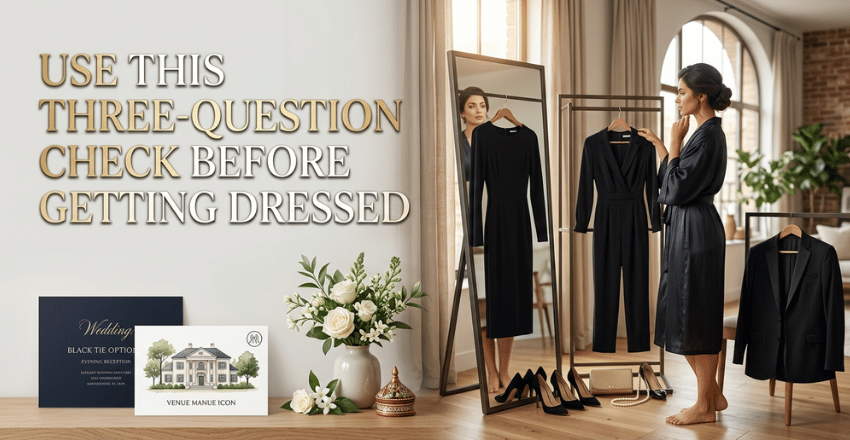
If you’re still undecided, use this quick test.
| Question | What to Check |
| Does the invitation allow it? | Look for a stated dress code, theme, or color request |
| Does the setting support it? | Consider the venue, season, time of day, and level of formality |
| Are there cultural or family expectations? | Check traditions that may affect the meaning of black clothing |
If the invitation gives you no reason to avoid black, the setting suits your outfit, and no custom makes the color inappropriate, black is usually a safe choice. This approach is more useful than treating wedding etiquette as a single color rule. The same black dress may work beautifully at an evening hotel reception but feel too heavy for a casual noon beach ceremony.
Apart from that, if you want to know more about Black Tie Attire, then visit our Wedding Fashion category.
Frequently Asked Questions
Yes, in most modern weddings. Check the invitation, dress code, venue, time, and cultural context before deciding. Formal and evening events are among the easiest settings for a black guest outfit.
Usually not. The older association between black clothing and mourning has weakened in modern Western wedding etiquette. It may still matter in particular cultures, families, or ceremonies, so the host’s expectations should come first.
Yes. Choose lighter, breathable fabrics and consider brighter accessories. Outdoor heat and the event’s level of formality matter more than the color alone.
Yes, provided the outfit fits the setting. Lighter fabrics, softer styling, and colorful accessories can make black feel natural for a daytime ceremony.
Follow the couple’s guidance and relevant customs. Religion, culture, and local traditions can influence wedding attire, even when a color is widely accepted elsewhere.