
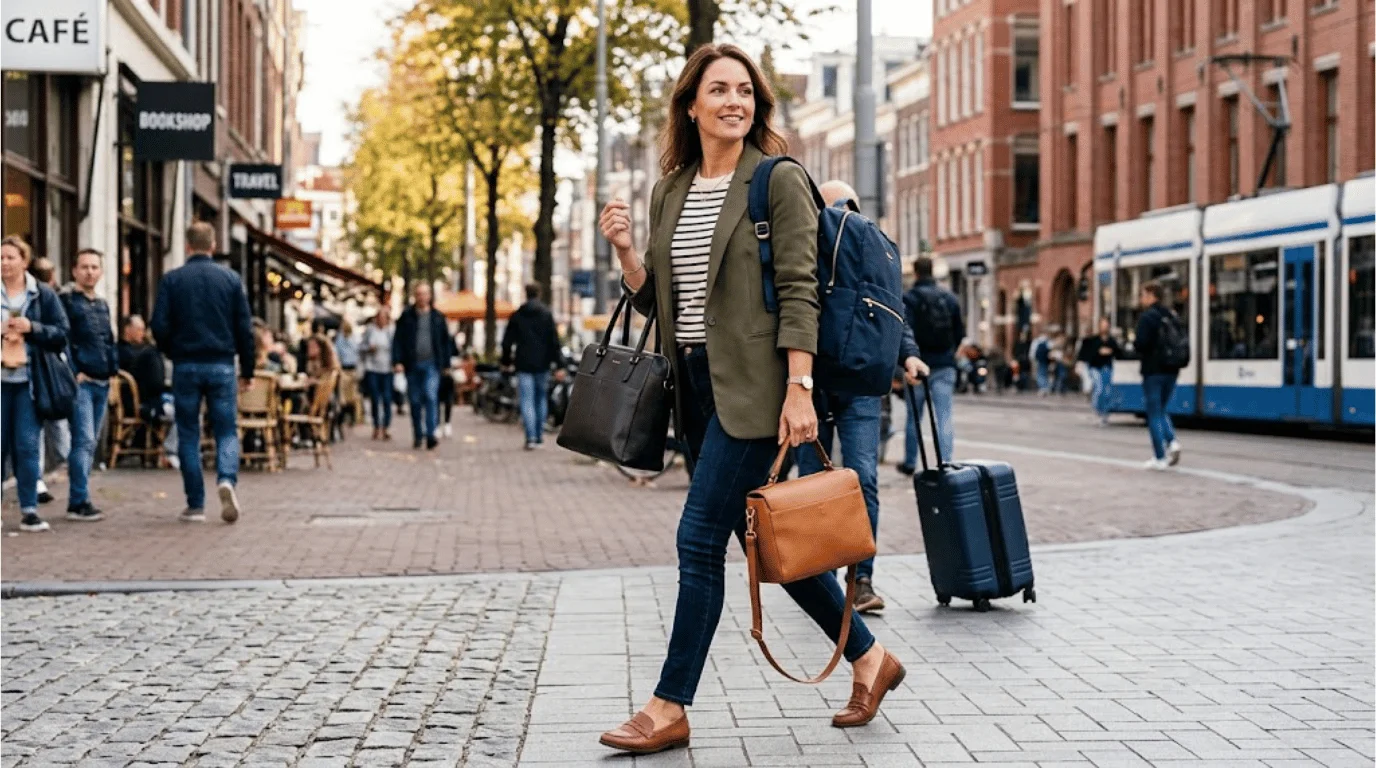
A city bag should handle the parts of your day that smaller occasion bags cannot. It needs enough space for essentials without becoming awkward on a commute. The best version also looks natural with workwear, denim, dresses, and weekend clothes.
Quick answer: A city bag is a versatile everyday handbag made for work, errands, commuting, and social plans. Most useful versions combine comfortable straps, secure storage, and enough room for daily essentials. Choose a size based on what you carry, then match the material and structure to your wardrobe.
| What to consider | Practical choice for everyday use |
|---|---|
| Size | Medium for most daily routines |
| Closure | Zipper or secure magnetic top |
| Strap | Shoulder strap, crossbody strap, or both |
| Material | Leather for polish; nylon or canvas for lighter carrying |
| Organization | One secure pocket plus an easy-access section |
| Color | Black, brown, burgundy, navy, or another repeatable neutral |
| Best use | Work, errands, commuting, shopping, and casual evenings |
Key Takeaways
- Buy for your normal daily load, not the largest capacity available.
- Medium sizes usually balance storage, comfort, and appearance most effectively.
- Leather offers polish, while nylon and canvas reduce empty weight.
- A secure closure matters more when you use public transportation.
- Neutral colors offer more outfit combinations, but rich accent colors can work just as well.
- The Balenciaga Le City is one famous design, not the definition of the whole category.
- Test the bag with your coat, shoes, and usual essentials before deciding.
What Is a City Bag?
The term usually describes a practical daytime handbag designed for an active urban routine. It is broader than one silhouette, brand, or price level. A tote, shoulder bag, satchel, or slouchy top-handle style can all fill that role.
Fashion dictionaries have long described the category as an everyday accessory associated with daytime urban dressing. Modern retailers use the label more loosely across totes, bucket shapes, and compact carryalls. That flexibility explains why two products with the same label can look completely different.
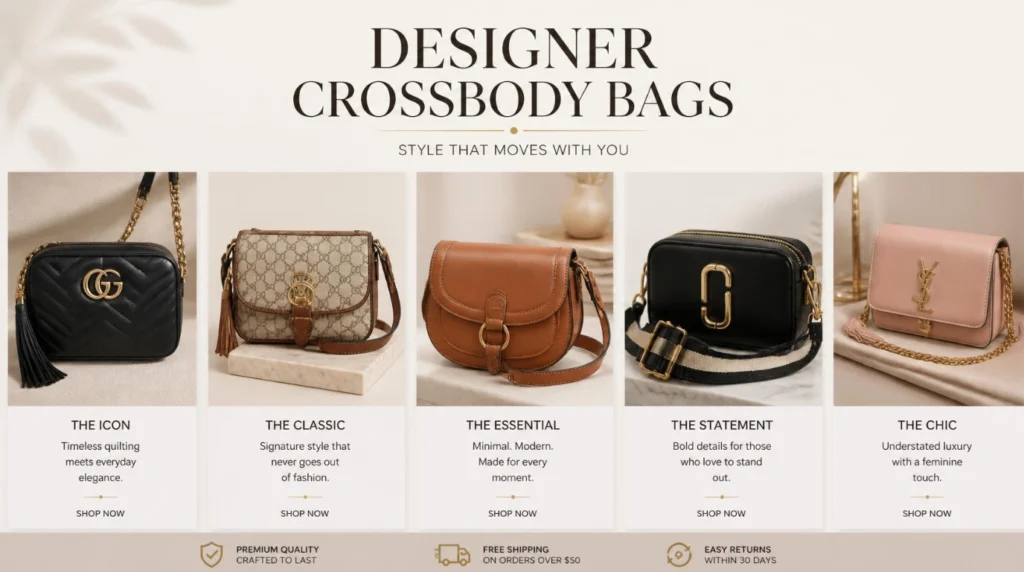
The name also creates confusion because Balenciaga has a famous model called Le City. That design first appeared in 2001 and became associated with early-2000s celebrity style. Its slouchy leather, long zipper pulls, studs, and hardware created a recognizable look.
Balenciaga revived the design for a newer audience, while its archive connection fits the current interest in 2000s fashion. You can explore that broader period through Styleblor’s Y2K guide. The historical reference can inspire your choice without requiring a designer purchase.
The Best Size Depends on What You Carry
Start with your real daily load before comparing measurements or brand names. Empty your current handbag and remove anything you rarely use. The remaining items give you a much better size target.
A compact style works when you carry a phone, wallet, keys, sunglasses, and a few personal items. A medium version adds room for a small umbrella, bottle, notebook, cosmetics, or tablet. Larger work-oriented bags make sense when laptops, documents, or spare shoes are part of your routine.
| Size direction | Typical capacity | Main advantage | Main trade-off |
|---|---|---|---|
| Compact | Phone, wallet, keys, small extras | Light and easy | Limited work capacity |
| Medium | Daily essentials, tablet, bottle, notebook | Most versatile | Can become heavy when overfilled |
| Large | Laptop, documents, extra layers | Strong commuter capacity | More bulk and shoulder weight |
Balenciaga’s current U.S. medium Le City measures about 15.1 inches across and can hold a small laptop. The official listing also includes an adjustable strap, interior pocket, and zippered exterior storage. That provides a useful example of how a larger designer model approaches daily capacity.
Choose the Material Around Your Routine
Leather suits people who want one handbag to move between work, dinner, and weekends. Smooth finishes usually appear more formal, while distressed leather feels softer and more casual. Leather can become heavy, so check the empty weight before buying a large version.
Suede creates a softer appearance and works especially well with fall textures. Current 2026 fashion coverage continues to feature suede totes, slouchy shapes, and suede versions of Le City. The material needs more protection from moisture and stains than many smooth finishes.
Canvas and nylon make sense when low weight and easy daily carrying matter most. They often suit commuting, travel, campus life, or long walking days. Look for strong handles and a secure top because lightweight fabric cannot compensate for weak construction.
Synthetic alternatives vary considerably, so examine the surface, seams, lining, and edge finishing. A convincing texture matters less than whether the handles remain comfortable after an hour. Choose materials that support your routine rather than satisfy a label.
Look at Function Before Decorative Details
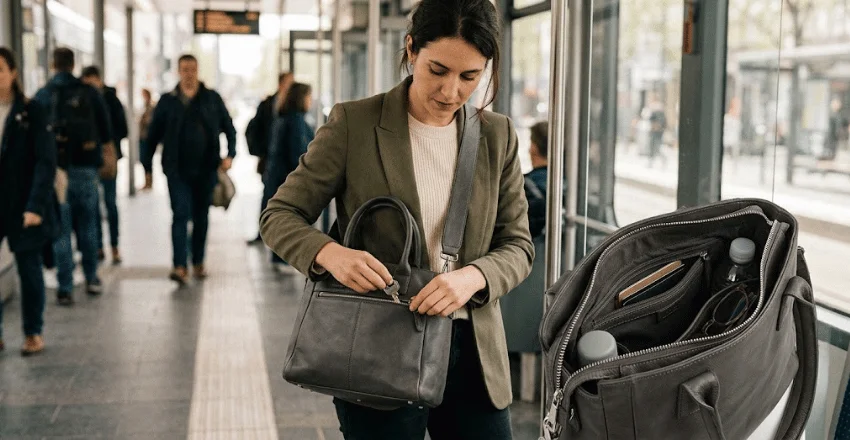
A beautiful bag becomes frustrating when you cannot find your keys or secure your wallet. One exterior or easy-access pocket can hold items you use several times each day. A separate internal pocket keeps cards, identification, and smaller valuables away from the main compartment.
Closure design deserves similar attention, especially for commuters. Open totes offer quick access, but zipped tops offer better security in crowded environments. Magnetic closures sit between those options and can work well for casual routines.
Straps also change how practical a handbag feels. Top handles look polished, while shoulder and crossbody straps free your hands. Convertible designs offer more flexibility when the same bag must cover several settings.
How to Style It Without Rebuilding Your Wardrobe
Treat the handbag as part of the outfit’s proportion rather than an isolated accessory. Compact shapes can sharpen wide trousers, relaxed denim, or oversized jackets. Larger slouchy styles work best when the clothing has at least one clear structural point.
For relaxed outfits, create that structure through a waistband, jacket, shoe, or fitted layer. Styleblor’s guide to intentional baggy clothes explains how those proportion anchors work. The same principle keeps a roomy handbag from making an outfit feel shapeless.
Early-2000s styling offers another easy direction. Pair a worn-looking leather shoulder style with straight jeans, a fitted knit, and slim sneakers or boots. For a less literal approach, use the personal layering ideas in Styleblor’s indie aesthetic guide.
Work outfits usually benefit from quieter colors and cleaner lines. Try a dark leather carryall with trousers, a knit, and structured footwear. Styleblor’s black boots outfit guide offers several formulas that pair naturally with practical everyday handbags.
Black, Brown, or a Statement Color?
Black remains easy because it works across seasons and dress codes. It also hides minor marks better than many pale finishes. Choose it when your wardrobe contains plenty of black footwear, belts, outerwear, or dark denim.
Chocolate brown, tan, burgundy, navy, and deep olive can behave almost like neutrals. These shades often look softer beside blue denim, cream, camel, gray, and autumn textures. They also provide color without making the handbag difficult to repeat.
Bright colors work best when you already wear a controlled clothing palette. A red, blue, or green bag can become the single focal point against quieter clothes. You do not need matching shoes because repeated color can make an outfit feel overly planned.
What Should You Spend?
This category covers an unusually wide price range because the term describes function more than market level. Current U.S. examples range from accessible outlet totes to four-figure luxury designs. Materials, construction, branding, and production methods create much of that difference.
Coach Outlet currently lists City collection styles around $149 to $199. Balenciaga lists several current Le City versions above $2,000, with a medium leather model at $2,990. Prices were checked in September 2026 and can change after publication.
Don’t assume the higher price automatically makes it a better everyday choice for you. Comfort, capacity, closure, and repeat wear remain more useful measures. A cheaper handbag that works five days a week can offer more practical value than an expensive design used twice a month.
Why the Balenciaga Version Matters
Balenciaga’s design helped make slouchy, hardware-heavy handbags a defining part of early-2000s fashion. Vogue reports that the original appeared in 2001 under Nicolas Ghesquière and later gained famous celebrity fans. The modern revival has brought that worn-in look back into current fashion coverage.
The newer versions retain several recognizable details, including braided handles, zip pulls, metal hardware, and soft leather. Balenciaga currently sells mini, small, and medium variations across multiple finishes. Buyers should separate appreciation for that design history from the broader everyday handbag category.
That distinction matters when shopping vintage or searching online. A seller may use “city” descriptively, while another may refer to a named collection or model. Always check the brand, measurements, materials, and exact product name before comparing prices.
A Simple Five-Minute Buying Test
Before buying, pack the items you expect to carry during a normal weekday. Put on the coat or jacket you wear most often. Then carry the loaded bag for several minutes using every available strap.
Check whether it slides off your shoulder, digs into your arm, or becomes difficult to open. Make sure your phone and keys are accessible without emptying the main compartment. The bag should also sit comfortably beside your hip without fighting your clothing.
Finally, build three outfits around it using clothes you already own. Try one casual outfit, one polished look, and one weather-appropriate combination. If the bag works with all three, it is more likely to earn regular use.
Frequently Asked Questions
What is a city bag used for?
A city bag is mainly used as an everyday handbag for commuting, errands, work, shopping, and casual social plans. It normally holds more than an evening bag but is easier to carry than luggage. The exact shape depends on the wearer’s routine.
Is it the same thing as the Balenciaga Le City?
No, the broader term can describe many practical urban handbags from different brands. Balenciaga Le City is a specific luxury design with a history dating to 2001. Its popularity has made the two ideas easy to confuse.
What size works best for everyday use?
A medium handbag suits many people because it carries essentials without creating excessive bulk. Your ideal dimensions still depend on whether you carry a laptop, tablet, bottle, or extra shoes. Measure your largest daily item before shopping.
Are these bags still fashionable in 2026?
Yes, practical shoulder bags, slouchy leather shapes, suede carryalls, and archive-inspired designs remain visible in 2026 fashion coverage. Balenciaga has also continued developing Le City in new materials and finishes. Current interest combines daily usefulness with renewed attention to 2000s references.
Which color is easiest to wear?
Black and dark brown are dependable because they coordinate with common American wardrobe colors. Burgundy, navy, and olive can provide similar versatility with more visual interest. Choose a shade that already appears in your footwear, jackets, or everyday clothing.
Should an everyday handbag have a zipper?
A zipper is useful when you commute, travel, or spend time in crowded spaces. Open totes are quicker to access but offer less protection from spills and exposed contents. A magnetic closure can provide a practical compromise for lower-risk daily use.
Build Around Your Real Day
The right everyday handbag should solve problems before it creates a fashion statement. Start with what you carry, how long you walk, and where the bag needs to go. Size, weight, closure, and strap comfort should narrow the options before color or branding.
Then choose the version that fits the clothes you already enjoy wearing. A practical purchase should work on an ordinary Tuesday, not only in a carefully styled photo. Build three outfits, load the bag fully, and choose the one you would genuinely reach for tomorrow.