

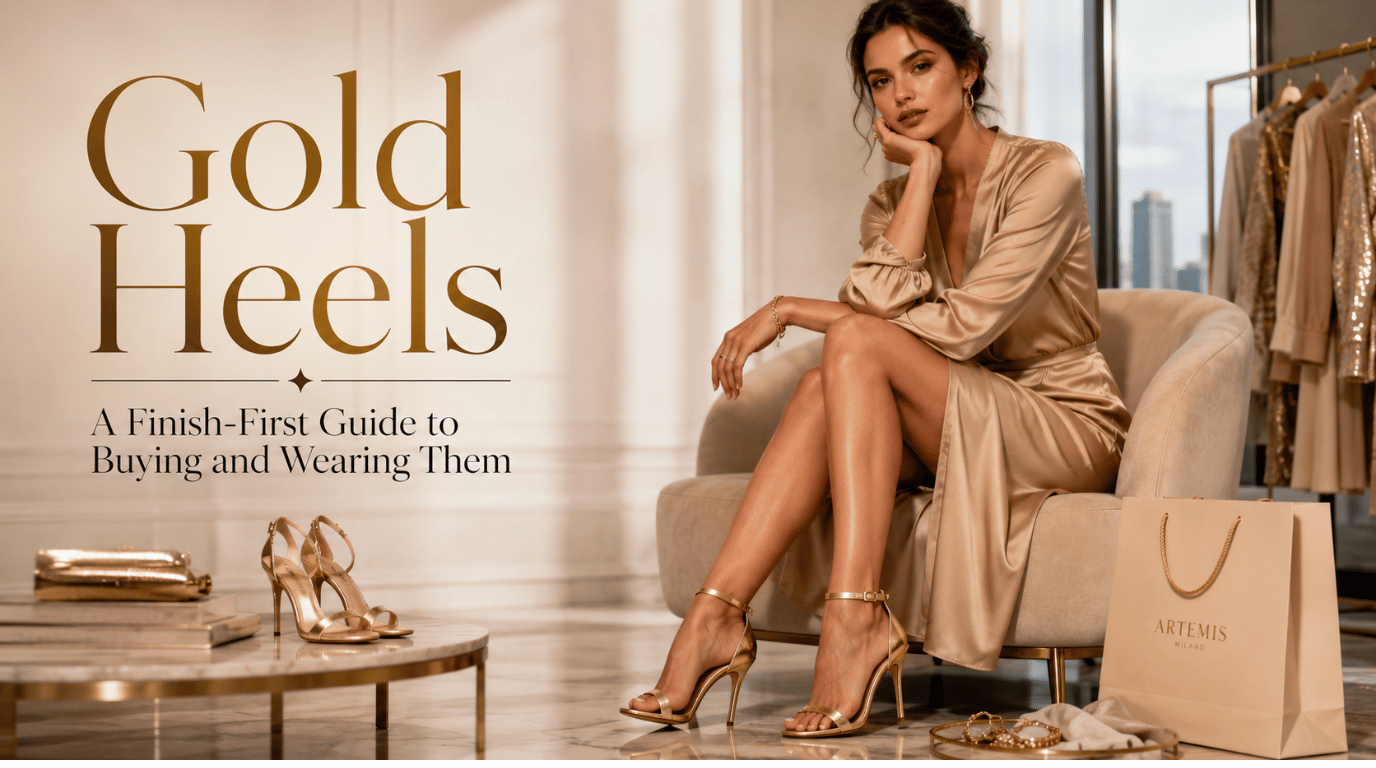
Two pairs of gold heels can sit on the same shelf, at the same price, and read completely differently on your feet. One looks like jewelry. The other looks like a costume prop. The difference is almost never the shape; it is the finish. There is more on this in Red Heels.
Gold footwear splits into six finishes: mirror metallic, brushed or satin, antique, champagne, rose gold, and glitter. Brushed and champagne are the most expensive because they diffuse light instead of bouncing it. Mirror photographs best but scuffs fastest. Antique hides wear. Glitter is the loudest and the hardest to dress down. There is more on this in Mall Goth Style.
Key takeaways
- The finish decides whether a pair looks costly or cheap. Shape barely matters by comparison.
- Brushed, satin, and champagne surfaces stay calm under flash. The mirror can blow out into a white blob.
- Gold behaves like a neutral, so treat it the way you treat black or nude.
- Metallic foil creases at the toe box within a season of real wear.
- Fast fashion pairs start around $60. Contemporary labels sit near $345 to $395.
The six gold finishes, and what each one signals
Shop by finish first and shape second. That single reorder saves most people from a bad purchase.
| Finish | How it reads | Under flash | Scuff risk | Strongest use |
| Mirror metallic | Liquid, high shine, almost wet | Blows out to white | High | Dark rooms, evening |
| Brushed or satin | Soft sheen, close to real gold jewelry | Even and flattering | Low | Weddings, daytime events |
| Antique or aged | Warm, slightly dulled, a little vintage | Rich and dimensional | Very low | Fall parties, textured fabrics |
| Champagne | Pale gold with a beige undertone | Almost reads as nude | Low | Weddings, work parties |
| Rose gold | Pink cast, softer than yellow | Warm, forgiving on skin | Medium | Prom, spring events |
| Glitter | Granular sparkle with visible movement | Sparkles hard, hides the shape | Low, but chunks shed | New Year, prom |
Champagne deserves a note of its own. It is not a dimmer version of yellow gold. Beige sits inside it, so it disappears against ivory and pale skin instead of fighting them. Antiques work differently. Its surface has been deliberately knocked back, so grime and micro scratches land on something that already looks lived in.
Which finishes survive a camera
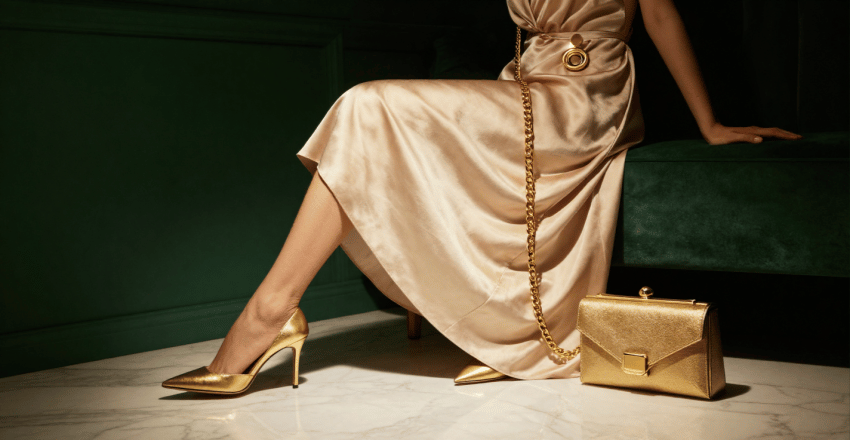
Every event that drives people toward shopping for gold shoes also involves a camera. Flash is unkind to reflective surfaces. A mirrored toe cap fires light straight back at the lens and turns into a bright white shape with no detail. That is why full-length reception photos so often show a foil blob at the bottom of a great outfit.
Brushed and satin surfaces scatter light instead. You keep the metal, you keep the warmth, and the shoe still looks like a shoe in the picture. Antique does the same thing with more depth. Glitter is a strange middle case: it sparkles beautifully in video and motion, then flattens into texture in a still frame.
If half your night will be spent in photos, skip the mirror.
Gold is a neutral, so use it like one
People overthink this. Gold pairs with more colors than nude does because a metallic has no single competing hue. What changes across outfits is which finish flatters the fabric next to it.
| Wear it with | Finish that wins | Why |
| Black | Mirror or glitter | Black absorbs light, so the shoe needs to give some back |
| White or ivory | Champagne or brushed | Keeps the outfit soft instead of yellowing it |
| Navy | Antique or brushed | Warm metal against a cool base looks expensive, not loud |
| Emerald, ruby, sapphire | Antique | Aged gold reads like a setting around a stone |
| Florals and prints | Champagne | The quietest option, so the print stays the subject |
| Denim | Brushed or rose gold | Stops a casual outfit from looking like it is trying too hard |
One rule covers the rest. The busier the garment, the flatter the finish should be, which is why champagne survives a loud print and mirror does not. That logic holds across most party dresses you already own.
Scuffs are the real weakness
Metallic uppers are almost always a foil or coated layer bonded to leather or synthetic. That layer does not stretch the way the base does. So it creases at the flex point over the toes, and those creases catch light as dull white lines. Toe boxes take the worst of it. Heel tips come second, especially on grass and carpet edges.
A repair that genuinely works
- Match a metallic nail polish to the shoe by painting a test swatch on a note card first.
- Clean the scuffed area with white vinegar on a soft toothbrush, then let it dry fully.
- Paint one thin coat of polish over the mark. Let it dry, then add a second thin coat.
- Seal with a clear top coat so the repair stops shedding.
Prevention
Brush a clear top coat across the whole toe box before the first wear. Store each shoe in its own dust bag, never touching its partner, since metallic surfaces scratch each other in the box. A cobbler can swap worn heel tips for roughly $15 to $25, which is worth doing before an event rather than after.
Choosing gold heels for weddings, prom, and New Year
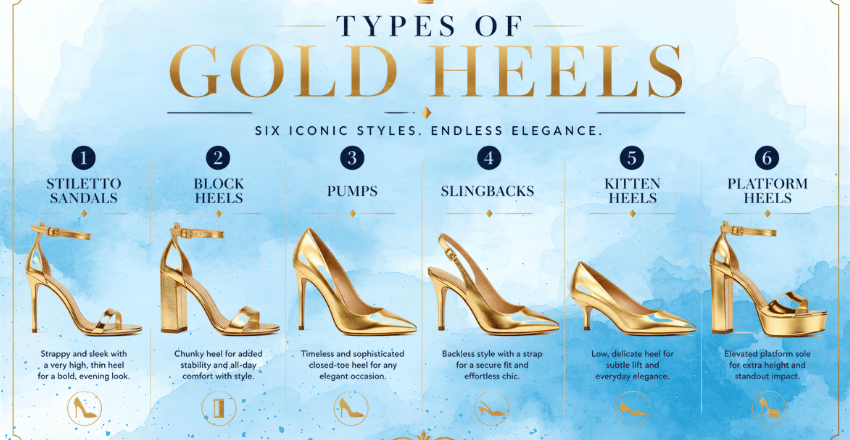
The occasion changes the answer more than the outfit does.
- Wedding as a guest: champagne or a brushed block heel or a low stiletto. Grass, gravel, and long receptions punish thin heels, and champagne stays polite next to a bride in white.
- Prom: glitter or rose gold, platform or chunky. Photos are the whole point, and a platform buys you two extra hours of standing.
- New Year: mirror, strappy, as high as you can walk in. Rooms are dark, flash is everywhere, and this is the one night reflection wins.
- Cocktail parties and dinners: antique or brushed, closed-toe or slingback. Quiet metal beside candlelight looks considerably more grown-up.
- Everyday: brushed, kitten-height or a low block, worn with denims.
Heel shape matters for stamina. A block or wedge spreads your weight across a wider footprint, so a 3-inch block usually beats a 2.5-inch stiletto over four hours.
Gold shoes and gold jewelry, without the costume
Your metals do not need to match exactly. Matching them precisely is what tips an outfit into looking like a themed set, especially if the bag joins in too.
Pick one gold piece to dominate. If the shoe is mirror and loud, keep your gold jewelry small and matte: thin hoops, a fine chain, and nothing that competes. If the shoe is champagne and quiet, a heavier cuff or a statement earring has room to work.
Mixing yellow gold jewelry with rose gold shoes is fine, and it usually looks more deliberate than a perfect match. Silver jewelry with gold shoes also works, provided one metal clearly leads.
What you should expect to pay
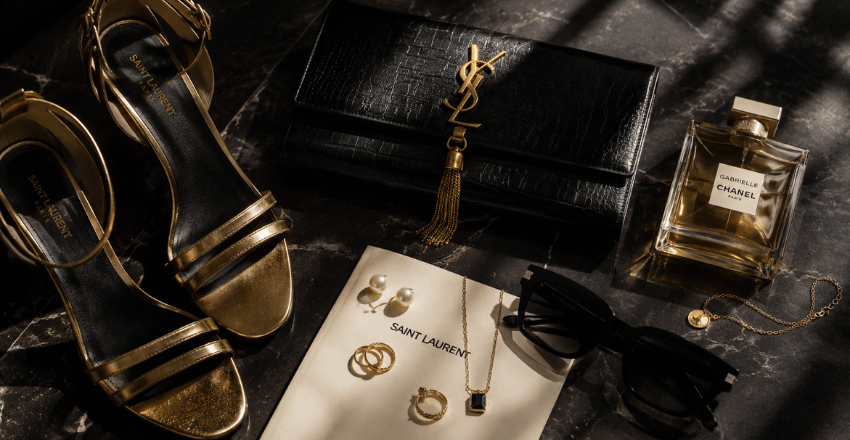
Prices spread wider here than in most shoe categories, and the middle is where the value sits.
- $60 to $70: Zara, Mango, and Open Edit. Coated synthetic uppers, fine for one season and a handful of events.
- $100 to $200: the practical sweet spot. Real leather linings, better heel construction, and repairability.
- $345 to $395: contemporary labels such as Aeyde and Stuart Weitzman. Metallic leather rather than foil, so creasing is gentler.
- $695 to $1,095: Jimmy Choo, Manolo Blahnik, and René Caovilla territory.
Spending more does not buy scuff resistance. It buys comfort, lining quality, and a shoe worth resoling.
Your next move
Look at the three events on your calendar, decide how many will be photographed, and buy the finish that suits the majority. One versatile brushed pair beats three specialized ones.
If you want to know more, please visit our shoes category.
FAQ
Close to it. A gold pair sits beside black, white, navy, jewel tones, and most prints without clashing because it reads as a neutral rather than a color. The finish is what needs adjusting, not the pairing itself.
Antique. Aging is already built into that surface, so scratches and dust blend in instead of standing out. Champagne comes second.
No. Champagne carries a beige undertone and sits much paler, which is why it behaves like a nude in an outfit while still catching light.
Yes. Let one metal lead and keep the other in a supporting role, such as a silver watch beside warm metallic sandals.
Store the shoes separately in soft bags so they never rub against each other. Add a clear topcoat over the toe box, and carry it to the venue rather than driving in it.