

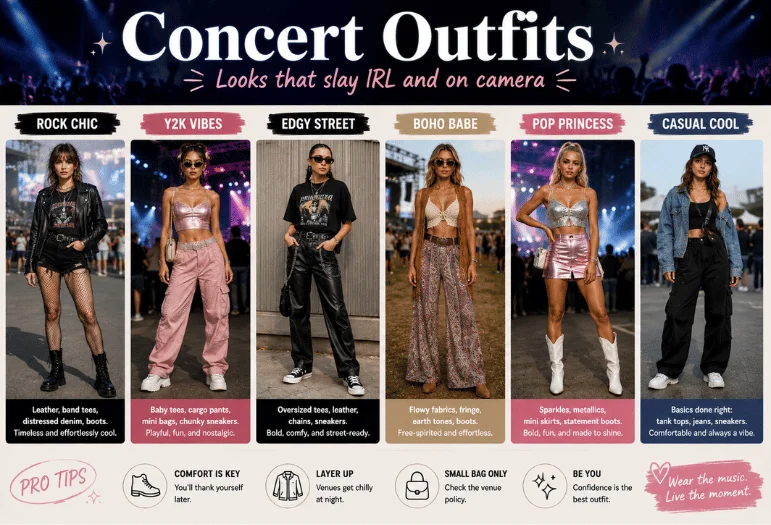
Most concert outfits fail for one reason. They get planned for a photo, not for the room they walk into. A stadium floor, a 300-person club, and a seated jazz room ask for three different things. Venue type sets the rules, and genre only picks the mood. For a closer look at this, see plus size wedding guest dresses.
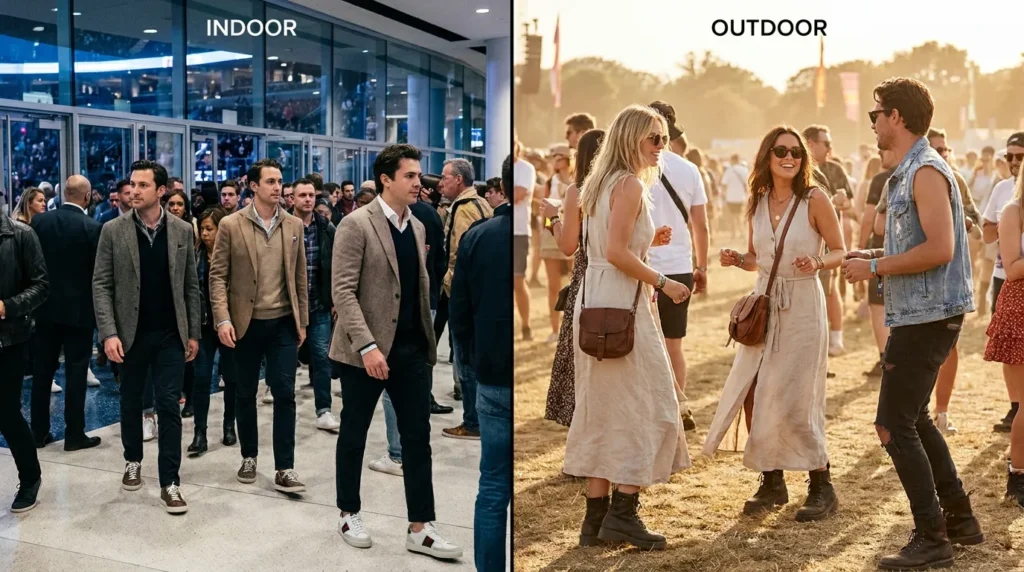
Start with the venue, then the genre. Stadiums and arenas run strict clear bag rules and long walks. Clubs run hot, dark, and crowded, so lightweight layers win. Outdoor festivals need sun cover and mud-tolerant boots. Seated jazz and classical rooms reward smart casual over anything loud.
Key takeaways
- Venue decides your constraints. Genre decides your styling.
- Stadium gates cap bags at 12 by 6 by 12 inches, clear plastic only.
- Small clutches up to 4.5 by 6.5 inches usually pass too.
- Plan for four hours upright, counting doors, Opener, and set change.
- A packed floor runs far warmer than the line outside. Layer for both.
- One nod to the artist reads as tribute. Four nods read as costume.
The genre and venue grid
Read the row for your ticket, not the row for your taste.
| Show type | What the room is like | Wear | Skip |
| Stadium pop show | Clear bag gate, huge concourse, long walk from parking | Sequin top, straight jeans, cushioned sneakers, clear crossbody | Stilettos, canvas totes, anything you cannot walk half a mile in |
| Arena rap show | Big standing floor, tight security, cold air in the bowl | Oversized tee or cropped knit, baggy denim or cargos, chunky sneakers | Delicate fabrics, long trailing hems |
| Small rock club | 200 to 800 people, weak airflow, sweat on the ceiling | Band tee, black jeans, broken-in boots | New white shoes, silk, dry clean only pieces |
| Outdoor country festival | Grass, dust, sun, sudden storms | Denim shorts or a midi skirt, western boots, a brimmed hat | Open toe sandals, white anything |
| Amphitheater lawn | Sloped turf, evening temperature drop of 15 degrees | Sundress with a flannel, low boots, a blanket | Heels that sink into grass |
| Seated jazz or classical | Table service, quiet room, low light | Wide-leg pants, satin blouse, loafers or a block heel | Graphic tees, ball caps, flip-flops |
Concert Outfits: Venue beats genre, every time

Two country shows can need opposite clothes. One is a July field with no shade and a mud risk. The other is a downtown theater with assigned seats and the heat running.
So build in that order—room first, mood second. A quick look at the venue seating map tells you whether you stand or sit, and whether the surface is concrete or grass. Then choose shoes that match the surface rather than the playlist.
The bag rule is the dress code nobody reads
Security turns away more looks than any doorman does. Large stadiums run a clear bag policy, and the standard limit is 12 by 6 by 12 inches. A small clutch of 4.5 by 6.5 inches or less usually gets through alongside it. One-gallon clear freezer bags also count at most gates.
Clubs and theaters stay looser, though not unlimited. Plenty of them cap you at a small purse and ban backpacks outright.
- Buy the clear tote ahead of time. A zippered 12 by 6 by 12 version runs $10 to $25.
- Some stadiums check oversized bags outside the gate for about $5 per item. That service is never guaranteed.
- A crossbody strap beats a handheld bag. Your hands will be full.
- Phone, card, key, lip balm. That is the honest packing list.
No coat check means you wear it or carry it
Most arenas skip coat check, and nearly every club does. Whatever you bring, you hold for four hours. The fix is outerwear that doubles as part of the look.
A cropped denim jacket, a leather moto, or a shrunken blazer ties around the waist without bulk. Packable shells fold down to the size of your fist. Long wool coats do neither, so save those for seated rooms where a chair back exists.
The line outside is not the floor inside
People dress for the weather app and forget the crowd. A packed general admission floor can feel 15 to 20 degrees warmer than the sidewalk you queued on. Body heat, dead air, and stage lights stack up fast.
Layer so the outer piece comes off and ties on. Try a tank under a flannel for both ends of the night. A bodysuit under an open shirt does the same job. Our seasonal outfits archive tracks the same swing across spring and fall.
Four hours upright, and the opener math
Doors at 6:30. Opener at 8:00. Set change until 9:00. Headliner until 11:00.
That adds up to four and a half hours on your feet, and most of it happens before the artist you paid for walks out. Concrete punishes feet in a way a wood club floor does not. Pick something with a real footbed and a closed toe, because strangers will step on you.
- Platform sneakers add height without a heel angle.
- Block heels under 2 inches survive a full set.
- Broken-in boots beat new boots. Always.
- Tuck a blister patch into the clutch.
Dressing for the artist without the costume
Fan dressing is fun until it tips over. The rule is one reference. Borrow a single element: a color, a motif, an era, or a silhouette. Then build everything else from clothes you would wear on a normal Friday.
A cowboy hat plus fringe boots plus a bandana plus a sequin skirt is a costume. That same skirt with your own boots is a look. Copying a stage outfit head to toe rarely photographs well either. You end up as a slightly worse version of the person on the screen.
Getting home at midnight
The set ends and the practical part starts. You might walk half a mile to a lot, wait in a rideshare pen for 40 minutes, or catch a late train.
Dress for that stretch too. A pocket for your phone, a jacket you can actually close, and shoes you can move fast in all matter more at 11:40 than they did at 8:00.
What concert outfits cost in 2026
Nobody needs a brand new look. Here is what the pieces run if you do buy.
| Piece | Typical range | Note |
| Clear stadium tote, 12 by 6 by 12 | $10 to $25 | Buy once, use for years |
| Official tour tee at the merch stand | $45 to $75 | Often cheaper online after the tour |
| Vintage style band tee | $25 to $45 | Thrift racks first |
| Platform sneakers | $60 to $130 | Break them in for a week |
| Western boots | $120 to $280 | Leather softens by show three |
| Sequin mini dress | $50 to $120 | Line it or wear shorts under it |
| Bag check outside the gate | About $5 | Where the venue offers it |
A full look can land under $100 when one piece is new, and the rest already hangs in your closet. Sequins do the most work per dollar, and our dresses and party silhouettes archive is a good browsing start.
Your next step before the show
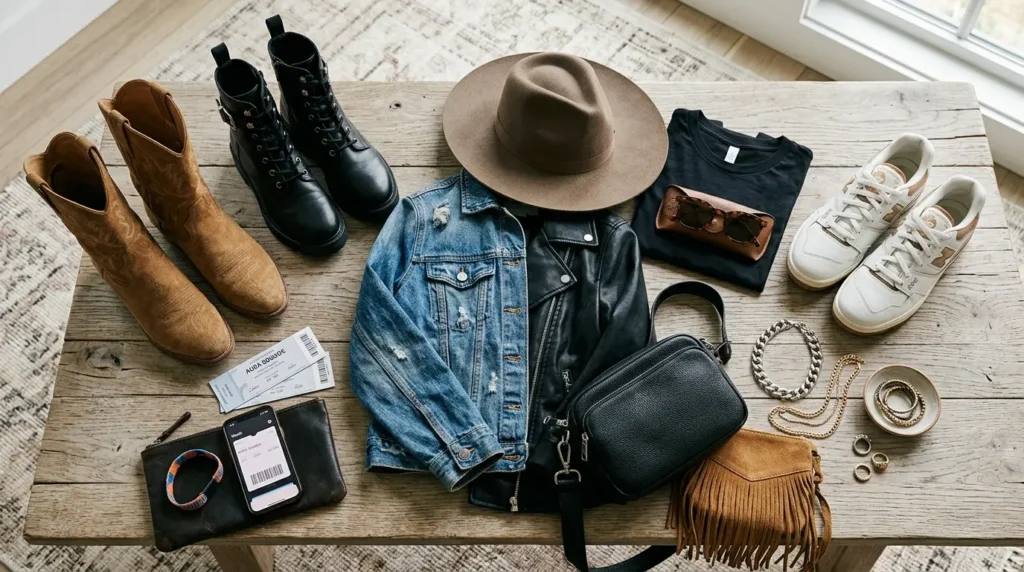
Pull up your venue page tonight and read two lines: the bag policy and the door time. Everything else follows from those. Then lay the outfit on the bed, walk around the house in the shoes for 20 minutes, and swap anything that pinches.
FAQ
Yes, for most rooms. Straight or baggy denim reads right at pop, rock, rap, and country shows. Seated jazz rooms prefer dark denim with a blazer or a silk top.
A clear tote at 12 by 6 by 12 inches or smaller, plus a clutch at 4.5 by 6.5 inches. Check the venue page the week of the show. Policies shift from event to event.
Stilettos, no. A block heel under 2 inches works if your ticket is a seat. On grass, skip heels completely.
Smart casual covers almost all of them. Wide-leg pants with a satin top, or a midi dress with a low heel. Upscale rooms with table service lean closer to cocktail attire.
No. A tee you already own plus one statement piece beats a head-to-toe purchase you have never worn. New clothes chafe, and a show is a bad place to find that out.