


Most beach outfits photograph beautifully in a store mirror. Then they meet saltwater, a stiff breeze, and a fistful of sand. Fabric decides what happens next. Pick the fiber first, and the styling part gets easy. There is more on this in Teacher Outfits.
The short answer: fiber beats silhouette. Linen and cotton gauze dry fast and hide a damp swimsuit. Rayon and viscose cling and sag once wet, and silk spots from salt. Polyester dries quickest, but traps heat. Build around a fast-drying opaque layer, then add weight or buttons so a sea breeze cannot lift it.
Key takeaways
- Linen and cotton gauze are the safest all-day picks. They breathe, they dry in under an hour in the sun, and they stay opaque over a wetsuit.
- Rayon and viscose lose real strength when wet. Soaked rayon wrap skirts stretch, sag, and show every seam.
- A dry white cotton shirt rates roughly UPF 7. Wet, it drops to about UPF 3, which is close to nothing.
- Loose open weaves like crochet and gauze shed sand. Terry loops, corduroy and brushed knits hold it.
- Wind is the thing nobody plans for. Buttons, hem weight and a longer wrap overlap solve most of it.
How each fabric behaves once it is wet, salty and sandy
Every fiber reacts differently to water. Some go translucent. Some go heavy and stay heavy for two hours. A few take on salt and dry stiff with a chalky bloom you can see in daylight.
Here is the comparison that most style guides skip.
| Fabric | Dry time in sun | Wet behavior | Sand in the weave | Verdict |
| Linen | 30 to 45 min | Darkens, stays opaque, does not cling | Shakes out clean | Strongest all-rounder |
| Cotton gauze | 20 to 40 min | Crinkle hides damp patches | Falls straight out | Best over a wetsuit |
| Cotton poplin, white | 45 to 90 min | Turns sheer immediately | Fine, shakes out | Only in a color |
| Rayon or viscose | 60 to 120 min | Clings, stretches, sags at the hem | Sticks while damp | Save it for dinner |
| Silk | 40 to 70 min | Water marks, salt leaves rings | Slides off | Keep it off the sand |
| Polyester or nylon | 10 to 20 min | Sheds water, no sag | Static pulls sand on | Fastest, hottest |
| Terry cotton | 2 hours plus | Soaks up and stays wet | Loops trap it | Poolside only |
Two entries deserve a footnote. Viscose is the most absorbent cellulose fiber sold, more absorbent than cotton or linen, which is exactly why it goes limp. And polyester wins every drying race while making you hotter than any natural fiber at noon.
Beach outfits to wear over a swimsuit.
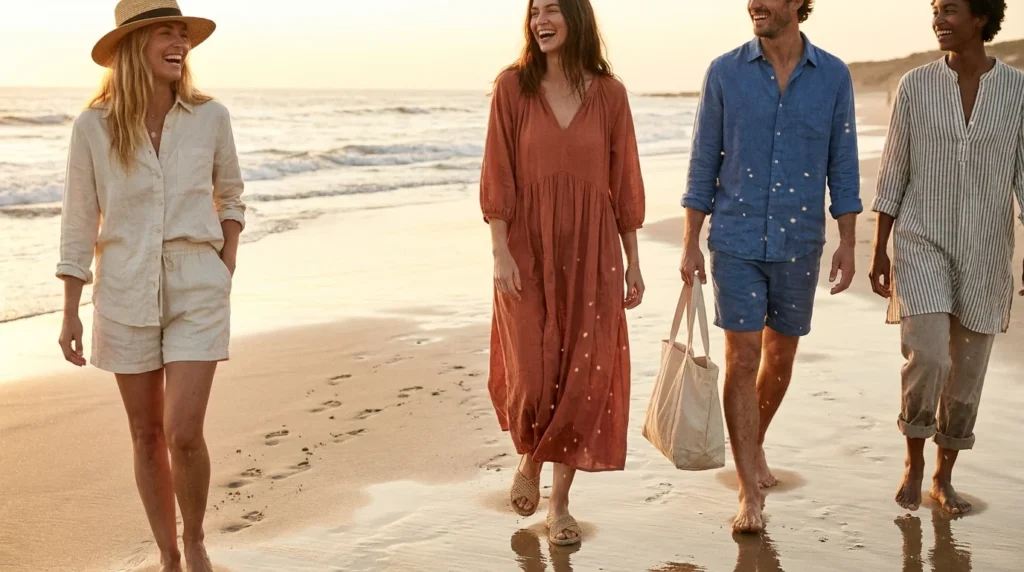
This is the layer that gets wet, sat on, and dragged through sand. It needs to go on over damp skin without a fight.
- Cotton gauze kaftan. The crinkled surface hides damp patches and slides over a wetsuit. Expect $35 to $75.
- Oversized linen shirt. Buy it two sizes up and leave it open, or knot it at the hip when the wind starts.
- Crochet midi. Gorgeous, breezy, and it dumps sand out of the holes. Wear a solid suit underneath.
- Loose cotton shorts and a tank. Unglamorous, unbeatable for a long day.
Skip anything white and thin. That cheap white cotton cover-up over a dark bikini goes see-through the second it touches water, and it stays that way for an hour.
From the sand to lunch without going home
The trick is one piece that never touched the water. Keep a folded linen or gauze dress in your bag, roll it, and it comes out with soft creases that read as intentional. Shake the sand off your feet, swap flip-flops for a leather slide, and add earrings.
Choose the shape before the fabric here. Columns and tiered midis in mid-tone colors read polished at a table and still let air move. Our guide to easy summer dresses covers the silhouettes that hold up in humidity.
One rule: nothing that needs a bra you did not bring.
A sunset walk when the wind picks up
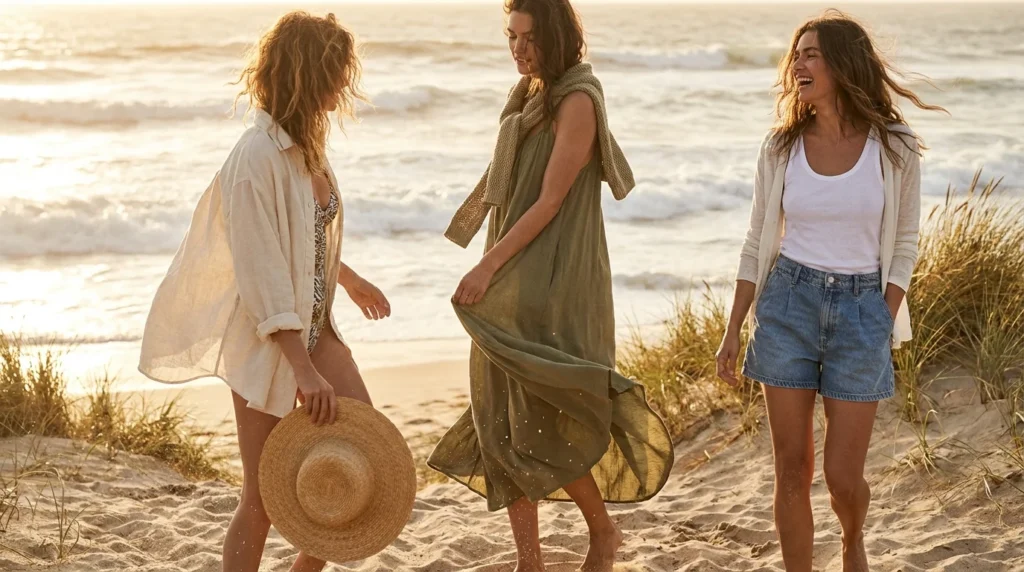
Late afternoon on the coast is windier than midday, and the temperature drops faster than people expect. The gauze skirt that behaved at 2 p.m. becomes a sail at 6 p.m.
So change the closures, not the outfit. A wrap skirt with a deep overlap and a hidden snap stays shut. Three buttons at a kaftan placket stop the billowing. Weighted hems help too, and so does a heavier fiber: a linen blend has enough body to hang instead of fly.
Bring one warm layer. An oversized cotton knit or a light denim shirt handles a 15-degree drop, and both look right against sand. If your feet are staying bare, sandals with a back strap keep you upright on wet packed sand where flip-flops slip.
Beach club and resort dinner
Different rules apply once there is a table, a check, and a dress code. Most beach clubs and resort restaurants want resort chic: no wet swimwear, no visible bikini ties, and closed or structured footwear.
- Silk or viscose slip dress, since neither one is going near salt water tonight.
- Wide-leg linen pants with a fitted knit tank, which is the coolest evening combination there is.
- Crochet or lurex maxi with flat metallic sandals.
- Block heels or wedges if you want height. Stilettos sink into decking and sand every time.
Sandals matter more than the dress at a beach club, because you will walk on three surfaces in one night. Browse flat sandals and warm-weather shoes before you commit to anything with a thin heel.
Sun protection your cover-up probably is not giving you
UPF measures how much ultraviolet light a fabric blocks. UPF 30 to 49 counts as very good protection, and UPF 50+ is excellent. Ordinary clothing rarely gets close.
The number that surprises people: a plain white cotton T-shirt sits around UPF 7 when dry. Soak it, and it falls to roughly UPF 3. Stretched fabric leaks more UV as well, because the yarns pull apart and open gaps.
Dark and saturated colors absorb more UV than pale ones. Dense weaves beat sheer ones. If you burn easily, buy one rated UPF 50+ long-sleeve layer at $45 to $90 and wear it in the water, then switch to the pretty gauze on land.
What actually survives sand
Sand is abrasive, and it migrates. Some materials let it go, and some hang onto it for the whole trip.
- Sheds it: smooth linen, cotton gauze, crochet, leather slides, straw.
- Holds it: terry loops, boucle, corduroy, suede, anything with velcro or a fuzzy lining.
- Ruined by it: fine chain jewelry, watch bezels, suede espadrille soles.
Salt is the slower problem. Rinse swimwear in fresh water the same day, because dried salt crystals cut elastane fibers, and that is how a suit loses its snap by August. For seasonal packing ideas built around this logic, our seasonal outfits archive is a good starting point.
What you should expect to pay

| Piece | Typical US range | Where the money goes |
| Cotton gauze cover-up | $25 to $60 | Weight and opacity |
| Linen blend cover-up shirt | $45 to $70 | Linen percentage |
| Full linen kaftan or maxi | $95 to $170 | Fiber quality, hem finish |
| UPF 50+ swim layer | $45 to $90 | Tested rating, chlorine resistance |
| Flat leather sandals | $40 to $120 | Sole and strap durability |
| Straw tote | $30 to $80 | Lining and handle strength |
Spend on the layer you will wear five days out of seven. A $110 linen kaftan you actually reach for costs less per wear than three $30 pieces that stay folded.
Your next step
Pull out the cover-up you already own and check the care label. If it reads rayon, viscose, or terry, move it to the pool bag and buy one linen or gauze piece to replace it. That single swap fixes more bad vacation photos than any amount of shopping. For more warm-weather styling, keep reading our fashion coverage.
FAQs
Cotton gauze, for most people. It dries in about half an hour, stays opaque over a wetsuit, and sand falls out of the crinkle instead of sticking.
Linen darkens but holds. Thin white cotton poplin turns sheer instantly. Color and weave density matter more than the fiber name.
Wear it to dinner, not into the water. Rayon and viscose lose a lot of strength when wet, so they stretch out of shape and stay damp for up to two hours.
Use a deep wrap overlap with a snap, a button-through front, or a hem with some weight. Fabric with body beats floaty chiffon on a windy afternoon.
Flat leather slides, rubber sandals, and anything with a back strap. Suede soles and thin heels lose that fight fast.
Three daytime layers, two dinner looks, and two pairs of sandals. Rotate the cover-ups so each one gets a full day to dry.