
Red sneakers have moved well beyond the occasional statement shoe. In 2026, slim retro runners, suede low-tops, canvas classics, and racing-inspired silhouettes make red surprisingly easy to work into an everyday wardrobe. The trick is choosing a shade and shape that fit the clothes you already wear instead of treating every red shoe as interchangeable.
That matters because cherry, scarlet, burgundy, and muted brick red create very different effects. A bright pair can wake up simple denim, while a deeper red can sit comfortably beside brown trousers, navy tailoring, or an autumn coat. Once you understand that difference, red becomes much easier to wear than its reputation suggests.
Quick answer: Red sneakers are easiest to wear when you treat them as the only strong color in an outfit. Pair cherry or scarlet low-tops with denim, black, gray, white, navy, or cream; use burgundy with camel, brown, and olive. Choose a low-profile shape for versatility, then repeat red at most once.
Key Takeaways
| What to know | Best approach |
|---|---|
| Easiest first shade | Cherry, classic red, or muted burgundy |
| Most versatile shape | Low-profile sneaker with a clean toe |
| Safest outfit colors | Denim, white, cream, black, gray, navy |
| Best warm-color partners | Camel, chocolate brown, olive, ecru |
| Easy styling rule | One red focal point, quiet colors elsewhere |
| Typical U.S. price range | About $60 to $150 for mainstream lifestyle pairs |
| Best first material | Leather or suede for polish; canvas for casual wear |
Why Red Sneakers Work So Well in 2026
They have stayed visible through 2026 because they solve a useful styling problem: they make familiar clothes feel intentional without requiring a completely new outfit. Vogue’s September 2026 coverage describes the color as an established closet staple that works with tailoring, dresses, denim, and transitional fall clothing, while Glamour has similarly framed it as an unexpectedly versatile footwear choice. That broader fashion context makes red less of a novelty and more of an alternative to white, cream, brown, or black sneakers.
The current low-profile sneaker movement helps too. Racing shapes, retro court shoes, slim runners, and narrow suede sneakers expose more of the ankle and sit neatly under jeans or trousers, so a saturated color doesn’t overwhelm the outfit. If you like experimenting with color but want something softer, Styleblor’s guide to yellow sneakers explores the same idea from a lighter direction.
Start With the Right Shade of Red
Choosing red by shade is more useful than choosing it by trend name. Two pairs can both appear under a retailer’s red filter and still require completely different wardrobes, especially when one leans blue and another leans brown or orange. Think about the colors you wear most often before deciding which red belongs in your closet.
Cherry and Classic Red
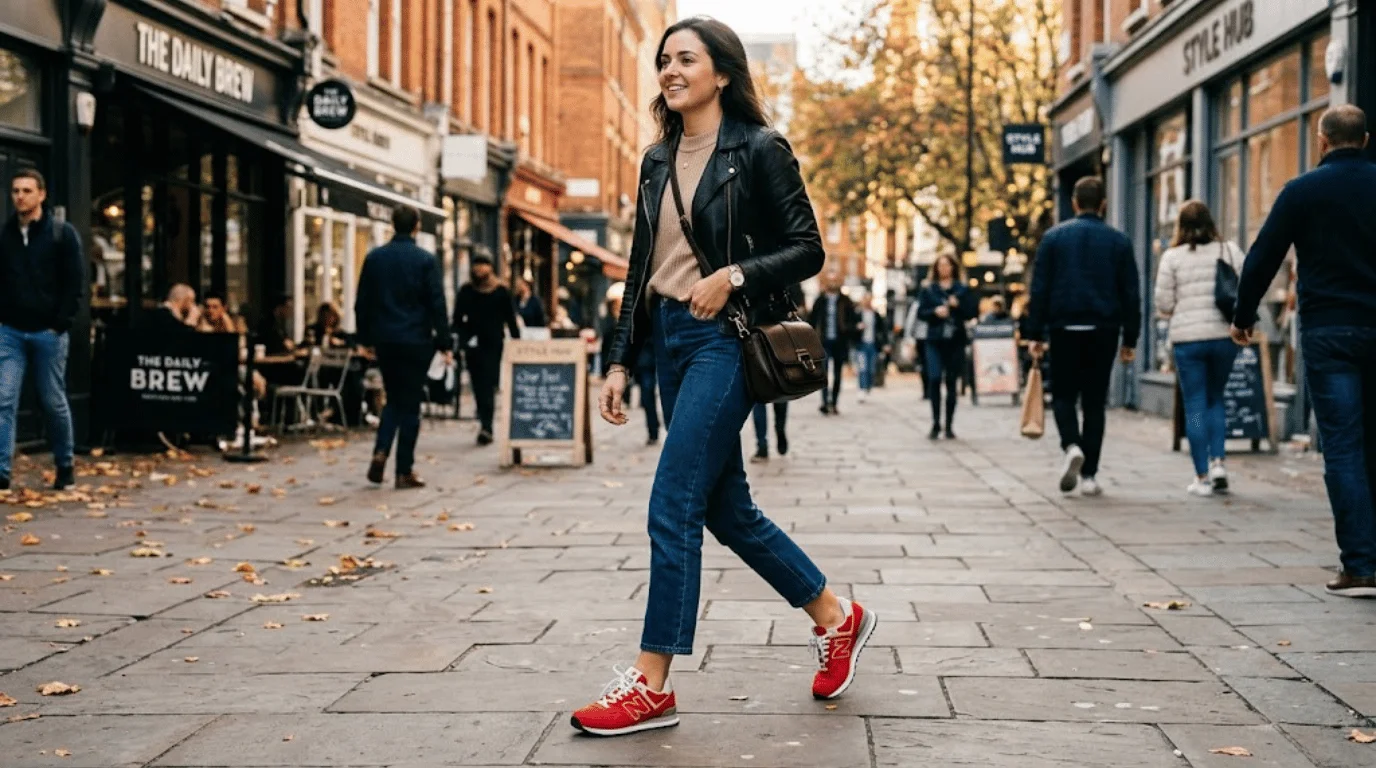
Cherry and classic primary red are the easiest places to start if your wardrobe contains blue denim, white tees, black pants, gray knits, or navy jackets. They create a clear pop without becoming difficult to coordinate, especially when the sneaker has white stripes, a white sole, or another neutral detail. A slim cherry pair with straight jeans and a white shirt is one of the simplest formulas in this entire guide.
Scarlet and Tomato Red
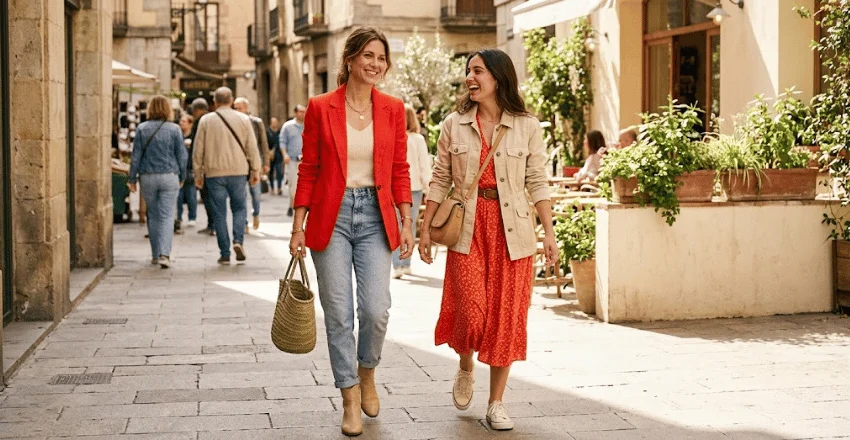
Scarlet and tomato shades carry more warmth, so they feel especially energetic next to cream, ecru, khaki, faded denim, and warm beige. They can look louder against pure black because the contrast is strong, although that can work when the rest of the outfit is intentionally minimal. If your clothes already lean warm, these orange-based reds usually integrate more naturally than blue-red cherry.
Burgundy, Wine, and Oxblood
Burgundy and wine red behave almost like dark neutrals, making them useful for fall, winter, and smarter casual outfits. They pair easily with camel, chocolate brown, olive, charcoal, navy, cream, and dark denim because their deeper tone creates less visual contrast. The same principle appears in Styleblor’s red heels guide, where deeper reds pair more easily with sophisticated neutral palettes.
Choose the Silhouette Before You Choose the Brand
A low-profile shoe is the easiest version to style because it leaves more visual space around the foot. Retro runners, football-inspired trainers, racing sneakers, Gazelle-like suede shapes, and classic canvas low-tops all work particularly well because the red becomes an accent instead of a large block. Chunkier pairs can still work, but their extra sole volume makes the color feel stronger.
Consider what you plan to wear directly above the shoe. Wide-leg pants usually look cleaner with a slimmer sole, straight jeans can handle almost anything, and shorts give you more freedom because no hem competes with the sneaker. If you prefer hybrid or feminine sneaker shapes, Styleblor’s Mary Jane sneakers guide explains how straps and low-profile soles shift an outfit’s balance.
6 Red Sneakers Worth Considering in the U.S. in 2026
Shopping by name alone can be misleading because some famous models constantly change colorways, prices, and materials. The table below highlights recognizable U.S.-market pairs that represent the major red-sneaker categories, from slim racing shoes to canvas classics and retro runners. Use it as a comparison starting point, not as a guarantee that every shoe will suit the same foot or wardrobe.
| Sneaker | U.S. price checked | Red option | Best for | Watch for |
|---|---|---|---|---|
| PUMA Speedcat OG | $100 | For All Time Red/PUMA White | Slim racing profile, denim, trousers | Low profile may feel less cushioned than a runner |
| adidas Gazelle Indoor | $120 | Multiple red colorways | Suede texture, casual-to-polished outfits | Slim shape may not suit every wide foot |
| Converse Chuck Taylor All Star Low | $60 | Classic Red | Budget-friendly canvas, shorts, denim | Converse notes this style runs large |
| Nike LD-1000 | $105 list; $62.97 sale checked | University Red/Sail/Black/Silver | Retro running look, casual outfits | Sale prices and stock can change quickly |
| ASICS SKYHAND OG | $100 list; $79.95 sale checked | Red options listed in Sportstyle | Sportier retro styling and cushioning | More athletic-looking than a court sneaker |
| Reebok Freestyle Lo | $75 | Vector Red/Vector Red/Vector Red | Tonal red leather and retro styling | Women’s sizing and availability vary |
These prices were checked against U.S. brand pages in September 2026, and temporary discounts may disappear without notice. PUMA currently lists the red Speedcat OG at $100, adidas lists red Gazelle options around $120, Converse lists the classic red low-top Chuck at $60, and Nike’s University Red LD-1000 was discounted from $105 to $62.97 when checked. ASICS listed the red-filtered SKYHAND OG at $100 before sale pricing, while Reebok’s Vector Red Freestyle Lo was listed at $75.
For pure versatility, the PUMA Speedcat and adidas Gazelle Indoor make strong starting points because both use relatively slim proportions. The Converse is the easiest low-cost experiment if you are unsure whether red will get enough wear, while the Reebok offers a more tonal leather option. Choose based on fit and the pants you actually own, rather than buying whichever model is most visible on social media.
What Colors Go With Red Sneakers?
Color becomes easier when you stop trying to find a perfect match. Red already gives the outfit enough energy, so the rest of the palette can simply create space around it. Denim and neutrals cover most situations, while a few warmer shades work especially well with burgundy and muted red.
| Outfit color | Why it works with red | Easy formula |
|---|---|---|
| Blue denim | Familiar contrast without looking forced | White tee + straight jeans + cherry low-tops |
| Black | Creates strong, graphic contrast | Black pants + gray knit + scarlet low-tops |
| White | Makes the red look crisp | White shirt + light denim + a classic red pair |
| Cream/ecru | Softens bright red | Cream trousers + navy tee + tomato-red suede |
| Gray | Lets the shoe provide the interest | Gray sweater + charcoal pants + a cherry pair |
| Navy | Richer and softer than black | Navy trousers + white shirt + a scarlet pair |
| Camel | Excellent with burgundy or brick red | Camel coat + dark denim + a deep-red pair |
| Olive | Works best with muted or dark red | Olive pants + cream knit + burgundy sneakers |
| Chocolate brown | Creates a warm, current palette | Brown trousers + white tee + a wine-red pair |
How to Style Red Sneakers With Jeans
Denim is the easiest entry point because blue and red already create a familiar, balanced contrast. Straight-leg, relaxed, cropped, and barrel jeans all work, but the hem should reveal enough of the shoe for the color to look deliberate. A white tee, mid-blue jeans, and a cherry low-top need very little else beyond a belt, jacket, or simple bag.
Bootcut denim requires more attention because the hem can hide most of a low-profile shoe. Aim for a length that nearly meets the sneaker without dragging over the entire upper, then let the toe and a little color stay visible. Styleblor’s bootcut jeans guide goes deeper into how footwear and hem length affect the silhouette.
Styling With Black and Gray
An all-black or mostly charcoal outfit gives a bright pair maximum contrast, which makes the shoe look especially graphic. Keep silhouettes simple when using this formula because dramatic accessories can start competing with the color at your feet. Black trousers, a charcoal sweater, and cherry-red low-tops create a cleaner result than adding several other saturated accents.
Gray is even easier because its lower contrast softens the transition into red. Light heather gray feels sporty with a racing sneaker, while charcoal makes burgundy or scarlet look more sophisticated. This combination is useful in fall when you want color without giving up dark layers.
Pairing With White and Cream
White makes a clear red look brighter and sharper, which is ideal for spring and summer. A white cotton dress, white tee, cream trousers, or simple button-down can all act as a quiet background for the shoe. Add denim or tan if an all-light outfit feels too stark.
Cream and ecru work especially well with warmer reds because they soften the high-contrast effect of pure white. Tomato-red suede with cream trousers feels softer than the same shoe with black pants, even though the sneaker remains the focal point. This is a useful direction for anyone who likes color but does not want the outfit to read as sporty.
Try Navy, Brown, and Olive for Fall
Navy gives red a classic foundation without creating the severity of black. It works with both bright and dark shades, so navy trousers, dark jeans, or a navy coat can extend the shoe well beyond warm weather. White or cream between the two colors keeps the combination clean.
Brown and olive work best when the sneaker moves toward burgundy, brick, cranberry, or wine. Those muted reds contain enough depth to sit comfortably beside earthy colors rather than fighting them. A camel coat, blue jeans, and burgundy sneakers are one of the easiest autumn formulas because every color already belongs to a traditional cold-weather palette.
Can You Wear Red Sneakers With Dresses and Skirts?
Yes, especially when the sneaker has a slim sole rather than a large performance-running shape. A cotton midi, knit dress, denim skirt, pleated skirt, or simple slip dress can all work because the casual shoe deliberately interrupts the dressiness. Current fashion coverage has also shown the shoes paired with dresses and skirts rather than limiting them to jeans.
Pay attention to where the hem ends. A low-profile sneaker usually looks cleaner when the skirt leaves a visible section of ankle or falls long enough to create one continuous line, while awkward mid-calf proportions can make both the shoe and leg look heavier. When the dress contains a print, let the sneakers either pick up a small trace of red or act as the only strong solid color.
Wearing Them With Shorts and Jorts
Shorts give a bold sneaker more breathing room, making this combination difficult to overcomplicate. Denim cutoffs, tailored shorts, athletic shorts, and longer jorts can all work if the top stays relatively simple. White, gray, cream, navy, and faded black tees are easy starting points.
Longer denim shorts add more visual weight around the knee, so a low red sneaker generally balances the outfit better than an oversized sole. Socks can be white, cream, gray, or matched loosely to the pants instead of the shoe. For more guidance on proportion, Styleblor’s jorts styling guide explains how shoe shape changes a longer-short silhouette.
Can Red Sneakers Work at the Office?
They can work in a casual or creative office when the dress code already allows clean sneakers. Choose leather or suede, avoid obviously technical running shoes, and pair the color with structured pieces such as trousers, a button-down, a fine knit, or an unstructured blazer. Deep cherry and burgundy usually feel more restrained than a saturated racing red.
The key is making the sneaker the casual part of an otherwise polished outfit. Navy trousers, a white oxford shirt, and low burgundy sneakers can read intentional, while ripped jeans and a graphic tee push the same shoes firmly into weekend territory. For interviews, formal client meetings, or conservative workplaces, choose the dressier shoe the setting calls for rather than trying to force a sneaker into the dress code.
Red Sneakers for Women and Men: The Styling Rules Are Basically the Same
Searches often separate the women’s and men’s versions, but the core color rules do not change much. Denim, black, cream, gray, navy, olive, and brown remain useful regardless of gender, and low-profile shapes stay easier to pair with different bottoms. What changes more is the silhouette around the shoe.
A skirt, wide-leg trouser, relaxed suit, cargo pant, straight jean, or short can all work when its proportions make sense with the sneaker. Instead of buying by a gendered styling formula, decide whether you want the shoe to look sleek, retro, sporty, chunky, or minimal. Then choose clothing that reinforces or deliberately contrasts with that shape.
Getting the Fit Right
Color cannot rescue a shoe that hurts. Your toes should be able to spread without pressing hard against the front, your heel should remain reasonably secure, and the shoe should not create immediate pressure across the widest part of your forefoot. Try footwear later in the day when possible because feet can feel fuller after hours of standing and walking.
Brand sizing is inconsistent, so use the model-specific guidance rather than assuming your usual number will always work. Converse, for example, currently notes that its classic Chuck Taylor All Star low-top runs large, while other slim retro models can feel narrower through the forefoot. If you are between sizes, compare the brand’s length chart and return policy before relying on reviews alone.
Leather, Suede, Canvas, or Mesh?
Leather is the easiest material to dress up because its smoother surface looks cleaner with trousers, dark denim, and simple tailoring. Suede softens a bright red by absorbing light rather than reflecting it, which is one reason racing and retro terrace shoes often feel less aggressive in suede. Both materials make sense if you want the color to work across multiple seasons.
Canvas is cheaper, lighter, and naturally casual, making it excellent for summer, shorts, and anyone testing the color before spending more. Mesh leans sportier and usually works best when the rest of the outfit has some athletic or technical character. If versatility is the priority, start with leather or suede and save mesh for a clearly sporty use case.
Keeping a Bright Pair Looking Good
Always check the material before cleaning because leather, suede, canvas, and mesh respond differently to water and brushes. Wipe rubber midsoles regularly so gray grime does not dull the contrast, and use a suede brush rather than saturating suede with water. Canvas can usually tolerate gentler washing than suede, but aggressive machine washing can still distort shape or weaken adhesives.
Store red shoes away from strong direct sunlight when possible because repeated exposure can affect saturated colors over time. Let wet sneakers dry naturally instead of placing them directly against a heater, and remove surface dirt before it settles into the material. Regular light maintenance is safer than waiting until the pair needs an aggressive deep clean.
Common Mistakes That Make the Color Harder to Wear
The biggest mistake is asking too many parts of the outfit to compete. A bright red shoe, matching red bag, red jacket, bold print, and oversized jewelry can turn a simple accent into a theme, especially when every red is slightly different. One clear focal point is usually enough.
Another mistake is ignoring proportion because the color gets all the attention. A huge red sole beneath delicate cropped pants can feel visually disconnected, while a tiny racing sneaker under an extremely long, heavy hem may disappear. Choose the shape first, check how it looks with your usual pants, and only then decide whether the color earns a place in your wardrobe.
The Verdict
For a first pair, choose a low-profile red sneaker in leather or suede and keep the shade near classic cherry, muted scarlet, or burgundy. Those versions work with the widest range of U.S. wardrobes because they can move between jeans, trousers, shorts, casual dresses, and transitional layers. PUMA’s Speedcat, adidas’ Gazelle family, and similar slim silhouettes illustrate why this combination is so easy to style.
Build one complete outfit before you buy anything else to match the shoes. If the pair already works with your best jeans, a neutral top, and one jacket you wear regularly, it is probably versatile enough to justify the purchase. The goal isn’t to create a special red-sneaker wardrobe, but to make the shoes improve the wardrobe you already have.
FAQ
Are red sneakers still in style in 2026?
Yes, they remain highly visible in 2026 fashion coverage and current brand assortments. Vogue, Glamour, adidas, PUMA, and other major retailers continue to feature red lifestyle sneakers across retro, racing, and classic silhouettes. The trend is strongest in low-profile shapes, but red has become broad enough to work beyond a single sneaker model.
What color pants look best with red sneakers?
Blue denim is the easiest option because it creates familiar contrast without making the outfit feel overly coordinated. Black, charcoal, navy, cream, ecru, olive, and chocolate brown also work when you choose the shade of red carefully. Bright cherry handles black and denim especially well, while burgundy is particularly strong with brown, olive, camel, and navy.
Can I wear red sneakers with an all-black outfit?
Yes, and an all-black base is one of the simplest ways to make the shoes look intentional. The high contrast makes the sneaker the obvious focal point, so keep accessories and prints restrained unless you want a maximalist result. Deeper burgundy creates a softer effect, while true red or scarlet produces a sharper graphic contrast.
Are red and white sneakers easier to wear than a fully red pair?
Usually, because the white sections break up the color and connect naturally with white tees, socks, shirts, and midsoles elsewhere in casual wardrobes. A red upper with white stripes or a white sole feels less visually heavy than a completely tonal red shoe. If you are unsure about the trend, a red-and-white pair is an easy first step.
Do red sneakers work in fall and winter?
Yes, especially in burgundy, wine, dark cherry, suede, and leather. Pair them with dark denim, charcoal, navy, camel, chocolate brown, olive, wool coats, and textured knits to make the color feel seasonal rather than summery. Bright red can still work in cold weather, but deeper shades integrate more quietly with heavier fabrics.
How much should I spend on red sneakers?
Mainstream lifestyle options currently start around $60 for classic canvas and commonly land between about $75 and $150 for leather, suede, racing, and retro-running styles. Spending more can get you premium materials or designer branding, but a higher price doesn’t automatically mean the shoe will fit better or work with more outfits. For a first pair, a familiar model in the $75 to $120 range gives you plenty of strong options in the U.S. market.