

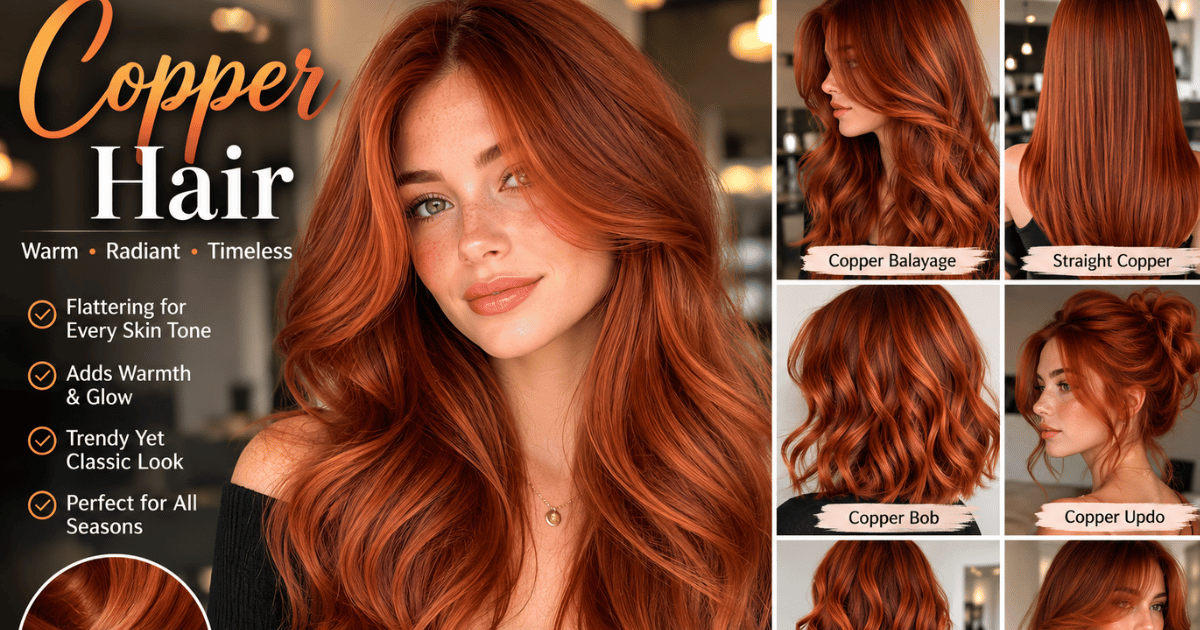
Copper hair is not one color. It is a family that stretches from pale strawberry to burnt cinnamon, and the two ends behave nothing alike. Your natural depth decides which version is realistic. Your shower habits decide how long it survives.
Copper is a warm red-orange family with six common variations: bright penny, auburn, strawberry, cinnamon, rose, and a muted brown. Darker natural hair needs lifting first, which costs more and causes more damage. Expect $70 to $400 at a salon, a gloss every six weeks, and a visible fade inside three weeks without care. We cover this in more depth in Light Brown Hair Guide (2026).
| Topic | Key Information |
|---|---|
| Hair Color Family | Copper hair includes bright penny, auburn, strawberry, cinnamon, rose, and copper-brown shades. |
| Best for Skin Tones | Warm undertones suit most copper shades, while cool undertones look best with auburn and copper-brown. |
| Natural Hair Level | Hair levels 5–10 achieve the easiest results. Darker hair usually requires bleaching before brightening. |
| Salon Cost | Professional copper coloring typically costs $70–$400, depending on lifting and coloring required. |
| Annual Maintenance Cost | Salon upkeep averages $600–$1,200 per year, while at-home maintenance costs around $150–$300 annually. |
| Color Longevity | Copper hair starts fading in about 3 weeks without proper care and lasts 4–6 weeks with maintenance. |
| Why It Fades Quickly | Red and orange pigments sit closer to the hair surface, making copper fade faster than most other hair colors. |
| Best Care Routine | Wash twice weekly with cool water, use a color-depositing conditioner, protect from UV rays, and refresh with a gloss every 4–6 weeks. |
| Who Should Visit a Colorist? | People with black or dark brown hair, previously bleached hair, henna-treated hair, or sensitive scalps should avoid box dye. |
| Safety Tips | Always perform a patch test before coloring and avoid using permanent hair dye on eyebrows or eyelashes. |
| Best Advice | Choose a copper shade that matches your skin tone and natural hair level, and consult a professional for dramatic color changes to minimize damage and achieve longer-lasting results. |
Key Takeaways
- The darker your natural hair, the more lift it takes, and the more breakage and money that lift costs.
- Warm undertones are worn in almost every version. Cool undertones look better in auburn and the deeper browns.
- Red pigment molecules are large and sit shallow, so they rinse away faster than any other shade family.
- Two cool-water washes a week, plus a weekly depositing conditioner, roughly doubles how long the tone holds.
- Salon upkeep runs $600 to $1,200 a year. At home, it lands nearer $150.
The Shade Family: Six Versions and Who Wears Them
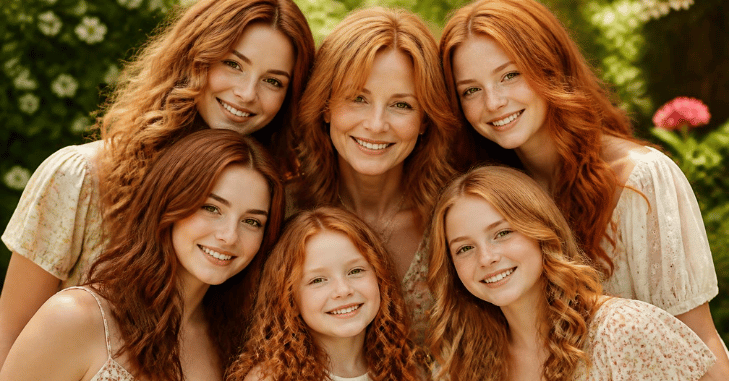
Copper Hair: Each shade below is the same warm red-orange idea at a different depth. What changes is how much orange sits in it, how much brown sits under it, and how loudly it reads in daylight.
| Shade | Reads best on | Works from level | Upkeep |
| Bright penny | Warm and neutral undertones, fair to medium skin | 7 to 9 | Highest |
| Auburn | Cool and neutral undertones, any depth of skin | 5 to 7 | Moderate |
| Strawberry | Fair skin, warm undertones, freckles | 8 to 10 | High |
| Cinnamon or burnt | Olive and deep skin, warm undertones | 4 to 6 | Low |
| Rose | Cool undertones, fair skin | 8 to 10 | Very high |
| Copper brown | Almost anyone, including cool undertones | 4 to 6 | Lowest |
Unsure of your undertone? Check the veins on your inner wrist in daylight. Green reads warm, blue reads cool, and a muddle of both reads neutral. Warm and neutral skin carries the loud versions without looking drained, while cool skin usually softens better into auburn. Our hair color guides go deeper on tone matching.
Your Natural Level Decides the Outcome

Colorists number depth from 1, which is black, to 10, which is the palest blonde. Copper lives around levels 5 to 8. Anything darker carries too much underlying brown for a warm red to show through, so some of that pigment has to come out first.
| Your natural level | What you can realistically get | Lift needed | Damage and salon cost |
| 9 to 10, light blonde | Any shade, and the brightest results of anyone | None | Low, $70 to $120 |
| 7 to 8, dark blonde | Penny, strawberry, rose | None or one level | Low, $80 to $150 |
| 5 to 6, light to medium brown | Auburn, cinnamon, warm brown | One to two levels | Moderate, $120 to $200 |
| 3 to 4, dark brown | Deep-auburn easily, bright only with bleach | Two to four levels | High, $200 to $400 |
| 1 to 2, black | Warm brown safely, bright at a real cost | Four or more levels | Highest, often two visits |
Here is the blunt version. Below level 5, bright results mean bleach, and bleach means structural damage you cannot reverse with conditioner. Two rounds of lightening on virgin dark hair can leave the ends stretchy and dull for months, and that is on a good day with a skilled colorist. Deep auburn on that same head, with no lift at all, looks expensive and costs your hair nothing. Pick within two levels of where you already are, and the result behaves.
Why Copper Hair Fades Faster Than Any Other Color

Red and orange dye molecules are physically larger than brown or ash ones. Large molecules cannot pack deep into the cortex, so they settle near the surface, right under the cuticle. Every wash lifts that cuticle a little and lets some pigment slip out. Nothing anchors them the way a small ash molecule anchors itself.
Then there is the lift. Any service that lightened your hair also made it more porous, and porous hair leaks color even faster. The orange escapes first, then the red, and what is left reads “brassy” or “oddly peach.” Most people see it by week three. That timeline is not a product failure; it is chemistry, and planning around it beats fighting it.
The Upkeep Routine That Actually Holds Tone
- Wash twice a week, not daily. Every wash releases pigment, even a sulfate-free one. Four washes a week fade roughly twice as fast as two.
- Rinse cool. Hot water swells the cuticle and pigment walks out with the water. A cool final rinse holds noticeably more tone across a month.
- Use a color-depositing conditioner once a week. It puts back roughly what the week took out. Daily use of overdoses turns the tone muddy and dark.
- Shield it from the sun. UV oxidizes warm red faster than any other natural-looking shade, so a UV spray earns its place from May through September.
- Book a gloss every four to six weeks. A gloss refreshes tone without touching your roots or your budget the way a full service does.
- Skip purple shampoo. It cancels warmth, and warmth is the whole point here.
Chlorine deserves its own warning. Saturate dry hair with conditioner before you swim, or one afternoon in a pool will strip weeks of tone—one styling note while you are here. Warm red pulls gold and bronze forward and makes cool silver look flat against your face, so this is a fair moment to rethink your everyday jewelry choices.
What It Costs: Salon Versus Box Dye
| Service or product | Typical US price |
| Box kit at home | $7 to $30 |
| Salon single process, no lift | $70 to $150 |
| Bleach and tone from dark hair | $200 to $400, often across two visits |
| Salon gloss or toner | $50 to $70 |
| Color-depositing conditioner | $15 to $30 |
| Color correction after a bad result | Around $100 per hour |
Fix it. Add a year together, and the picture gets honest. Six glosses, two root touch-ups, and a shelf of color-safe products put most people between $600 and $1,200. Doing it yourself with kits and a depositing mask lands nearer $150 to $300, with a real chance of a patchy result; then you pay someone to fix it. Neither figure is small. Both beat a correction bill. If you want to build a look around a loud color, our fashion coverage is a decent place to start.
Who Should Skip the Box and Book a Colorist?
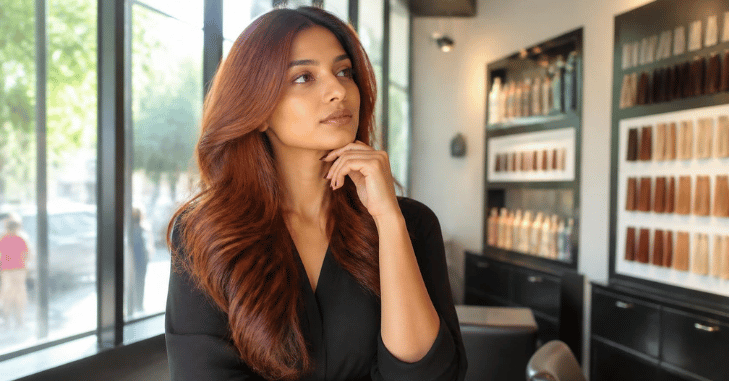
A box kit is fine for a level 6 brunette going one shade warmer. It is a poor idea in four situations. Skip it if your hair sits below level 4 and you want bright. Previously bleached or highlighted hair rules it out too. Henna anywhere in your history is a hard no, and so is a scalp that has ever reacted to dye.
That last one matters more than most people assume. Permanent color that lifts and deposits almost always contains p-phenylenediamine, known as PP. A 2016 study in the Journal of Investigative Dermatology patch-tested 2,739 adults across five European countries and found that 0.8% had a contact allergy to it. A small share of a very large group is still a lot of people. Reactions run from an itchy hairline to facial swelling that needs urgent care.
So do the tests. The FDA hair dye guidance tells consumers to run a skin allergy test before every single application. That holds even for a brand you first used 10 years ago. Formulas change, and sensitivity builds with exposure. Never put dye near your eyebrows or lashes. And if your hair has a chemical history you cannot fully account for, a colorist reading your actual strands beats any article, including this one.
Your Next Step
Take a photo of your hair in daylight and find your level in the second table. Copper Hair: Then pick the shade in the first table that matches your level and your undertone. Book a consultation before you book a service. Fifteen minutes with a colorist tells you what your hair will actually give you, and that is worth more than any shade chart.
FAQ
Three weeks with no intervention. Four to six weeks if you wash twice a week in cool water and use a depositing conditioner. Bright shades drop off first, and warm browns hold the longest.
Can I go from black hair to bright hair without bleach?
No. Black hair holds too much pigment for a warm red to read as anything but a faint shine in the sun. Lightening to at least level 6 comes first, and that usually means two appointments.
Yes, with the right depth. Auburn and warm brown sit beautifully on cool undertones because the brown base cuts the orange. Bright-penny and rose on cool skin can pull sallow.
It will not, and it makes things worse. Purple neutralizes yellow and orange, which strips the warmth you paid for. A red- or orange-depositing conditioner is the right tool.