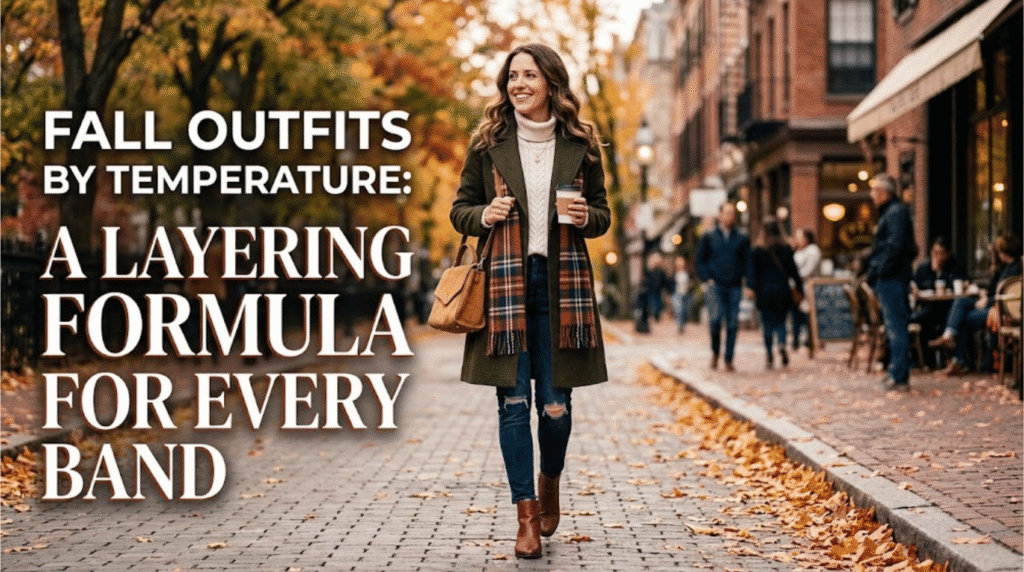

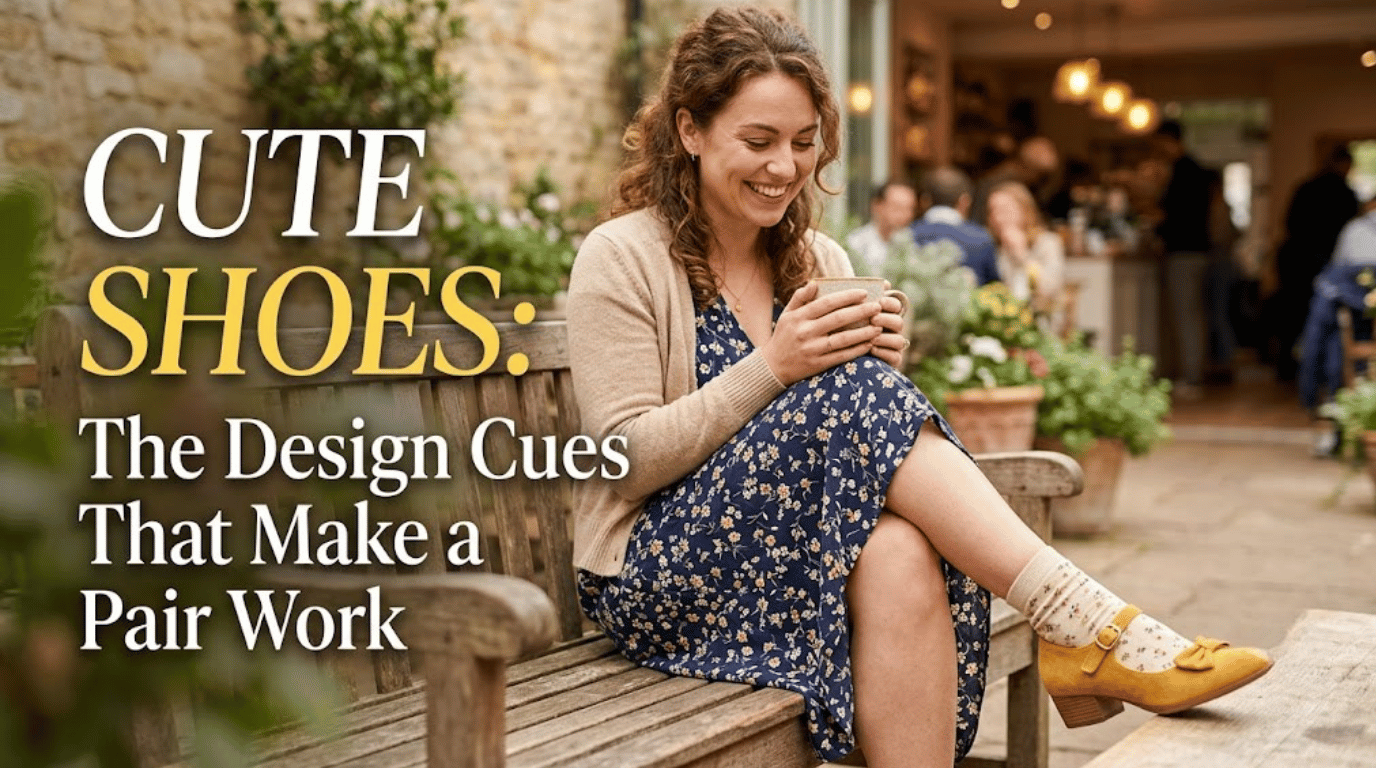
Ask ten people to point at cute shoes, and you get ten different pairs. Yet the ones they pick share a short list of design cues. Rounded toes. Straps, bows, low heels, and soft color do most of the lifting.
Any pair reads as cute when the shape is soft rather than sharp. Rounded or almond toes, a strap across the instep, a small buckle or bow, a heel under two inches: each one pushes a pair that way. Color matters too. Cream and pale blue read sweeter than glossy black.
Key takeaways
- Soft shapes read cute: rounded toes, instep straps, buckles, bows, low block heels.
- Two inches of heel is roughly the line between pretty and painful for most feet.
- Budget $15 to $110 for a ballet flat, $45 to $139 for a dressier low heel, and $120 to $200 for a cushioned walker.
- Leave half an inch past your longest toe. That single check prevents most blisters.
- Buy for the day you actually have, not the outfit photo you saved.
The seven cues that make a pair look sweet
None of these are rules. They are patterns, and once you see them you cannot unsee them.
- Rounded or almond toe. A blunt front softens the whole silhouette. Sharp points read powerful instead.
- A strap across the instep. It breaks the foot into two shapes and draws the eye up.
- Buckles and small hardware. Tiny buckles read charming. Big chunky ones read tough.
- Bows and ribbon trim. One bow is plenty.
- A low block heel. Under two inches, with a base wide enough to stand on.
- Contrast stitching or piping. A cream shoe with tan topstitching looks handmade.
- Soft, chalky color. Butter and blush both do more than a neutral.
Stack two or three of these, and you have a pair worth buying. Stack seven, and you have a costume. If you want to see how each cue lands on real feet, our shoes styling guides break the silhouettes down one at a time.
Cute shoes you can walk in all day
Comfort is not the opposite of pretty. It is a set of build details you can check in the store, and most of them are visible before you ever try the pair on.
Look for a sole that bends at the ball of the foot but stays firm under the arch. Look for a heel base wider than a quarter. A little foam under the ball matters more than the brand name on the box. Adjustable fastening beats a rigid slip-on every time, because feet swell by mid-afternoon and a buckle can move with them.
Cushioned walking sneakers now come in cream, sage, or soft pink rather than only white and neon. That shift is why so many people walk five miles in a pair and still look put together at dinner.
What each style costs
These ranges reflect what mainstream US retailers and mall brands charge in 2026, from budget racks up to contemporary labels.
| Style | What makes it read cute | Typical price (USD) | Suits |
| Ballet flat | Rounded toe, low vamp, ribbon or bow trim | $15 to $110 | Errands, office days |
| Instep-strap flat | Buckle across the top of the foot | $29 to $75 | Skirts, cropped pants |
| Low block heel pump | Heel under 2 inches on a wide base | $45 to $139 | Work, dinner |
| Slingback | Open back, thin ankle strap, soft toe shape | $36 to $129 | Date night |
| Leather sneaker | Contrast stitching, cream or pastel upper | $60 to $130 | Campus, travel |
| Suede ankle boot | Short shaft, soft nap, stacked heel | $70 to $160 | Cool weather |
| Cushioned walker | Chunky foam sole, color-blocked panels | $120 to $200 | All-day walking |
Notice the overlap. A $39 flat and a $110 flat often share a shape, and the gap is leather quality, lining, then how the pair looks after nine months.
For work and the office
Offices punish anything that clacks, slips, or needs a break-in week. So the safe zone is narrow: a closed toe, a heel you forget about, a color that disappears under pants.
Soft-toe pumps in taupe or oxblood do more than black ones. Penny styling on a flat reads polished without reading stuffy. Keep a second pair under your desk if your commute involves stairs or a train platform. For more on building a rotation that survives a five-day week, our everyday fashion guides cover the basics.
For a date
Dates involve standing, sitting, and usually a sidewalk. Any pair that only photographs well will betray you by hour two.
- A slingback with a two-inch heel gives you height and an escape hatch, since the open back stops the rub at your Achilles.
- Patent flats with a bow read dressy at a fraction of the pain.
- Skip anything brand new. One hour around the house first, always.
Silhouette matters as much as the shoe. A low heel under a midi looks intentional, and our guide to dresses and hemlines shows which lengths sit right above a flat.
For school and campus
Campus days mean concrete, stairs, and roughly four miles you did not plan on. Leather sneakers in cream or butter, with a contrast sole, survive that and still look considered. Waterproof them before the first rainy week.
Budget matters more here than anywhere else. A $60 pair you replace every year beats a $200 pair you baby. Slip-on styles win on days with a gym locker or a lab, since you take them off six times before noon.
Materials worth the money
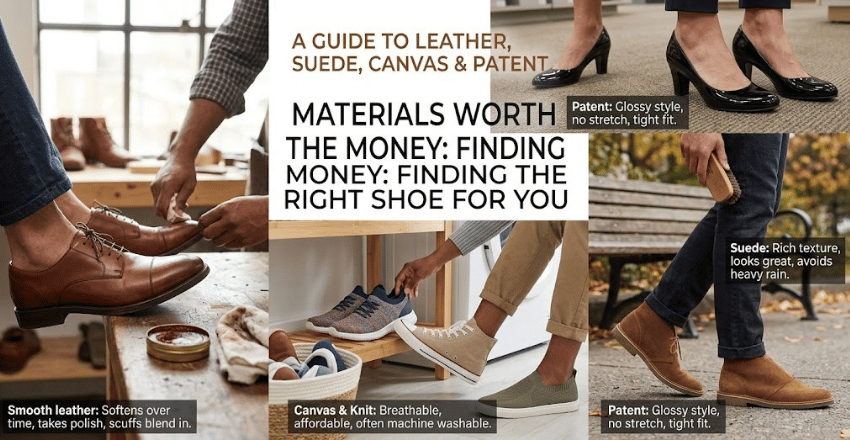
Smooth leather softens instead of cracking, and it takes polish, so a scuff in March is invisible by April. Suede looks richer and photographs better, though it drinks rain. Canvas and knit uppers breathe, cost less, and survive a cold wash.
Patent is the divisive one. It reads glossy and fun, yet it does not stretch at all, so it punishes a wide foot.
Cute and wearable versus cute and painful
Here is the fastest way to sort a pretty pair from a punishing one.
| Feature | Wearable version | Painful version |
| Toe box | Rounded or almond, toes lie flat | Sharp point that stacks your toes |
| Heel | Under 2 inches, block or stacked | Over 3 inches on a pin |
| Sole | Bends at the ball, some padding | Board flat with no give at all |
| Fastening | Buckle or elastic you can adjust | Rigid backless mule that grips |
| Material | Soft leather, suede, or knit | Stiff patent with a hard edge |
Backless styles are the sneaky one. Your toes grip to keep them on, and that quiet clenching is what leaves your arches sore at 6 p.m.
How to check fit before you buy
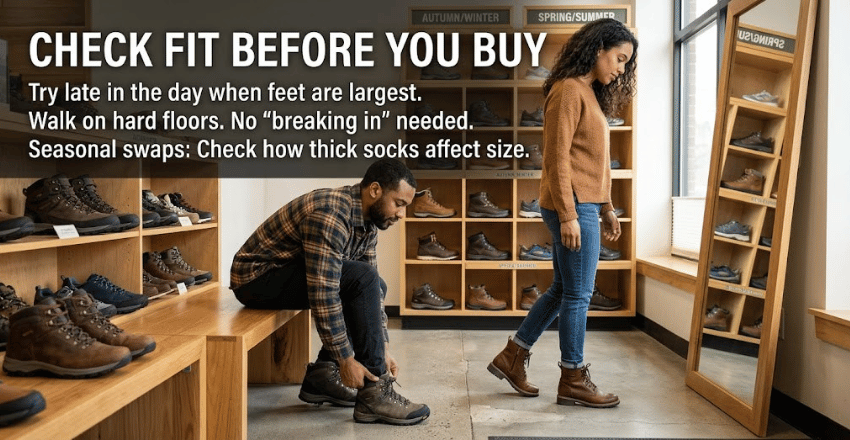
Try pairs on late in the day, when your feet are at their largest. Then run these checks.
- Half an inch of room between your longest toe and the front.
- A quarter inch of space on each side, so nothing presses your joints.
- Your heel should lift slightly, not slide out.
- Walk on a hard floor, never on store carpet.
- If it needs breaking in, it does not fit. Sizing up half a size fixes more than a stretch spray will.
Seasonal swaps help too. A pair that felt perfect in July can pinch in November over thicker socks, which is why our seasonal outfits archive plans footwear by month.
Your next step
Pick one gap in your rotation this week. Not four. If you own no low heel, buy the low heel, and set a $60 to $90 ceiling so you can replace it without regret when the season turns.
Then wear it around the house for an hour before you cut the tags off. That hour tells you everything a product photo cannot.
FAQ about cute shoes
Cream. It softens an outfit the way white never does, and it sits beside denim, tan, and navy without a fight.
No. The pain comes from a narrow toe box and a tall thin heel, not from bows or straps. Plenty of sweet-looking pairs sit on a two-inch block heel with a padded footbed. Those you can wear for eight hours.
Four covers most lives. One flat, one low heel, one sneaker, one boot.
Suede does. Smooth leather wipes clean in seconds, so pick leather for cream and pastel if you take public transit.
One and a half to two inches. High enough to change your posture, low enough that your weight stays off the ball of your foot.